
1. Introduction
UV resin has become a popular choice for crafters and DIY enthusiasts because it cures quickly under UV light, creating smooth, durable, and glossy finishes. However, a common question among hobbyists is: is UV resin toxic before curing? Understanding the potential hazards of uncured resin is essential to ensure safe handling and prevent health risks.
Before UV resin cures, it contains chemicals that can irritate the skin, eyes, or respiratory system if proper precautions are not taken. In this article, we will answer the question “is UV resin toxic before curing”, explore the risks associated with uncured resin, and share practical safety tips to help you work safely while enjoying your crafting projects.
Table of Contents
2. What is UV Resin and How Does It Work?
UV resin is a type of synthetic resin that hardens when exposed to ultraviolet (UV) light. Unlike traditional epoxy resins that require mixing with a hardener and curing over hours or even days, UV resin cures quickly in just a few minutes under a UV lamp or direct sunlight. This makes it highly convenient for jewelry makers, craft enthusiasts, and small-scale DIY projects.
The key component in UV resin is a photoinitiator, a chemical that reacts to UV light to trigger polymerization. During this process, the liquid resin transforms into a solid, durable material with a clear, glossy finish. This transformation is what gives UV resin its versatility, allowing it to be used for embedding small objects, coating surfaces, or creating detailed molds.
Because UV resin starts as a liquid, it is easy to pour, shape, and manipulate before curing. Once it hardens under UV light, it becomes strong, resistant to scratches, and safe to handle for crafting purposes.
Some advantages of UV resin include:
- Fast curing time – ideal for quick projects and on-demand crafting.
- Clear finish – perfect for jewelry, art pieces, and coatings.
- Detail retention – great for molds and intricate designs.
Understanding how UV resin works helps crafters appreciate the importance of proper handling during the liquid stage and highlights why safety precautions are necessary before the material hardens.
3. Toxicity of UV Resin Before Curing
Before UV resin hardens, it contains several chemical compounds that can pose health risks if handled improperly. These chemicals, including monomers and photoinitiators, are highly reactive in their liquid state, which is why protective measures are essential when working with uncured resin.
Skin contact is one of the most common concerns. Direct exposure can lead to irritation, redness, or allergic reactions in sensitive individuals. Prolonged or repeated contact may even result in dermatitis.
Respiratory exposure is another potential hazard. Fumes released from the liquid resin, especially in poorly ventilated areas, can irritate the eyes, nose, throat, and lungs. People with asthma or other respiratory conditions may be particularly sensitive to these vapors.
Eye irritation can occur if resin splashes accidentally, causing discomfort or temporary irritation. Even small amounts can be harmful, so wearing safety goggles is highly recommended.
It is also important to note that accidental ingestion, while rare, can be dangerous due to the toxic nature of the liquid resin. Keeping crafting areas clean and out of reach of children and pets helps reduce this risk.
Overall, handling liquid UV resin safely requires awareness of its chemical properties and proper protective equipment, including gloves, masks, and eye protection. By taking these precautions, crafters can enjoy their projects while minimizing potential health hazards.
4. Common Health Risks of Handling Uncured UV Resin
Working with liquid UV resin can be safe if proper precautions are taken, but it’s important to understand the potential health risks associated with direct contact or inhalation.
1. Skin Irritation and Allergic Reactions
One of the most frequent issues is skin irritation. The uncured resin contains reactive chemicals that can cause redness, itching, or rashes. People with sensitive skin may also develop allergic reactions, sometimes appearing hours after contact. Prolonged exposure without protective gloves can increase the likelihood of dermatitis.
2. Respiratory Issues
Fumes from liquid resin can irritate the respiratory system. Breathing in these vapors may cause coughing, throat irritation, or shortness of breath, particularly in poorly ventilated spaces. Individuals with asthma or other respiratory conditions should be especially cautious and consider using a mask or respirator.
3. Eye Irritation
Accidental splashes or fumes can affect the eyes, causing redness, watering, or a burning sensation. Wearing safety goggles when pouring or mixing resin helps prevent these uncomfortable and potentially harmful reactions.
4. Accidental Ingestion Risks
While uncommon, ingestion of liquid resin can be harmful due to its toxic chemical content. Keeping crafting materials away from children and pets and avoiding eating or drinking near your workspace reduces this risk.
5. Long-Term Exposure Concerns
Repeated exposure to uncured resin without proper protection may increase the risk of chronic skin or respiratory problems. Following recommended safety measures ensures that crafting remains a safe and enjoyable activity.
By being aware of these risks and taking preventive steps, crafters can minimize health hazards and safely enjoy creating with resin.
5. Safety Precautions for Using UV Resin
Ensuring safe handling of liquid resin is essential to protect your skin, eyes, and respiratory system. By following simple safety precautions, you can enjoy crafting without risking your health.
1. Wear Protective Gloves
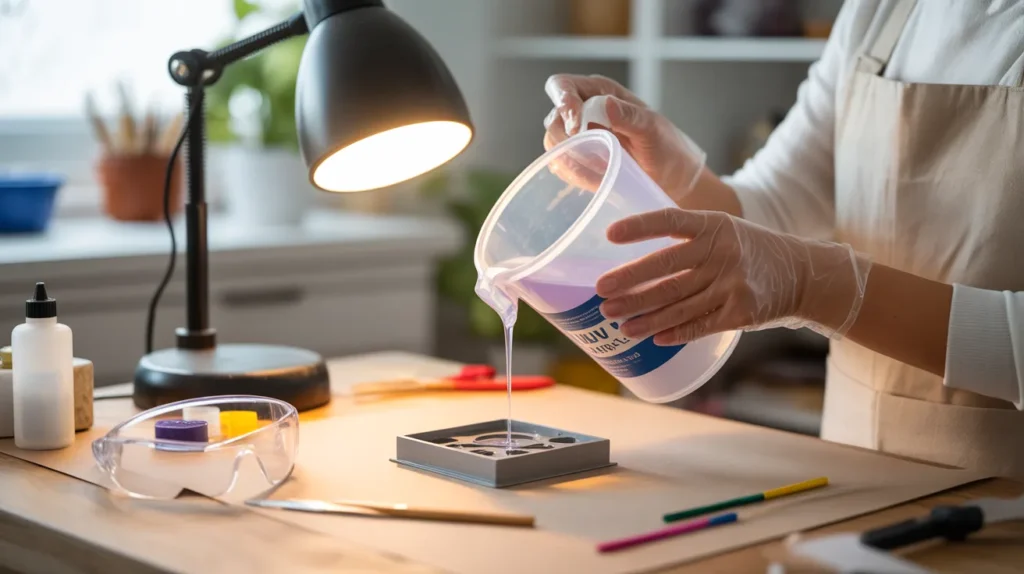
Always use disposable or chemical-resistant gloves when working with resin. Gloves prevent skin contact, reducing the risk of irritation, allergic reactions, or dermatitis. Make sure to check gloves for tears or holes before starting your project.
2. Use Eye Protection
Safety goggles or glasses shield your eyes from accidental splashes and chemical fumes. This is especially important when pouring resin into molds or mixing it with pigments and additives.
3. Work in a Well-Ventilated Area
Proper airflow helps minimize inhalation of resin vapors. Open windows or use a fan to circulate air, and consider using an exhaust system if you work indoors regularly. For added safety, a respirator with chemical cartridges can provide extra protection.
4. Avoid Direct Contact
Do not touch your face, mouth, or eyes while handling resin. Wash your hands thoroughly after finishing your project, even if you were wearing gloves. Avoid eating or drinking near your crafting area.
5. Keep Resin Out of Reach of Children and Pets
Store resin in a secure location, away from children and pets. Liquid resin is toxic if ingested and can be harmful if accidentally touched or inhaled.
6. Clean Spills Promptly
Spilled resin can stick to surfaces and skin. Clean any spills immediately using disposable paper towels and a safe cleaning solution. Avoid using bare hands to wipe up liquid resin.
By following these precautions, you can significantly reduce health risks while working with liquid resin. Safe crafting practices ensure that your creative projects are enjoyable and hazard-free.
6. Differences Between Uncured and Cured UV Resin Toxicity
The chemical composition of resin changes significantly during the curing process, which directly affects its safety. Understanding the difference between uncured and cured resin is essential for safe crafting.
Uncured Resin
Before hardening, resin is in a liquid state and contains reactive chemicals such as monomers and photoinitiators. These compounds are responsible for the curing reaction but can irritate the skin, eyes, and respiratory system. Handling liquid resin without proper protection increases the risk of dermatitis, allergic reactions, and inhalation hazards.
Cured Resin
Once the resin is fully exposed to UV light and has hardened, the chemical reaction completes, transforming the liquid into a solid polymer. This polymerized material is stable and no longer reactive, making it much safer to handle. Fully cured resin is durable, scratch-resistant, and safe to touch or wear in jewelry.
Key Safety Difference
The main distinction is that the health risks present during the liquid stage disappear once the resin has fully cured. While uncured resin requires protective gear and careful handling, cured resin poses minimal risk under normal use. However, sanding or cutting cured resin can produce fine dust particles, so wearing a mask and working in a ventilated area is still recommended for these tasks.
By knowing the differences between the two stages, crafters can plan their projects safely and avoid exposure to harmful chemicals during the liquid phase.
7. Signs of Exposure and What to Do
Even with precautions, accidents can happen while working with liquid resin. Recognizing the signs of exposure early is important for preventing more serious health issues.
Common Signs of Exposure
- Skin Reactions – Redness, itching, rashes, or blistering may appear shortly after contact with liquid resin. Sensitive skin can develop irritation even with brief exposure.
- Respiratory Symptoms – Coughing, throat irritation, shortness of breath, or sneezing can occur if resin fumes are inhaled in a poorly ventilated area.
- Eye Irritation – Red, watery, or burning eyes may result from splashes or exposure to fumes.
- Digestive Issues – Nausea or upset stomach can occur if resin is accidentally ingested, though this is less common.
Immediate Steps to Take
- Skin Contact – Wash the affected area thoroughly with soap and water. Remove contaminated clothing and avoid further contact. Applying a gentle moisturizer can help soothe irritation.
- Respiratory Exposure – Move to fresh air immediately. If symptoms persist, seek medical attention. Using a fan or opening windows can help ventilate the area.
- Eye Contact – Rinse eyes with clean, lukewarm water for at least 15 minutes. If irritation continues, consult an eye specialist.
- Ingestion – Do not induce vomiting. Rinse your mouth thoroughly and seek medical attention immediately.
Preventive Advice
Even after an exposure incident, always reassess your workspace and safety procedures. Wearing gloves, goggles, and masks, and working in well-ventilated areas will minimize the risk of future accidents.
By understanding the signs of exposure and knowing how to respond quickly, crafters can protect their health and continue enjoying resin projects safely.
8. Choosing Safer UV Resin Products
Selecting the right resin can make a significant difference in both safety and crafting experience. Not all UV resins are created equal, and some are formulated to reduce harmful effects while maintaining quality.
Look for Low-Odor or Non-Toxic Options
Many brands now offer low-odor or non-toxic UV resins. These products are designed to minimize volatile organic compounds (VOCs) and irritating fumes, making them safer for indoor use and extended crafting sessions.
Check Product Labels and Certifications
Reputable brands provide safety information on labels, including whether the resin is free of harmful chemicals or compliant with safety standards. Certifications such as ASTM D-4236 (for art materials) or low-VOC labels can help identify safer choices.
Consider Resin for Specific Applications
Some resins are formulated for jewelry, while others are meant for coatings or art projects. Choosing a resin designed for your particular use ensures better results and often safer handling. For example, jewelry resins are often low in irritants since they come into contact with skin.
Start Small and Test
When trying a new resin brand, work with a small batch first to observe its behavior, odor, and potential skin sensitivity. This cautious approach helps prevent unnecessary exposure and ensures comfort with the material.
Maintain a Safe Workspace
Even when using safer resins, always work in a well-ventilated area and use protective gear. Combining a safer product with proper safety practices provides the best protection for your health.
By choosing safer UV resin products and following recommended handling practices, crafters can enjoy creative projects with reduced risk of irritation or exposure.
9. FAQs
1. Can liquid resin cause skin irritation?
Yes, direct contact with liquid resin can irritate the skin, causing redness, itching, or rashes. Wearing protective gloves and washing hands thoroughly after handling the material can prevent most reactions.
2. How can I reduce resin fumes while working?
Working in a well-ventilated area, using fans or open windows, and wearing a respirator or mask can significantly reduce exposure to fumes. Choosing low-odor or low-VOC resin products also helps minimize irritation.
3. Is it safe to use resin around children or pets?
Uncured resin is toxic and should be kept out of reach of children and pets. Always store resin in secure containers and supervise your workspace to prevent accidental contact.
4. What should I do if resin gets into my eyes?
Rinse the affected eyes immediately with clean, lukewarm water for at least 15 minutes. If irritation persists, seek medical attention promptly.
5. Can sanding or cutting cured resin be harmful?
While fully cured resin is safe to handle, sanding or cutting can produce fine dust particles. It’s recommended to wear a mask and work in a ventilated area to avoid inhaling the dust.
6. Are there safer alternatives for sensitive crafters?
Yes, some resins are formulated to be non-toxic, low-odor, or low-VOC. These are ideal for indoor crafting and for individuals who may be sensitive to chemicals.
7. How can I test a new resin brand safely?
Start with a small batch to observe its behavior, odor, and any skin sensitivity. This cautious approach helps prevent unnecessary exposure and ensures you are comfortable with the product.
10. Conclusion
Understanding the risks associated with working with liquid UV resin is essential for safe crafting. Many crafters wonder, is UV resin toxic before curing, and the answer is that the uncured resin does contain chemicals that can irritate the skin, eyes, and respiratory system if not handled properly.
By learning about the potential health hazards, recognizing signs of exposure, and taking the proper safety precautions such as wearing gloves, goggles, and working in a well-ventilated area you can significantly reduce these risks. Choosing safer resin products, like low-odor or non-toxic options, further enhances safety and makes crafting a more enjoyable experience.
Ultimately, understanding the difference between uncured and cured resin and following recommended safety measures allows hobbyists and professionals alike to create beautiful, durable projects while protecting their health. Safe handling ensures that your creative process remains worry-free and fun.