
Introduction
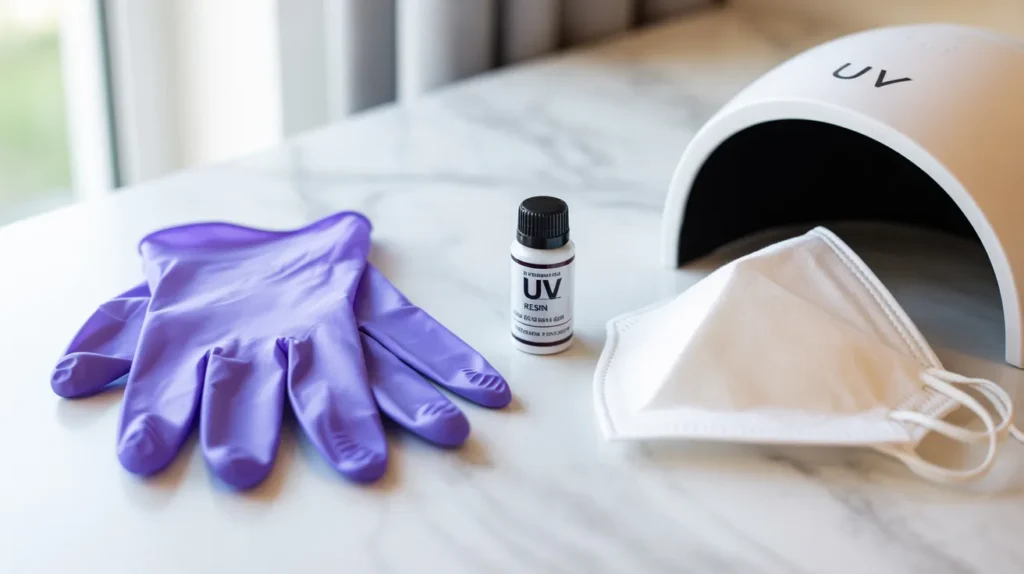
If you have ever wondered is UV resin dangerous, you are asking the right question. UV resin is safe when used correctly but uncured liquid resin can irritate your skin, release fumes, and cause allergic reactions if handled without protection. Once fully cured, it becomes a stable solid that is completely safe to touch and wear every day. In this guide you will learn exactly what the real risks are, how to avoid them, and how to use UV resin safely with confidence.
What Makes UV Resin Potentially Harmful?
UV resin is a liquid synthetic plastic that hardens under ultraviolet light. Inside the liquid, there are chemicals called photoinitiators — these react when UV light hits them and trigger the hardening process. The problem is that while the resin is still liquid, those chemicals are active and reactive.
This is why uncured UV resin can irritate your skin, eyes, and respiratory system. The resin itself is not uniquely toxic compared to other craft chemicals, but it needs to be treated with respect. People who use it daily without protection are the ones who tend to develop problems over time. Once the resin is fully cured and hardened, most of those reactive chemicals have been used up in the curing process. At that point, the solid piece is generally stable and safe to handle normally.
Is UV Resin Dangerous Before It Cures?
Yes liquid UV resin is the stage where most safety risks exist, and this is where you need to be most careful.
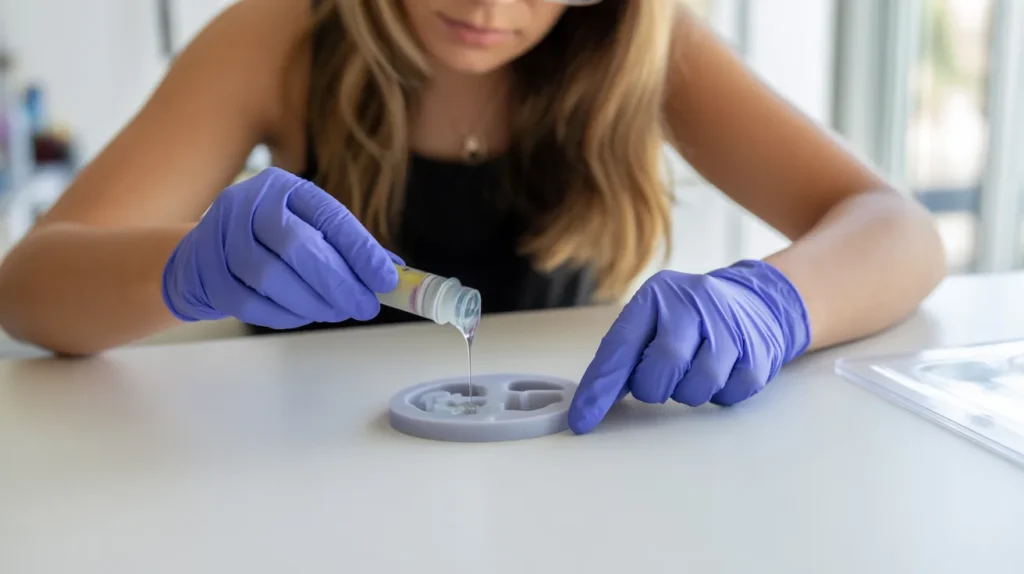
Skin contact is the most common issue. If uncured resin touches your bare skin repeatedly, it can cause a reaction called skin sensitization. This means the more contact you have over time, the more sensitive your skin becomes. Eventually even a tiny amount of resin can cause redness, itching, or a rash. This sensitization is permanent once it develops, it does not go away. This is why wearing nitrile gloves every single time you work with UV resin matters more than most beginners realize.
Fume exposure is the second concern. Liquid UV resin releases fumes, especially in warm temperatures or small enclosed spaces. For most people, short exposure just causes a mild headache or slight throat irritation. But working in a poorly ventilated room for hours at a time is a different story. Over weeks and months, regular fume inhalation without airflow can cause more persistent respiratory irritation.
Eye contact is less common but more serious. If you accidentally rub your eye with a resin-contaminated finger, or if resin splashes near your face, it can cause inflammation and discomfort. Safety glasses are not usually required for casual crafting, but they are worth considering if you are working quickly or handling larger volumes. The simple takeaway: treat liquid UV resin as a hazardous material. Gloves on, windows open, and keep your workspace clean.
Is UV Resin Toxic After It Cures?
This is where a lot of beginners feel relieved — and rightfully so. Fully cured UV resin is not toxic for normal handling. Once the liquid has hardened completely under a UV lamp, the reactive chemicals have done their job and the material becomes an inert solid plastic.
You can touch it, wear it as jewelry, display it, and handle it daily without any health concern.
However, there are two situations where cured resin can still cause problems:
Under-cured resin is the first one. If your UV lamp is too weak, your resin layer is too thick, or you did not cure it long enough, the outside may feel hard while the inside is still soft and reactive. Touching under-cured resin can still irritate your skin because those photoinitiators are still active underneath. This is why curing in thin layers and using a proper UV lamp matters not just for aesthetics, but for safety too.
Sanding and drilling cured resin is the second situation. When you sand or cut hardened resin, it creates fine dust particles. Breathing resin dust is harmful to your lungs. Always wear a dust mask ideally an N95 when sanding or doing any post-processing that creates particles.
UV Resin Fumes Are They Harmful Indoors?
One of the most common questions from indoor crafters is whether UV resin fumes are dangerous when working in a bedroom, kitchen, or small studio.
The fumes from UV resin are not as strong or dangerous as those from polyester resin or industrial epoxy, but they are not something to ignore either. The smell you notice when opening a bottle of UV resin comes from volatile organic compounds (VOCs) that evaporate from the liquid surface.
In a well-ventilated room windows open, fan running the fume risk is low for most people during a normal crafting session. The problems start when people work in sealed rooms for extended periods with no airflow.
Practical tips for indoor use:
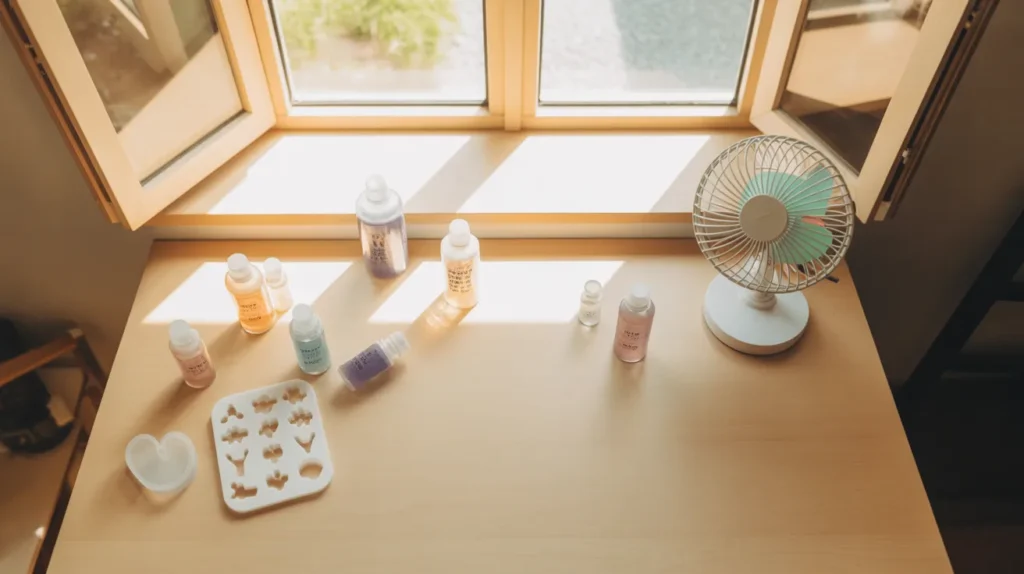
- Always open at least one window when working with UV resin
- Use a small desk fan to direct fumes away from your face
- Take breaks every 30–45 minutes during long sessions
- If you notice a persistent headache or feel lightheaded, stop and get fresh air immediately
- An activated carbon respirator offers extra protection if you work with resin daily
UV resin is one of the safer options for indoor crafting compared to two-part epoxy, but ventilation is always non-negotiable.
UV Resin Health Risks What to Watch For
Most people use UV resin for years without any serious health issues. But there are specific symptoms that tell you something is wrong:
If you develop a skin rash that does not go away, see a doctor and mention you work with photopolymer resins. Some people do develop true allergies that require them to stop using UV resin entirely or switch to wearing full arm protection.
Is UV Resin Safe to Use Indoors?
Yes, UV resin can be used safely indoors as long as you follow the ventilation rules above. It does not produce the kind of overwhelming chemical fumes that some two-part resins do, and for most casual crafters working a few hours a week, indoor use with open windows is perfectly reasonable.
Where it becomes a problem is when people treat it like a totally harmless material and work with it in sealed rooms, skip gloves, and spend hours per day at the bench. That is when long-term skin sensitization and respiratory irritation become real risks. A good rule of thumb: if you can smell the resin strongly, your ventilation is not good enough.
Is UV Resin Safe for Kids?
This one requires a clear answer: UV resin is not suitable for young children to use unsupervised.
The liquid resin is a chemical that requires responsible handling — gloves, ventilation, careful application. Children under 12 should not be working with UV resin at all. Teenagers aged 13 and above can use it safely with adult supervision, proper gloves, and good ventilation, as long as they understand the safety rules.
The UV lamp itself is also a consideration. UV lamps emit ultraviolet radiation that can damage eyes and skin with direct prolonged exposure. Children should never look directly at a UV lamp while it is on, and the lamp should be placed out of reach when not in use. If you are looking for a safer craft option for younger children, air-dry clay or water-based crafts are much more appropriate.
UV Resin vs Epoxy Resin Which Is Safer?
Both UV resin and epoxy resin carry safety risks, but they are different in nature.
| Safety Factor | UV Resin | Epoxy Resin |
|---|---|---|
| Fume strength | Mild to moderate | Moderate to strong |
| Skin sensitization risk | Yes — uncured liquid | Yes — hardener is highly sensitizing |
| Cure time | Minutes | Hours to days |
| Fume exposure window | Short (cures fast) | Long (off-gases for hours) |
| Safe after curing | Yes | Yes |
| Indoor use | More manageable | Requires stronger ventilation |
UV resin is generally considered slightly safer for indoor hobbyist use because its curing time is so short the window of chemical exposure is much smaller than with two-part epoxy, which off-gases for hours while it hardens. However, the photoinitiators in UV resin are potent skin sensitizers, so gloves are just as important as with epoxy.
Neither is completely safe without precautions. Both require gloves, ventilation, and careful handling of the uncured material.
UV Resin Safety Checklist
Before every crafting session, run through this list:
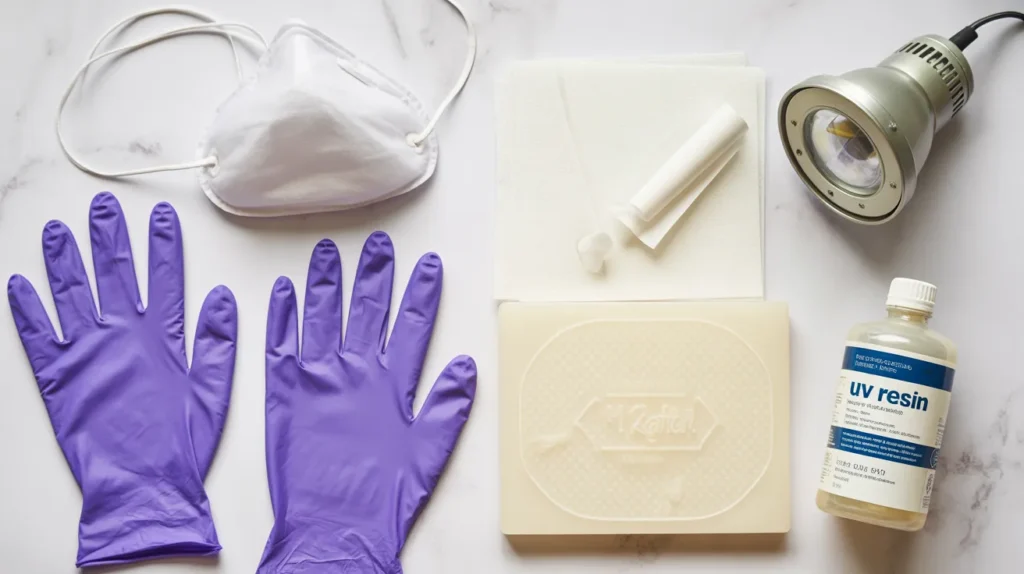
- Nitrile gloves on (not latex — some people are latex-allergic)
- Window open or fan running for ventilation
- UV lamp positioned safely away from eyes
- Work surface covered with a silicone mat or parchment paper
- Paper towels nearby to clean spills immediately
- Resin bottle capped when not in use
- Hands washed thoroughly after removing gloves
- Dust mask on if sanding or cutting cured pieces
Following these steps takes less than two minutes and removes most of the health risks associated with UV resin use.
How to Store UV Resin Safely
Proper storage also matters for safety. UV resin that is stored incorrectly can degrade, and degraded resin may produce stronger fumes or cure unevenly.
- Store UV resin in a dark, cool place — a cupboard away from sunlight works well
- Keep the bottle tightly capped between uses
- Do not store near heat sources like radiators or sunny windowsills
- Keep away from children and pets
- Check the expiry date — expired resin can become unpredictable in how it cures and smells
Most UV resins have a shelf life of 12 to 24 months when stored correctly. Using old, yellowed resin is not just a quality issue it can also mean stronger fume exposure during application.
Final Verdict Is UV Resin Dangerous?
UV resin is not dangerous when you use it with basic precautions. The risks are real but manageable. Uncured liquid resin requires gloves and ventilation. Cured resin is safe for everyday handling. The biggest long-term risk is skin sensitization from repeated unprotected contact — and that is entirely preventable.
Millions of crafters use UV resin every day without any health problems because they follow simple safety habits. Treat the liquid with respect, keep your workspace ventilated, and you can enjoy resin crafting safely for years.
FAQs
Is UV resin dangerous to use at home?
Not if you take basic precautions. Open a window, wear nitrile gloves, and keep your UV lamp away from your eyes. Most home crafters use UV resin for years without any health issues.
Is UV resin toxic to breathe?
The fumes are mild but real. In a ventilated room with open windows they are unlikely to cause harm. In a sealed room during long sessions they can cause headaches and throat irritation. Always work with fresh airflow.
Can UV resin cause a skin allergy?
Yes. Repeated skin contact with uncured liquid resin can cause skin sensitization over time — leading to permanent redness and itching even from tiny amounts. Nitrile gloves every session is the only way to prevent this.
Is UV resin safe after it fully cures?
Yes. Fully cured UV resin is stable and safe to touch and wear daily. The only exception is sanding or drilling cured pieces — always wear an N95 dust mask during any sanding work to avoid inhaling resin dust.
Is UV resin safe indoors?
Yes with ventilation. UV resin fumes disappear quickly once cured. One open window and a small desk fan directing air away from your face is enough for most crafting sessions indoors.
Is UV resin safe for kids?
Not for children under 12. Teenagers 13 and above can use it safely with adult supervision, gloves, and ventilation. For younger children use water-based or air-dry crafts instead.
Is UV resin food safe?
No. Standard UV resin is not food safe. Never use it on cups, bowls, or plates. Only use resin that is explicitly labelled as food-safe certified by the manufacturer.
Is UV resin safer than epoxy resin?
For indoor use yes UV resin cures in minutes so fume exposure is very short. Epoxy off-gasses for hours while curing. But both require gloves and ventilation. Neither is safe without basic precautions.
What to do if UV resin touches my skin?
Wash immediately with soap and water. Do not use acetone on your skin. If redness or itching develops after washing, stop using resin without gloves and see a doctor.
How do I know if my UV resin is fully cured?
It should feel completely hard with zero stickiness anywhere. If any part feels tacky it is under-cured. Use a 36W or higher lamp, apply thin layers, and cure each layer for at least 60 to 120 seconds.