
1. Introduction
Resin crafting has become extremely popular in recent years, especially for jewelry, keychains, art pieces, and home décor. Crafters now have more choices than ever, with UV resin and epoxy resin being the two most commonly used options. While both create beautiful, glossy finishes, many beginners and even experienced makers ask the same important question: is UV resin safer than epoxy resin?
Safety is a major concern when working with any chemical-based material. Resin products can release fumes, cause skin irritation, or trigger allergic reactions if not handled properly. Because UV resin and epoxy resin cure in different ways and contain different chemical components, their safety profiles are not exactly the same. Understanding these differences is essential before choosing which one to use in your craft room.
In this guide, we will compare UV resin and epoxy resin from a safety perspective. We’ll look at toxicity levels, fumes and VOC emissions, skin contact risks, ventilation needs, curing processes, and long-term health concerns. By the end, you’ll have a clear and practical answer to the question: is UV resin safer than epoxy resin, and you’ll know how to work with either option more safely and confidently.
2. What Is UV Resin?
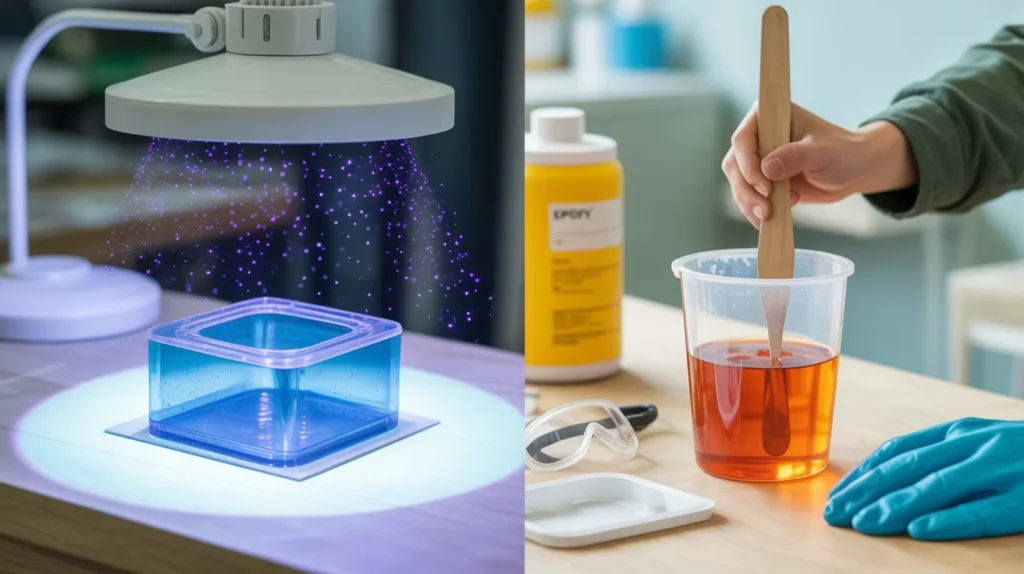
UV resin is a ready-to-use liquid plastic that hardens when exposed to ultraviolet (UV) light. It does not need mixing because it comes as a single product. When you place it under a UV lamp or in sunlight, it cures within a few minutes.
It is mostly used for small craft projects like jewelry, keychains, charms, and thin coatings. Because it cures quickly, it saves time and is easy for beginners to handle.
UV resin is clear, slightly thick, and creates a shiny, glass-like finish. It works best in thin layers, as thick pours may not cure properly. In simple terms, UV resin is a fast-curing, easy-to-use option designed mainly for small and detailed projects.
3. What Is Epoxy Resin?
Epoxy resin is a two-part liquid system made up of resin and a hardener. These two components must be mixed together in the correct ratio to start a chemical reaction. Once mixed, the material slowly hardens and turns into a strong, solid plastic.
Unlike fast-curing UV products, epoxy resin cures at room temperature. Depending on the formula, it can take several hours to a few days to fully harden. During curing, it goes through an exothermic reaction, meaning it generates heat as it solidifies.
Epoxy resin is commonly used for larger projects such as tabletops, river tables, molds, coatings, art panels, and floor finishes. It can be poured in thicker layers compared to light-cured resins, making it more suitable for deep casts. In liquid form, epoxy resin can release noticeable fumes and may cause skin irritation if touched directly. Proper mixing, ventilation, and protective gear are important when working with it.
In simple terms, epoxy resin is a strong, durable material that requires mixing and more curing time, but it works well for bigger and thicker projects.
4. Toxicity Levels (Uncured & Cured)
Understanding toxicity is essential before working with any type of resin. The safety level depends mainly on whether the material is uncured (liquid form) or fully cured (hardened form).
Uncured Resin (Liquid State)
In liquid form, both UV and epoxy resins contain reactive chemicals. These substances can cause:
- Skin irritation
- Allergic reactions (skin sensitization)
- Eye irritation
- Respiratory discomfort from fumes
Epoxy resin often poses a higher risk of skin sensitization because of the hardener component. Repeated skin contact can increase the chance of developing long-term allergies. UV resin also contains reactive chemicals, but since it does not require mixing, there is less handling involved.
In short: uncured resin is the most hazardous stage and should never touch bare skin.
Cured Resin (Hardened State)
Once fully cured, resin becomes a stable, solid plastic. At this stage:
- It is generally considered non-toxic to touch
- It does not release harmful fumes
- It is safe for normal handling
However, if the resin is not cured properly, leftover uncured chemicals may remain on the surface. Sanding cured resin can also create dust, which should not be inhaled.
Key Takeaway
The highest health risk exists before curing. Proper gloves, ventilation, and careful handling greatly reduce exposure. Once completely hardened, both materials are much safer for everyday use.

5. Fumes & VOC Emissions
Fumes and VOCs (volatile organic compounds) are important safety factors when working with resin. VOCs are chemicals that can evaporate into the air during use, especially while the material is still liquid and curing.
UV Resin Fumes
UV resin is often labeled as “low odor,” but low odor does not always mean low emissions. In small craft projects, the amount of fumes is usually minimal because only thin layers are used. Since it cures quickly under UV light, the exposure time is shorter.
However, it can still release mild vapors while in liquid form. Working in a well-ventilated area is recommended, especially in small rooms.
Epoxy Resin Fumes
Epoxy resin typically produces stronger fumes, especially during mixing and curing. The chemical reaction between resin and hardener can release noticeable vapors. Poor ventilation may lead to:
- Headaches
- Throat irritation
- Dizziness
- Respiratory discomfort
Large pours and long curing times can increase air exposure.
Ventilation Matters
Both materials require proper airflow. Open windows, fans, or a dedicated ventilation system significantly reduce inhalation risks. For sensitive individuals, wearing a respirator designed for organic vapors adds extra protection.
Key Takeaway
Fume exposure mainly occurs during mixing and curing. Short curing time and small project use generally mean less air exposure, while larger pours and longer curing processes increase the need for strong ventilation.
6. Skin Contact & Allergic Reactions
Skin contact is one of the most common safety risks when working with resin. In liquid form, both UV and epoxy products contain reactive chemicals that can irritate the skin.
Immediate Skin Irritation
If uncured resin touches bare skin, it may cause:
- Redness
- Itching
- Burning sensation
- Mild swelling
Some people may not react the first time, but repeated exposure increases sensitivity.
Allergic Reactions (Sensitization)
One of the biggest concerns is skin sensitization. This happens when the body develops an allergy after repeated contact. Once sensitized, even small amounts of resin can trigger a strong reaction.
Epoxy hardeners are especially known for causing long-term allergies. UV formulas can also cause reactions, but they usually involve less handling since no mixing is required.
How to Reduce Risk
To prevent skin problems:
- Always wear nitrile gloves (not latex)
- Avoid touching liquid resin directly
- Clean spills immediately
- Wash hands thoroughly after use
If resin gets on the skin, wipe it off gently with a dry paper towel first, then wash with soap and water. Avoid using harsh solvents on skin.
Key Takeaway
Liquid resin should never touch bare skin. Even if no reaction appears at first, repeated exposure can lead to permanent sensitivity. Proper protective gear is essential for safe crafting.
7. Ventilation Requirements
Proper ventilation is essential when working with any type of resin. Even if a product is labeled “low odor,” it can still release vapors while in liquid form and during curing.
Why Ventilation Matters
Poor airflow can allow fumes to build up in a room. This may lead to:
- Headaches
- Eye or throat irritation
- Dizziness
- Breathing discomfort
Good ventilation reduces the amount of airborne chemicals you inhale.
Working in Small Spaces
If you are crafting in a bedroom or small workspace, open windows and use a fan to improve air circulation. A desk fan placed near a window can help push fumes outside. Avoid working in completely closed rooms.
For Larger Projects
Bigger pours and longer curing times require stronger airflow. In these cases, consider:
- An exhaust fan
- A workshop ventilation system
- A respirator with organic vapor filters
The longer the curing process and the larger the project, the more important ventilation becomes.
Key Takeaway
Always work in a well-ventilated area, no matter which resin you use. Fresh air flow significantly lowers inhalation risks and makes the crafting process safer and more comfortable.
8. Curing Process & Safety Risks
The curing process is how resin transforms from a liquid to a solid. Understanding this process is important for both safety and project quality, as different types of resin behave differently.
UV Resin Curing
UV resin hardens when exposed to ultraviolet light, either from a lamp or direct sunlight. The process is fast, usually taking just a few minutes for thin layers. Because it cures quickly, the liquid is exposed for a shorter time, reducing chemical contact.
Safety Considerations:
- Direct UV light can harm eyes and skin; avoid looking at the light source.
- Uneven exposure or thick layers may not cure completely, leaving sticky areas.
Epoxy Resin Curing
Epoxy resin requires mixing with a hardener to start the chemical reaction. Curing occurs at room temperature and can take several hours to days, depending on the formula and layer thickness. The reaction is exothermic, meaning it generates heat.
Safety Considerations:
- Large pours can overheat, potentially causing burns or warping molds.
- Uncured sections may remain toxic until fully hardened.
- Stirring and mixing must be precise; incorrect ratios can prevent proper curing.
General Safety Tips
- Always follow manufacturer instructions for curing times and layer thickness.
- Avoid direct skin contact with liquid resin.
- Use gloves and protective gear when handling uncured resin.
- Ensure good ventilation to prevent inhaling any fumes.
Key Takeaway
The curing stage is where safety risks are highest. Quick UV curing reduces exposure, while slow epoxy curing requires more care due to heat and prolonged chemical contact. Proper handling and protective measures are essential for a safe crafting experience.
9. Safety for Beginners
For those new to resin crafting, safety should always be the top priority. Both UV and epoxy products can cause irritation or allergic reactions if not handled correctly, so taking precautions from the start is essential.
Simple Safety Tips
- Wear Protective Gear – Always use nitrile gloves, a mask or respirator, and eye protection to prevent skin contact and inhalation of fumes.
- Work in a Ventilated Area – Open windows, use fans, or work near an exhaust to reduce exposure to vapors.
- Follow Instructions Carefully – Measure and mix epoxy accurately, or cure UV resin for the recommended time. Improper handling can lead to sticky surfaces or incomplete curing.
- Start Small – Begin with small projects to get familiar with how the resin behaves before attempting larger or thicker pours.
- Keep Cleaning Materials Handy – Wipes, paper towels, and soap are essential to quickly clean spills and prevent skin contact.
Why Beginners Need Extra Care
New crafters may not be familiar with the chemical nature of resin. Even small mistakes, like touching liquid resin or pouring too thick a layer, can increase risk. Starting with safe practices builds good habits and reduces the chance of skin irritation, fumes, or project errors.
Key Takeaway
Beginners can craft safely by wearing protective gear, maintaining proper ventilation, and starting with small projects. Good habits early on ensure a safe and enjoyable crafting experience.
10. Long-Term Health Effects
Repeated exposure to uncured resin can have lasting effects on health if proper precautions are not taken. Even small amounts of skin contact or inhalation over time may lead to chronic issues.
Skin Sensitization
One of the most common long-term effects is skin sensitization, which can develop after repeated contact with liquid resin. Once sensitized, even minimal exposure can trigger redness, itching, or rashes. Epoxy hardeners are particularly known for causing these reactions, while UV products generally pose slightly lower risks due to less handling.
Respiratory Concerns
Breathing in fumes or VOCs repeatedly over months or years may irritate the lungs and airways. For sensitive individuals, prolonged exposure can worsen asthma or trigger allergic reactions. Using proper ventilation and masks significantly reduces these risks.
Eye and Mucous Membrane Irritation
Frequent exposure to resin vapors may irritate eyes, nose, and throat. Over time, this can lead to discomfort or increased sensitivity to chemicals.
Preventive Measures
- Always wear gloves and protective clothing.
- Work in a well-ventilated space.
- Avoid prolonged exposure to uncured resin.
- Clean hands and surfaces immediately after contact.
Key Takeaway
Long-term health risks are primarily associated with repeated contact and inhalation of uncured resin. Following safety precautions consistently ensures crafting remains a safe hobby over time.
11. Environmental Impact
Resin products can have environmental consequences if not handled and disposed of properly. Both UV and epoxy resins are synthetic plastics, which means they do not break down easily in nature.
Waste and Disposal
Leftover liquid resin, hardeners, and cleaning materials should never be poured down drains or into the soil. These chemicals can contaminate water sources and harm aquatic life. Solid, fully cured pieces are generally safe to dispose of, but recycling options are limited.
Energy Use
Epoxy resin often requires longer curing times, which can indirectly increase energy consumption if using heaters or fans to control temperature. UV resin cures quickly under a lamp, consuming less energy overall for small projects.
Eco-Friendly Alternatives
Some manufacturers now offer low-VOC or bio-based resins. These options reduce chemical emissions and are less harmful to the environment. Choosing such products and limiting waste helps make resin crafting more sustainable.
Key Takeaway
Proper disposal, reduced waste, and using eco-friendly formulas are essential to minimizing the environmental impact of resin projects. Even small changes in handling can make crafting safer for the planet.
12. Safety Gear Requirements
Using the right protective equipment is essential when working with resin. Even small projects can expose crafters to chemicals, fumes, and skin irritation if proper gear is not worn.
Essential Protective Gear
- Gloves – Nitrile gloves are recommended because they resist chemicals better than latex. Always wear gloves when handling liquid resin or cleaning spills.
- Respirator or Mask – A mask rated for organic vapors helps protect lungs from fumes, especially in poorly ventilated areas or during larger pours.
- Eye Protection – Safety goggles prevent splashes from reaching the eyes, which can cause irritation or more serious damage.
- Protective Clothing – Long sleeves, aprons, or disposable coveralls reduce skin exposure and protect clothing from resin stains.
- UV Protection – For projects using UV light, avoid direct skin exposure and never look directly at the lamp. Some UV lamps come with protective shields.
Best Practices
- Inspect gloves for tears before use.
- Keep gear clean and replace disposable items regularly.
- Combine multiple protective measures for maximum safety.
Key Takeaway
Wearing gloves, a respirator, eye protection, and protective clothing is crucial. Proper safety gear minimizes risks and ensures a safer and more comfortable crafting experience.
13. Quick Comparison Table (UV Resin vs Epoxy Resin)
A side-by-side comparison helps quickly understand the differences in safety, handling, and performance between UV resin and epoxy resin.
| Feature | UV Resin | Epoxy Resin |
| Components | Single liquid, ready-to-use | Two-part system (resin + hardener) |
| Curing Time | Minutes under UV light | Several hours to days at room temperature |
| Fumes & VOCs | Low, short exposure | Moderate to strong, longer exposure |
| Skin Irritation Risk | Moderate, less handling | Higher, especially from hardener |
| Ventilation Needs | Light ventilation sufficient | Strong ventilation recommended for large pours |
| Ease of Use | Beginner-friendly, fast curing | Requires careful mixing and ratio accuracy |
| Layer Thickness | Best for thin layers | Can pour thicker layers without issues |
| Long-Term Safety | Safer with small projects | Higher risk with repeated exposure |
| Project Types | Jewelry, charms, small crafts | Tables, molds, coatings, deep casts |
Key Takeaway
This table shows that UV resin is generally easier and faster to work with for small projects, while epoxy resin is better suited for larger pours but requires more careful handling and safety measures.
14. So, Is UV Resin Safer Than Epoxy Resin?
When asking is UV resin safer than epoxy resin, the answer is yes in certain situations, but it depends on how and what you are making. Both materials have chemical risks, but their exposure levels and handling requirements differ.
Clear Summary Answer
UV resin is generally safer for small projects because it cures quickly and comes pre-mixed, which reduces skin contact and chemical exposure. Epoxy resin, on the other hand, requires careful mixing and longer curing times, which increases the chance of fumes and skin irritation.
Situational Safety Comparison
- Small Crafts (Jewelry, Charms, Keychains): UV resin is safer due to shorter exposure and thin layers.
- Large Projects (Tables, Molds, Thick Coatings): Epoxy resin is practical, but safety precautions like gloves, masks, and proper ventilation are essential.
- Beginners: UV resin is easier and safer to handle for those new to crafting.
- Experienced Crafters: Epoxy resin can be used safely with proper knowledge and gear.
Who Should Choose Which
- Choose UV resin if you want fast, low-risk projects and minimal handling.
- Choose epoxy resin if your project requires thick pours, extra strength, or larger pieces, but always follow strict safety measures.
In conclusion, UV resin is generally safer than epoxy resin for small and beginner projects, while epoxy resin is suitable for larger works when proper precautions are taken.
15. FAQs
1. Can I touch resin after it has cured?
Yes. Once fully cured, resin becomes a stable solid and is generally safe to handle. Only uncured or partially cured resin poses health risks.
2. Do I need gloves for every resin project?
Yes. Wearing nitrile gloves is essential when handling liquid resin to prevent skin irritation or long-term sensitization.
3. How long should I ventilate my workspace?
Always work in a well-ventilated area. For small projects, a few minutes of airflow may suffice. For larger pours, continuous ventilation until curing is complete is recommended.
4. Can I work with resin indoors?
Yes, but ensure proper airflow. Open windows, use fans, or work near an exhaust to minimize inhalation of fumes.
5. Is sanding cured resin safe?
Sanding produces dust that can irritate skin and lungs. Wear a dust mask and gloves when sanding or shaping cured pieces.
6. What should I do if resin spills on my skin?
Wipe off the resin gently with a dry paper towel, then wash the area thoroughly with soap and water. Avoid using harsh solvents directly on skin.
7. Are there eco-friendly resin options?
Yes. Some brands offer low-VOC or bio-based resins that reduce chemical exposure and environmental impact. Proper disposal and minimizing waste also help.
8. Can beginners safely work with resin?
Absolutely. Start with small projects, use protective gear, maintain good ventilation, and follow all instructions carefully to craft safely.
16. Final Verdict & Safety Tips
UV resin is best for small projects due to fast curing and lower exposure, while epoxy resin works for larger pours but needs careful handling.
Safety Tips
- Always wear gloves, mask, and eye protection.
- Work in a well-ventilated area.
- Avoid direct skin contact and clean spills immediately.
- Follow curing instructions and measure accurately.
- Dispose of leftover resin responsibly.
Key Takeaway: Proper safety measures make resin crafting enjoyable and low-risk, no matter which type you use.