
1️⃣ Introduction:
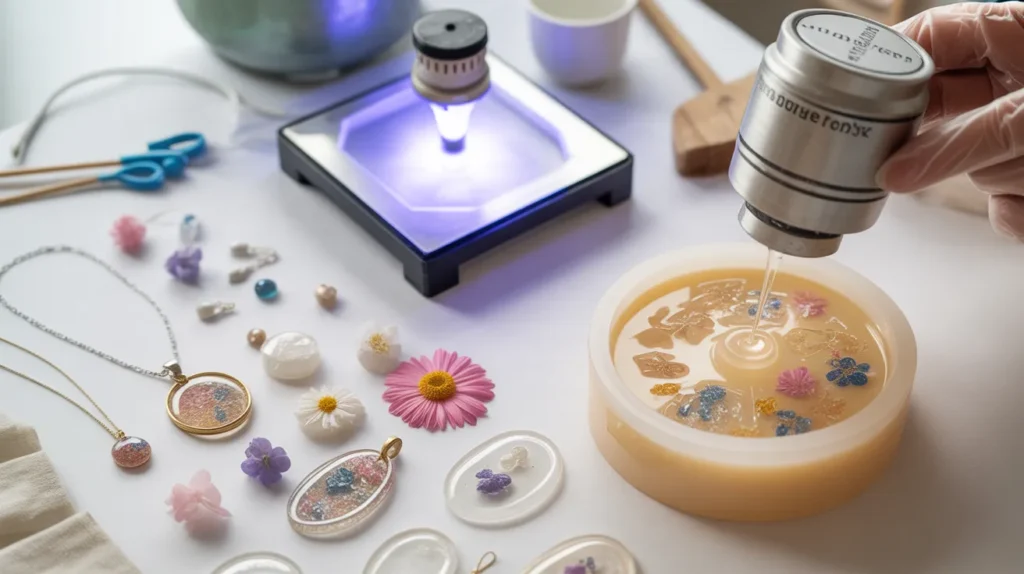
If you’re wondering is uv resin or epoxy resin better for jewelry, you’re not alone. Choosing the right resin directly affects the quality, durability, and appearance of your finished pieces.
In jewelry making, resin is more than just a clear coating. It determines how strong your pendant will be, how glossy your earrings look, how resistant your design is to yellowing, and how long it lasts with daily wear. Using the wrong type can lead to soft surfaces, bubbles, cracks, or fading over time.
UV resin and epoxy resin work differently. UV resin cures quickly under a UV lamp and is ideal for small, thin jewelry projects. Epoxy resin is a two-part system that takes longer to cure but offers better depth and strength for thicker molds and layered designs. Because of these differences, the best choice depends on your project type, skill level, and desired finish.
Understanding the comparison between UV resin vs epoxy resin helps you avoid costly mistakes and achieve professional results. In this guide, you’ll learn exactly how they differ in curing time, durability, clarity, safety, and cost so you can confidently decide which resin is best for your jewelry projects.
2️⃣ What Is UV Resin? (Quick-Cure Craft Resin Explained)
UV resin is a single-component liquid resin that hardens when exposed to ultraviolet (UV) light. Unlike traditional two-part systems, it does not require mixing with a separate hardener. Once placed under a UV lamp or direct sunlight, it cures within minutes.
How UV Resin Works
UV resin contains special photo-initiators that react to ultraviolet light. When exposed to a UV lamp, a chemical reaction starts instantly, turning the liquid into a solid, glossy surface. Most thin layers cure in 1–5 minutes, depending on the lamp strength and thickness.
Because of this fast curing process, it is often called a quick-dry or instant curing resin.
Best Uses in Jewelry Making
UV resin works best for:
- Small charms and pendants
- Doming over flat surfaces
- Thin layers and detailed molds
- Sealing stickers, glitter, or decals
- Quick repairs on resin pieces
It performs especially well in shallow molds where light can easily penetrate the entire piece.
Advantages of UV Resin
- No mixing required – beginner-friendly
- Fast curing time – ideal for quick projects
- High-gloss finish – smooth and shiny surface
- Low waste – use only what you need
- Great for small designs – perfect for earrings and charms
Limitations to Consider
- Not suitable for thick or deep pours
- Can remain sticky if under-cured
- Requires a UV lamp for consistent results
- May yellow faster over time compared to some high-quality casting resins
Who Should Use It?
UV resin is ideal for beginners, hobby crafters, and jewelry makers who prefer fast results and work mainly on small, thin pieces. It simplifies the process and reduces measuring errors, making it a practical option for quick creative projects.
3️⃣ What Is Epoxy Resin? (Two-Part Casting Resin Guide)
Epoxy resin is a two-part resin system made of resin and hardener. These two components must be mixed in a specific ratio before use. Once combined, a chemical reaction begins that slowly transforms the liquid mixture into a hard, durable solid.
Unlike quick-cure craft resins, this type does not require UV light. It cures naturally at room temperature, usually within 24 to 72 hours depending on the formula, thickness, and environment.
How Epoxy Resin Works
When the resin and hardener are mixed correctly, they create a controlled chemical reaction called curing. This process generates heat and gradually hardens the material. The mixture has a limited working time (pot life), giving you enough time to pour, remove bubbles, and adjust your design before it sets.
Accurate measuring and thorough mixing are essential. Incorrect ratios can result in soft spots, sticky surfaces, or incomplete curing.
Best Uses in Jewelry Making
Epoxy resin is ideal for:
- Thick molds and deep pours
- Layered jewelry designs
- Embedding flowers, shells, or stones
- Large pendants and statement pieces
- Casting rings and bangles
Because it can be poured in thicker layers than UV-based products, it works well for projects that require depth and structure.
Advantages of Epoxy Resin
- Strong and durable finish
- Better for thick or large pieces
- More resistant to scratching
- Longer working time for detailed designs
- Available in non-yellowing formulas
Limitations to Consider
- Requires precise mixing
- Longer curing time
- Higher risk of bubbles if mixed improperly
- Needs a dust-free environment during curing
Who Should Use It?
Epoxy resin is suitable for beginners willing to learn proper mixing techniques, as well as advanced jewelry makers who need strength, depth, and long-term durability. It offers flexibility and structural support that makes it a popular choice for more complex designs.
4️⃣ Curing Time Comparison: Fast UV vs Slow Epoxy
Curing time is one of the biggest differences between UV resin and epoxy resin. It directly affects how quickly you can complete a jewelry project and how much working time you have to perfect your design.
UV Resin: Minutes to Harden
UV resin cures only when exposed to ultraviolet light. Under a proper UV lamp, thin layers typically harden within 1 to 5 minutes. This makes it ideal for small charms, thin pendants, and doming projects.
Because it cures almost instantly under light, there is no long waiting period. However, once placed under the lamp, adjustments are no longer possible. You must finish positioning glitter, inclusions, or decals before curing begins.
Best for:
- Quick jewelry projects
- Small, shallow molds
- Fast production or repairs
Epoxy Resin: Longer Cure, More Working Time
Epoxy resin cures through a chemical reaction after mixing resin and hardener. Depending on the formula, it usually takes 24 to 72 hours to fully harden.
The advantage is a longer working time (pot life). You may have 20–45 minutes to remove bubbles, adjust decorations, and pour multiple layers. This makes it better for detailed, layered, or thick designs.
Best for:
- Deep molds and casting
- Embedding flowers or stones
- Projects requiring careful adjustments
Which Curing Speed Is Better?
Fast curing is perfect if you want speed and efficiency. Slower curing is better if you need flexibility and precision. The right choice depends on whether you value quick results or extended working time for complex jewelry designs.
5️⃣ Durability & Hardness: Which Resin Lasts Longer?
When making jewelry, durability is just as important as appearance. Earrings, pendants, and rings are exposed to daily wear, friction, heat, and sunlight. Choosing a resin that maintains its strength and clarity over time helps prevent scratches, cracks, and yellowing.
Hardness and Scratch Resistance
Epoxy resin generally cures into a harder and more impact-resistant surface, especially when poured in thicker molds. High-quality casting formulas are designed to withstand scratches and minor drops, making them suitable for statement pieces and layered jewelry.
UV resin also cures hard, but it is typically better suited for thin layers and smaller designs. In thicker applications, it may not achieve the same structural strength as casting resin.
Long-Term Wear
For jewelry that will be worn frequently such as rings or larger pendants strong structural integrity matters. Properly mixed and fully cured epoxy resin tends to hold up better under pressure and repeated use.
UV resin performs well for lightweight earrings, charms, and surface coatings. However, in some cases, it may be more sensitive to prolonged exposure to heat or direct sunlight.
Resistance to Yellowing
Both options can yellow over time, especially with UV exposure. Many modern epoxy formulas are labeled as non-yellowing and include UV stabilizers to slow discoloration. UV resin may yellow faster depending on the brand and exposure conditions.
Which One Lasts Longer?
For thick, structural, or high-wear jewelry, epoxy resin usually offers greater long-term durability. For small, decorative, or lightweight pieces, UV resin provides sufficient strength while offering convenience and speed.
6️⃣ Clarity & Finish: Crystal Clear or Glossy Shine?
In jewelry making, clarity and surface finish can determine whether a piece looks handmade or professionally crafted. A high-quality resin should cure with a crystal-clear appearance and a smooth, glossy shine.
Transparency and Optical Clarity
Epoxy resin is well known for its excellent transparency, especially in deeper pours. When mixed correctly and poured slowly, it produces a glass-like finish that works beautifully for embedding flowers, glitter, stones, or decorative elements. High-grade casting formulas are designed to minimize cloudiness and reduce yellowing over time.
UV resin also delivers a clear, high-gloss surface, particularly in thin layers. It is commonly used for doming because it creates a smooth, rounded top that enhances shine. However, in thicker applications, light penetration can be uneven, which may slightly affect clarity.
Bubble Formation
Bubbles are one of the most common issues in resin jewelry.
- Epoxy resin can trap air during mixing. Proper stirring techniques, slow pouring, and gentle heat can help remove bubbles before curing.
- UV resin does not require mixing, which reduces the risk of air bubbles. However, bubbles can still form if the resin is applied too quickly or cured too fast.
Surface Finish
Both options cure with a glossy finish. Epoxy resin levels itself over time, creating a smooth and even surface. UV resin provides a shiny finish almost immediately after curing, making it ideal for quick decorative coatings.
Which Offers Better Visual Results?
For deep, layered, or embedded designs, epoxy resin often provides superior depth and clarity. For small pieces, surface doming, and fast projects, UV resin delivers a bright, glossy shine with minimal effort.
7️⃣ Ease of Use: Which Resin Is More Beginner-Friendly?
For beginners, simplicity and low risk of mistakes are key factors when choosing a resin for jewelry making. The easier the process, the more confident and consistent your results will be.
UV Resin: Simple and Quick
UV resin is often considered more beginner-friendly because it comes ready to use. There is no measuring or mixing required, which eliminates ratio errors. You simply pour it into a mold or bezel and cure it under a UV lamp.
Since it hardens within minutes, beginners can quickly see results and correct mistakes in the next attempt. This makes it ideal for small charms, earrings, and surface doming.
However, beginners must ensure proper light exposure. If the layer is too thick or not cured long enough, the surface may remain sticky.
Epoxy Resin: More Steps, More Control
Epoxy resin requires accurate measuring and thorough mixing of resin and hardener. Beginners need to follow the recommended ratio carefully. Incorrect mixing can lead to soft spots or incomplete curing.
The advantage is longer working time. You can remove bubbles, adjust decorations, and reposition elements before the resin sets. This flexibility can be helpful for detailed or layered designs.
Which Is Easier to Start With?
For someone new to resin jewelry, UV resin is generally easier because it reduces technical steps and delivers fast results. Epoxy resin has a learning curve but offers greater flexibility for complex or larger projects.
If your goal is quick, small jewelry pieces with minimal setup, UV resin is simpler. If you’re willing to learn proper mixing techniques for stronger and thicker designs, epoxy resin provides more creative control.
8️⃣ Cost Comparison: UV Resin vs Epoxy Resin Price Breakdown
When choosing a resin for jewelry projects, cost is an important consideration. Both materials have upfront and long-term expenses, and understanding the difference can help you plan your budget effectively.
UV Resin Costs
UV resin is usually sold in small bottles because it is ideal for thin layers and small designs. While the price per ounce can be higher than epoxy, you use only the amount you need, reducing waste.
Additional costs include a UV lamp if you don’t already have one. A quality lamp is a one-time investment that allows consistent curing, but it adds to the initial setup cost.
Pros for budget-conscious crafters:
- Minimal waste for small projects
- Quick results can save time
- Low mess, reducing cleanup costs
Epoxy Resin Costs
Epoxy resin is sold in larger containers, often in ounces or liters, and requires mixing with a hardener. While the initial purchase may seem more expensive, it is cost-effective for larger pours and multiple pieces.
Additional items, like mixing cups, stir sticks, and molds, may be needed. Because epoxy can be poured in thick layers, one container can last for many projects, making it more economical in the long run.
Pros for long-term projects:
- Better for larger designs
- Can produce multiple pieces from a single batch
- Durable results reduce the need for replacements
Which Option Fits Your Budget?
- For small-scale projects or occasional jewelry making, UV resin is more convenient and reduces upfront waste.
- For larger, frequent, or layered designs, epoxy resin is more cost-effective over time despite the higher initial purchase.
Understanding these differences allows crafters to choose a resin that balances quality, quantity, and project size while staying within budget.
In the next section, we’ll look at safety considerations to ensure your jewelry-making process is healthy and hazard-free.
9️⃣ Safety & Toxicity: Which Resin Is Safer for Jewelry Makers?
Safety is a crucial factor when working with any type of resin. Both UV and epoxy resins involve chemicals that can irritate skin, eyes, or lungs if handled improperly, so understanding their risks is essential for a healthy crafting environment.
UV Resin Safety
UV resin is generally low-odor and contains fewer volatile compounds than some epoxy formulas, making it easier to work with in small spaces. However, it can still cause skin irritation or allergic reactions on contact, so wearing gloves is recommended.
Curing under a UV lamp also exposes users to ultraviolet light. Prolonged exposure to the lamp without proper eye protection may increase the risk of eye strain or damage. Always follow the manufacturer’s safety instructions when using UV lamps.
Epoxy Resin Safety
Epoxy resin contains two components—resin and hardener—both of which can release fumes during mixing and curing. These fumes may irritate the eyes, nose, or lungs. Proper ventilation is essential, and a mask is recommended for sensitive individuals.
Direct contact with uncured epoxy can cause skin sensitization, which may lead to allergic reactions over time. Gloves, protective clothing, and careful handling are important to minimize risks.
Safety Tips for Both Types
- Always wear nitrile gloves to prevent skin contact.
- Work in a well-ventilated area or use a respirator for sensitive individuals.
- Protect eyes with safety glasses when necessary.
- Avoid prolonged exposure to UV lamps, and never look directly at the light.
- Keep resins away from children and pets.
Conclusion
Both UV and epoxy resins can be used safely if proper precautions are followed. UV resin is convenient and low-odor, making it beginner-friendly, while epoxy resin requires more careful handling due to fumes and chemical contact. Understanding the safety requirements ensures a healthy, enjoyable crafting experience while producing high-quality jewelry pieces.
🔟 Project Type Comparison: Which Resin Is Best for Different Jewelry Styles?
Choosing the right resin often depends on the type of jewelry you want to create. Each resin performs differently depending on thickness, mold type, and design complexity.
Small Charms and Pendants
For tiny charms, thin pendants, and delicate pieces, UV resin is ideal. Its quick curing time allows for rapid production, and the glossy finish highlights fine details. Minimal mixing reduces mistakes, making it perfect for beginners or quick projects.
Doming Projects
Doming involves creating a rounded, glossy layer over a flat surface. UV resin works best here because it cures evenly in thin layers, producing a smooth, glass-like finish in minutes.
Thick or Layered Jewelry
For deep molds, layered pendants, or pieces that include embedded items like flowers, glitter, or stones, epoxy resin is more suitable. It cures slowly, giving enough working time to position inclusions accurately and achieve a clean, bubble-free finish.
Rings and Bracelets
Jewelry that requires structural strength, such as rings or bracelets, benefits from epoxy resin. Its durability and hardness ensure the piece withstands daily wear without cracking or bending.
Surface Coatings and Repairs
If you’re sealing a surface, adding a glossy top layer, or fixing a small imperfection, UV resin is convenient. It can cure in minutes, providing a protective layer without waiting for hours.
Quick Summary
| Jewelry Type | Recommended Resin | Reason |
| Small charms & pendants | UV resin | Fast curing, easy handling, highlights detail |
| Doming projects | UV resin | Smooth, glossy, quick finish |
| Thick or layered pieces | Epoxy resin | Longer working time, strong structure, better for embedded items |
| Rings & bracelets | Epoxy resin | Durable, scratch-resistant, withstands daily wear |
| Surface coatings & repairs | UV resin | Quick, convenient, minimal tools needed |
Understanding the strengths of each resin allows crafters to choose the right material for their project, ensuring professional results every time.
1️⃣1️⃣ Pros and Cons Table: Side-by-Side Comparison
To make choosing the right resin easier, here’s a clear side-by-side comparison highlighting the strengths and limitations of UV and epoxy resin for jewelry projects.
| Feature / Factor | UV Resin | Epoxy Resin |
| Curing Time | Fast – cures in minutes under UV light | Slow – takes 24–72 hours depending on thickness |
| Ease of Use | Very beginner-friendly, no mixing required | Requires accurate measuring and thorough mixing |
| Durability & Hardness | Suitable for small, thin pieces, less durable in thick pours | Strong, hard, and resistant to scratches and wear |
| Clarity & Finish | Glossy and clear in thin layers, ideal for doming | Excellent clarity, ideal for deep pours and embedding items |
| Working Time | Very short; adjustments must be made before curing | Longer working time allows repositioning and bubble removal |
| Cost | Higher per ounce, minimal waste for small projects | Economical for large or multiple pieces despite higher initial cost |
| Safety & Fumes | Low odor, fewer fumes, minimal ventilation required | May release fumes; proper ventilation and gloves recommended |
| Best Use Cases | Small charms, doming, surface coatings, quick projects | Thick molds, layered pieces, rings, bracelets, embedded decorations |
| Limitations | Not suitable for thick or large pours, may yellow faster | Learning curve for beginners, longer curing time |
This table makes it easy to see which resin fits your project type, skill level, and time constraints. Choosing the right material ensures your jewelry looks professional and lasts for years.
1️⃣2️⃣. FAQs
1️⃣ What is the main difference between UV resin and epoxy resin?
UV resin cures quickly under a UV lamp and is ideal for small jewelry pieces, while epoxy resin is a two-part system that cures slowly and is better for thick or layered designs.
2️⃣ Can UV resin be used for thick jewelry molds?
No, UV resin works best for thin layers and small molds. Thick pours may not cure evenly and can remain sticky.
3️⃣ Is epoxy resin better for embedding flowers and stones?
Yes, epoxy resin allows longer working time, making it perfect for embedding flowers, glitter, stones, or other inclusions in pendants and layered jewelry.
4️⃣ Which resin is easier for beginners to use?
UV resin is more beginner-friendly because it requires no mixing, has fast curing, and reduces mistakes compared to epoxy resin.
5️⃣ Does epoxy resin yellow over time?
Some epoxy resins may yellow with exposure to sunlight. High-quality non-yellowing formulas with UV stabilizers are available for long-lasting clarity.
6️⃣ Can UV resin be used for doming jewelry?
Yes, UV resin is ideal for doming because it cures quickly and creates a smooth, glossy, glass-like surface on flat pieces.
7️⃣ How long does epoxy resin take to fully cure?
Epoxy resin typically cures within 24–72 hours depending on the thickness, temperature, and brand. Full hardness may take longer in deep molds.
8️⃣ Is UV resin safe to use indoors?
UV resin is low-odor and generally safe in small, well-ventilated areas. Gloves and eye protection are recommended, especially when using a UV lamp.
9️⃣ Which resin is more durable for rings and bracelets?
Epoxy resin is stronger and more scratch-resistant, making it better for jewelry that experiences daily wear, such as rings and bracelets.
🔟 How do I avoid bubbles in resin jewelry?
For epoxy resin, mix slowly, pour gently, and use a heat gun or torch to remove trapped air. For UV resin, pour in thin layers and avoid shaking the bottle.
1️⃣3️⃣ Final Verdict: Is UV Resin or Epoxy Resin Better for Jewelry?
When deciding is uv resin or epoxy resin better for jewelry, the answer depends on your project type, skill level, and desired results. Both options have distinct strengths and limitations that make them suitable for different styles of jewelry.
UV resin is perfect for small, thin pieces, quick projects, and doming. Its fast curing time, beginner-friendly application, and glossy finish make it ideal for charms, earrings, and surface coatings. However, it is less durable in thick pours and may yellow faster over time.
Epoxy resin, on the other hand, is ideal for thick molds, layered pendants, rings, and bracelets. Its slower curing time allows for precise adjustments and embedding of decorative items. It offers greater durability, scratch resistance, and long-term clarity, making it better for high-wear jewelry pieces.
In summary:
- Choose UV resin for speed, ease of use, and small decorative projects.
- Choose epoxy resin for durability, depth, and complex or structural designs.
Understanding these differences ensures you select the right resin for your jewelry-making goals, helping you create professional, long-lasting pieces every time.