
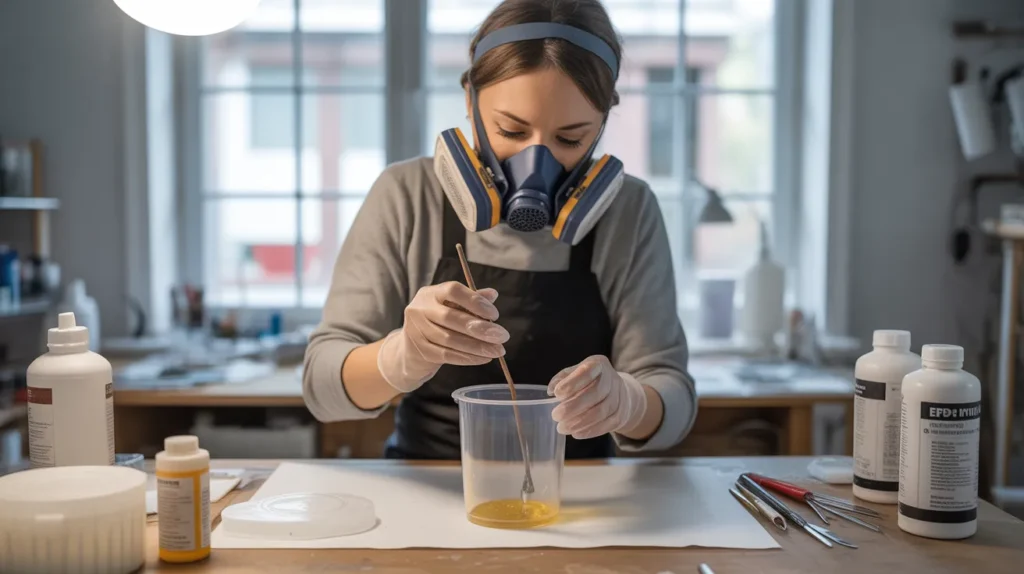
1. Quick Answer: Is Art Resin Safe to Use Without a Mask?
Is art resin safe to use without a mask?
In some situations, yes but it’s not the safest choice.
Most art resins are formulated to be low in VOCs (volatile organic compounds), which means they produce fewer strong fumes than industrial epoxy products. If you are working on a small project in a well-ventilated area such as a room with open windows and good airflow you may not notice any immediate discomfort without a mask.
However, during mixing and curing, art resin still releases vapors. Even if the smell is mild, those fumes can irritate your throat, nose, or lungs, especially in enclosed spaces. Some people may experience headaches, dizziness, or mild breathing discomfort. Repeated exposure over time can increase the risk of developing sensitivity or allergic reactions.
It may be lower risk if:
You are working in a large, well-ventilated space
The project is small
Exposure time is short
You are not sensitive to chemicals
You should wear protection if:
You are indoors with limited airflow
You are doing large pours
You work with resin frequently
You have asthma or respiratory issues
Final verdict: While art resin is generally safer than many industrial resins, using it without a mask carries some risk especially indoors. For better long-term safety, wearing a proper respirator and ensuring good ventilation is the smarter option.
2. What Happens When You Breathe Art Resin Fumes?
When epoxy resin is mixed and begins to cure, it releases vapors into the air. These vapors may be low in odor, but they can still affect your body when inhaled especially in enclosed or poorly ventilated spaces.
Short-Term Effects
Breathing resin fumes for a short period may cause:
- Headaches
- Dizziness or lightheadedness
- Throat or nose irritation
- Watery eyes
- Mild nausea
These symptoms usually happen when airflow is limited or when a large amount of resin is being used. Once fresh air is introduced, discomfort often improves.
Why Vapors Are Released
Art resin works through a chemical reaction between the resin and hardener. During this curing process, small amounts of volatile compounds can enter the air. Even products labeled “low VOC” may release minor fumes while curing.
It’s important to understand that low odor does not mean zero exposure. Some vapors are not easily detected by smell but can still irritate sensitive individuals.
Long-Term Exposure Risks
Repeated inhalation over weeks or months may increase the risk of:
- Respiratory sensitization (developing a reaction over time)
- Chronic throat or lung irritation
- Allergic responses
- Increased sensitivity to chemical fumes
Once someone becomes sensitized, even small amounts of exposure can trigger stronger reactions.
Higher-Risk Situations
Fume concentration increases when:
- The workspace has poor ventilation
- Large resin pours are done
- Work sessions last several hours
- The room is small or enclosed
Proper airflow significantly reduces airborne concentration and lowers health risks.
Key Takeaway
Breathing resin fumes occasionally in a well-ventilated space may cause only mild, temporary irritation. However, repeated or prolonged exposure especially indoors can lead to more serious respiratory issues over time. Maintaining good ventilation and minimizing direct inhalation are essential for safer resin work.
3. When Is It Safe to Use Art Resin Without a Mask?
There are limited situations where working without respiratory protection may present lower risk. Safety mainly depends on ventilation, project size, exposure time, and individual sensitivity.
Below are conditions where risk is generally reduced:
1. Excellent Ventilation
If you are working in a large, open space with strong airflow such as open windows on opposite sides of the room or active exhaust fans airborne vapors are diluted quickly. Good air circulation is the most important safety factor.
2. Small-Scale Projects
Mixing and pouring a small amount of resin releases fewer vapors compared to large or deep pours. Short crafting sessions with minimal material reduce overall exposure.
3. Short Working Time
Brief tasks, such as mixing, pouring, and stepping away while the piece cures in a ventilated area, lower the amount of time you are breathing nearby air.
4. Low-VOC, Art-Grade Resin
Many art-focused epoxy products are designed to have lower volatile emissions compared to industrial formulas. While this reduces odor and vapor intensity, it does not eliminate fumes completely.
5. No Respiratory Sensitivities
Individuals without asthma, allergies, or chemical sensitivities are generally less likely to experience irritation from mild exposure.
Important Considerations
Even in favorable conditions, safety is not guaranteed. Vapor levels can build up quickly in small rooms. Temperature, humidity, and the amount of resin used can also affect fume intensity. Working without a mask may be lower risk in well-ventilated, short-duration situations. However, consistent ventilation and awareness of symptoms remain essential for safe resin use.
4. When You MUST Wear a Mask (Non-Negotiable Situations)
There are situations where respiratory protection is not optional it is essential. In these cases, vapor levels or airborne particles can reach concentrations that increase health risks, especially with repeated exposure.
1. Poor or No Ventilation
If you are working in a closed room, basement, garage, or small studio without open windows or active airflow, vapors can build up quickly. Limited air circulation allows fumes to concentrate, increasing the chance of headaches, throat irritation, or breathing discomfort.
2. Large Resin Pours
The more material you mix and pour, the more vapors are released during the chemical reaction. Deep pours, large canvases, tabletops, or multiple projects at once significantly increase airborne exposure.
3. Long Working Sessions
Extended crafting periods mean prolonged exposure. Spending several hours mixing, pouring, and monitoring curing pieces raises cumulative inhalation levels, even if the odor seems mild.
4. Sanding or Drilling Cured Resin
Once resin has fully cured, it becomes solid and stable. However, sanding, cutting, or drilling creates fine dust particles. These particles can be easily inhaled and may irritate the lungs. A proper respirator is strongly recommended during any finishing work.
5. If You Have Respiratory Conditions
Individuals with asthma, allergies, or chemical sensitivities are more vulnerable to irritation. Even low-level vapors can trigger symptoms more quickly than in others.
6. High-Temperature Environments
Warmer conditions can increase vapor release during curing. Working in hot, enclosed spaces may intensify airborne exposure.
Bottom Line
Whenever airflow is limited, the project is large, exposure time is long, or dust is being created, wearing a properly fitted respirator is the safest choice. Preventive protection is far easier than dealing with long-term respiratory issues.
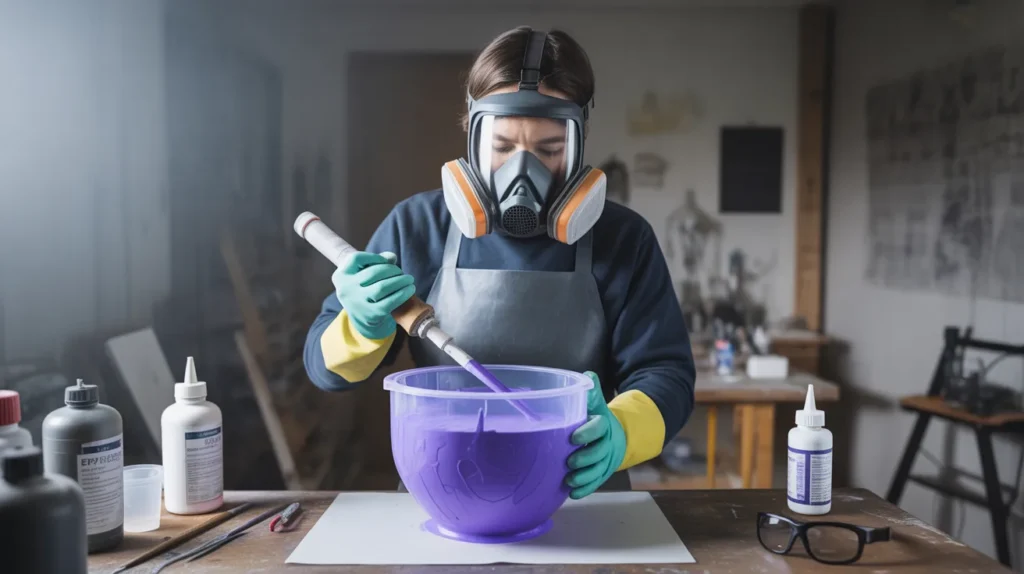
5. Health Risks of Using Art Resin Without Protection
Working with epoxy products without proper protection can affect your health, especially if exposure happens regularly or in poorly ventilated spaces. While many art-grade resins are formulated to be low in odor and lower in VOCs, they still release vapors during mixing and curing.
Below are the main health risks associated with unprotected exposure.
Short-Term Effects
These symptoms may appear during or shortly after working with resin:
- Headaches
- Dizziness or lightheadedness
- Throat and nose irritation
- Watery or burning eyes
- Mild nausea
These reactions are usually temporary and improve once you move into fresh air. However, frequent short-term symptoms are a sign that ventilation may not be adequate.
Respiratory Irritation
Inhaling vapors repeatedly can irritate the airways. You may notice:
- Persistent coughing
- Tightness in the chest
- Shortness of breath
People with asthma or existing lung conditions are at higher risk and may experience stronger reactions even with mild exposure.
Skin and Sensitization Risks
Although breathing fumes is a primary concern, repeated exposure to epoxy vapors can contribute to chemical sensitization. This means your body becomes more reactive over time. Once sensitized, even small amounts of exposure may trigger stronger symptoms.
Sensitization can lead to:
- Allergic-type reactions
- Increased respiratory discomfort
- Greater sensitivity to chemical odors
This condition can be long-lasting and difficult to reverse.
Long-Term Exposure Concerns
Chronic exposure in enclosed or poorly ventilated environments may increase the risk of ongoing respiratory irritation. While art resins are generally considered safer than industrial-grade epoxy, regular unprotected use still carries cumulative risk.
Key Takeaway
Occasional exposure in a well-ventilated space may cause only mild irritation. However, repeated or prolonged exposure without protection increases the risk of respiratory issues and chemical sensitivity. Taking preventive safety steps helps protect both short-term comfort and long-term health.
6. What Type of Mask Is Best for Art Resin?
Choosing the right mask depends on what stage of the project you are working on. Vapors released during mixing and curing require different protection than dust created while sanding or drilling.
Below is a clear breakdown of the most common options.
1. Dust Mask (Basic Disposable Mask)
A simple dust mask is designed to block large particles such as sawdust or debris. It does not protect against chemical vapors.
- Suitable for: light sanding with minimal dust
- Not suitable for: mixing or pouring resin
This option offers the lowest level of protection and should not be relied on for vapor control.
2. N95 Mask
An N95 respirator filters out fine airborne particles. It is effective for:
- Sanding cured resin
- Drilling or shaping hardened pieces
However, like a basic dust mask, it does not filter chemical fumes. It protects against particles, not vapors.
3. Organic Vapor Respirator (Best Overall Choice)
An organic vapor respirator with replaceable cartridges is the most effective option for resin work involving fumes.
It is designed to:
- Filter chemical vapors released during mixing
- Reduce inhalation of curing emissions
- Provide stronger, long-term respiratory protection
For frequent use, indoor projects, or larger pours, this type of respirator is strongly recommended.
Half-Face vs Full-Face Options
- Half-face respirators protect the nose and mouth and are suitable for most projects.
- Full-face respirators also protect the eyes, which may be helpful for extended sessions or highly sensitive individuals.
Key Recommendation
For mixing and pouring, an organic vapor respirator with properly fitted cartridges provides the highest level of protection. For sanding cured material, an N95 mask or higher-rated particulate respirator is appropriate. Selecting the correct mask for the task significantly reduces inhalation risks and supports safer long-term resin work.
7. Is Art Resin Safe After It Cures?
Once epoxy resin has fully cured, it undergoes a chemical reaction that transforms it from a liquid to a solid, inert surface. At this stage, it no longer releases harmful vapors, and the risk of inhalation or respiratory irritation is minimal.
Cured Resin Safety
- Touching: Fully cured resin is generally safe to handle. Gloves are still recommended if you are unsure whether the curing is complete.
- Indoor Use: Once hardened, it can be displayed or used in home environments without special ventilation.
- Food Contact: Only resins labeled as food-safe should be used for items that come into contact with food or drinks. Not all cured resin products are suitable for food use.
Dust Risks from Sanding or Cutting
Even though cured resin is inert, mechanical processes like sanding, cutting, or drilling can produce fine dust particles. These particles are not safe to breathe and can irritate the lungs. Using a particulate respirator or N95 mask is recommended during any finishing work.
Off-Gassing After Curing
Properly cured resin produces minimal to no off-gassing. However, curing conditions such as temperature, humidity, or using excessive resin may cause incomplete reactions, leaving small amounts of residual chemicals. Ensuring full curing according to the manufacturer’s instructions minimizes this risk.
Key Takeaway
Fully cured resin is much safer than uncured material. It is inert, low-risk for indoor use, and safe to handle. The only remaining concern is dust from sanding or cutting, which requires appropriate protective gear to prevent respiratory irritation.
8. Expert Safety Checklist for Resin Artists (2026 Standard)
Working with epoxy products can be safe and enjoyable if proper precautions are followed. Experts recommend a combination of protective gear, ventilation, and best practices to minimize exposure to fumes and dust. Below is a practical safety checklist for resin artists in 2026.
1. Ensure Proper Ventilation
- Work in a well-ventilated room or studio.
- Open windows on opposite sides to create cross-flow of air.
- Use exhaust fans or air purifiers to reduce airborne vapors.
2. Wear Appropriate Protective Gear
- Gloves: Nitrile gloves protect skin from irritation and sensitization.
- Respirator: An organic vapor respirator is best for mixing and pouring; an N95 or particulate mask works for sanding cured pieces.
- Eye Protection: Safety goggles prevent accidental splashes into the eyes.
3. Manage Project Size and Exposure
- Mix small batches to reduce fume concentration.
- Limit time spent near curing resin.
- Step away during curing whenever possible.
4. Maintain Workspace Safety
- Keep your area free of clutter to prevent spills.
- Avoid eating or drinking near resin to prevent accidental ingestion.
- Store resin components in a cool, dry, and labeled location.
5. Monitor Health and Symptoms
- Pay attention to headaches, dizziness, throat irritation, or coughing.
- Take breaks and step outside for fresh air if any symptoms occur.
- Stop using a resin product immediately if you experience persistent reactions.
6. Handle Dust Safely
- Sanding or drilling cured resin produces fine dust; always wear a particulate mask.
- Clean the workspace with a damp cloth or vacuum equipped with a HEPA filter to prevent airborne dust.
7. Follow Manufacturer Guidelines
- Always read the product’s safety data sheet (SDS).
- Follow recommended curing times and temperatures.
- Use products labeled low-VOC if possible for reduced exposure.
Key Takeaway
By combining proper ventilation, protective gear, safe handling, and monitoring for symptoms, resin artists can significantly reduce health risks while working. Following this expert checklist ensures both short-term comfort and long-term safety for creative projects.
9. FAQs
1. Can epoxy fumes be harmful if inhaled for a short time?
Yes. Even brief exposure to resin vapors can cause mild irritation to the throat, nose, and eyes. In poorly ventilated spaces, these fumes can lead to headaches, dizziness, or coughing. Using proper airflow and a respirator helps reduce risk.
2. How important is resin ventilation when working indoors?
Very important. Proper ventilation dilutes airborne VOCs and vapors, reducing respiratory irritation. Open windows, fans, or air purifiers are recommended when mixing or pouring resin, especially for larger projects.
3. Do I need a mask for sanding cured resin?
Yes. Sanding or drilling cured pieces creates fine epoxy dust particles, which can irritate the lungs. A particulate mask, such as an N95 respirator, is recommended to prevent inhalation of dust.
4. Can repeated exposure lead to resin sensitization?
Repeated exposure to resin fumes or skin contact can increase the risk of chemical sensitization. Once sensitized, even small amounts of vapors can trigger stronger allergic or respiratory reactions. Wearing gloves and using a respirator helps prevent this.
5. Is low-VOC resin completely safe to breathe?
Low-VOC formulations reduce odor and chemical emissions, but they do not eliminate fumes entirely. Even with low-VOC products, prolonged or repeated exposure without proper ventilation can cause irritation or respiratory discomfort.
6. Is cured resin completely safe to handle?
Yes, fully cured resin is largely inert and safe to touch. The main risk comes from sanding or cutting the hardened material, which produces dust. Protective gloves and a particulate mask are recommended during any finishing work.
7. What kind of respiratory protection works best for resin projects?
For mixing and pouring, an organic vapor respirator with replaceable cartridges is the safest choice. For sanding cured resin, an N95 or higher-grade particulate mask is sufficient. Always ensure a proper fit to maximize protection.
8. Can working with resin cause long-term lung problems?
Long-term risks are mainly associated with frequent exposure in poorly ventilated areas without protection. Chronic inhalation of vapors or dust can cause respiratory irritation or sensitization over time. Proper ventilation and protective gear minimize these risks.
10. Final Verdict:
So, is art resin safe to use without a mask? The answer is nuanced. While some low-VOC art resins release minimal fumes, exposure to any resin vapor can irritate your respiratory system, eyes, and skin especially in enclosed or poorly ventilated spaces.
For small projects in a well-ventilated area, occasional use without a mask may not cause noticeable immediate effects for healthy individuals. However, repeated exposure, large pours, or working in confined indoor spaces significantly increases health risks, including respiratory irritation and chemical sensitization.
Key Recommendations for Safe Use:
- Always prioritize ventilation open windows, use fans, or work outdoors.
- For mixing and pouring, using a respirator with organic vapor cartridges offers the highest protection.
- For sanding or cutting cured resin, a particulate mask or N95 respirator is necessary to avoid inhaling fine dust.
- People with asthma, allergies, or chemical sensitivities should always wear a mask, regardless of project size or ventilation.
Bottom Line: While low-odor resin may feel safe, using it without a mask carries unnecessary risk. Protecting your lungs and overall health with proper respiratory gear is the safest approach for both beginners and experienced resin artists.