
1. Introduction
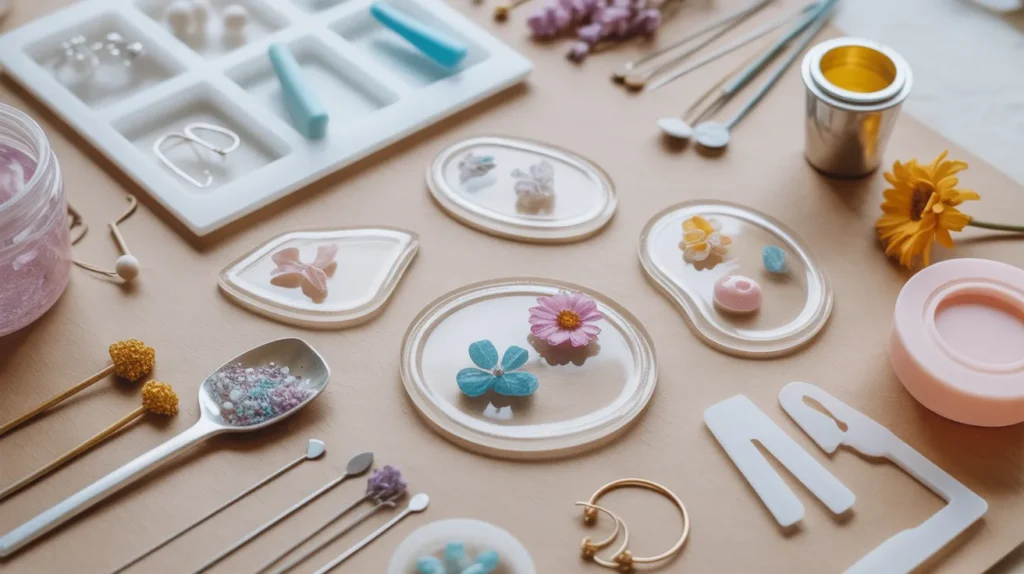
Resin jewellery is a type of handmade jewelry created by mixing liquid resin with a hardener (or curing it with UV light) and pouring it into molds or bezels to form decorative pieces. Once cured, the resin becomes hard, glossy, and glass-like, making it perfect for earrings, pendants, rings, bracelets, and charms.
If you’re learning how to make jewellery with resin, the first step is understanding what resin actually is and why it’s so popular in DIY jewelry making.
What Is Resin?
Resin is a synthetic liquid material that starts as a thick, clear solution. After mixing (in the case of epoxy resin) or exposing it to UV light (in the case of UV resin), it hardens into a solid plastic-like material.
There are two main types used in jewelry making:
- Epoxy resin – Mixed in two parts (resin + hardener). It usually takes several hours to cure fully.
- UV resin – A single-component resin that hardens quickly under a UV lamp.
Both types create a smooth, transparent finish that looks similar to glass but is more lightweight and durable.
Why Is Resin Jewellery So Popular?
Resin jewellery has become extremely popular because it is:
- Easy for beginners to learn
- Affordable to start
- Highly customizable
- Lightweight yet durable
- Perfect for creative designs
You can add dried flowers, glitter, gold flakes, pigments, alcohol inks, small charms, or even photos inside the resin. This makes every piece unique and personal.
What Does Resin Jewellery Look Like?
Resin jewelry can be:
- Crystal-clear and minimalist
- Colorful and abstract
- Floral and nature-inspired
- Ocean-themed with blue waves
- Personalized with names or initials
Because resin is transparent, it allows you to create layered effects and suspended designs that look professional even for beginners.
Is Resin Jewellery Good for Beginners?
Yes — resin jewelry is one of the most beginner-friendly crafts. If you are researching how to make jewellery with resin, you’ll be happy to know that you don’t need advanced skills. With basic tools, a simple resin kit, and proper measurements, you can start creating beautiful handmade pieces at home. Once you understand how resin cures and how to mix it correctly, the process becomes simple and enjoyable.
2. Types of Resin for Making Jewellery
Choosing the right resin is important because it affects the finish, curing time, durability, and overall quality of your jewelry. Not all resins work the same way, so understanding the differences will help you get better results.
1. Epoxy Resin
Epoxy resin is the most commonly used option for jewelry making. It comes in two parts: resin and hardener. These must be mixed in the correct ratio before pouring.
Best for:
- Earrings, pendants, rings
- Deep molds
- Beginners who want more working time
Advantages:
- Crystal-clear finish
- Strong and durable
- Good for embedding flowers, glitter, or charms
- Slower curing time allows corrections
Disadvantages:
- Takes 8–24 hours to fully cure
- Requires careful measuring and mixing
2. UV Resin
UV resin is a one-part resin that cures under a UV lamp. It hardens within minutes when exposed to UV light.
Best for:
- Small pieces
- Quick projects
- Thin layers and coatings
Advantages:
- Very fast curing
- No mixing required
- Easy for small repairs
Disadvantages:
- Not ideal for thick pours
- Requires a UV lamp
- Slightly more expensive per gram
3. Casting Resin
Casting resin is designed for deeper pours. It has a thinner consistency, which helps reduce bubbles in larger molds.
Best for:
- Thick pendants
- Larger decorative pieces
Advantages:
- Better bubble release
- Good clarity
- Suitable for deep molds
Disadvantages:
- Longer curing time
- May not be necessary for small jewelry pieces
4. Coating Resin
Coating resin is thicker and mainly used to add a glossy protective layer on top of finished jewelry.
Best for:
- Sealing artwork
- Adding shine to flat surfaces
Advantages:
- High-gloss finish
- Smooth protective layer
Disadvantages:
- Not suitable for deep molds
- Can trap bubbles if poured too thick
Quick Comparison
| Feature | Epoxy Resin | UV Resin | Casting Resin | Coating Resin |
| Mixing Required | Yes | No | Yes | Yes |
| Curing Time | Slow | Very Fast | Slow | Medium |
| Best For | Most jewelry | Small pieces | Deep molds | Surface coating |
| Beginner Friendly | Yes | Very easy | Moderate | Moderate |
For most beginners, epoxy resin is the most versatile and budget-friendly option. UV resin is ideal if you want quick results and work on small designs. Understanding these differences will help you choose the right product for your jewelry projects.
3. Essential Tools and Supplies Needed
To create high-quality resin jewelry, you need the right tools and materials. Using proper supplies helps prevent bubbles, uneven surfaces, and curing problems. Below are the essential items and how they compare.
1. Silicone Molds vs Open Bezels
These are used to shape your jewelry pieces.
Silicone Molds
- Flexible and reusable
- Easy to demold
- Available in many shapes (hearts, circles, letters)
- Best for beginners
Open Bezels
- Metal frames with an open center
- Need a backing (like resin tape)
- Give a professional metal-edge finish
Which to choose?
Beginners usually find silicone molds easier to use, while open bezels are better for more detailed or custom designs.
2. Mixing Cups: Plastic vs Silicone
You need cups to measure and mix resin properly.
Plastic Cups
- Affordable
- Disposable
- Good for one-time use
Silicone Cups
- Reusable
- Easy to clean after curing
- More eco-friendly
Which to choose?
If you craft often, silicone cups are more cost-effective in the long run.
3. Stir Sticks: Wooden vs Silicone
Proper mixing prevents sticky or soft results.
Wooden Sticks
- Cheap and widely available
- Disposable
- Can create small air bubbles
Silicone Sticks
- Reusable
- Easier to clean
- Create fewer bubbles
For smoother results, silicone stir sticks are usually better.
4. Bubble Removal Tools: Heat Gun vs Torch
Air bubbles can ruin the final finish.
Heat Gun
- Safer for beginners
- Even heat distribution
- Less risk of burning
Torch
- Removes bubbles quickly
- Stronger heat
- Requires careful handling
For small jewelry pieces, a heat gun is usually safer and easier to control.
5. Colorants: Pigments vs Alcohol Inks
Color adds creativity and uniqueness to each piece.
Resin Pigments
- Thick and opaque
- Strong, vibrant colors
- Great for solid designs
Alcohol Inks
- Transparent
- Create marble and abstract effects
- Ideal for layered designs
Choose pigments for bold colors and alcohol inks for artistic patterns.
6. Jewelry Findings and Hardware
To turn resin pieces into wearable accessories, you need:
- Earring hooks
- Jump rings
- Chains
- Pendant trays
- Pin backs
Look for stainless steel or hypoallergenic materials for better durability and comfort.
7. Safety Supplies
Safety is essential when working with resin.
- Nitrile gloves
- Face mask
- Protective mat
- Well-ventilated workspace
These help protect your skin and lungs while crafting.
Quick Summary
For beginners, the most important tools are:
- Silicone molds
- Measuring and mixing cups
- Stir sticks
- Heat gun
- Basic colorants
- Jewelry hardware
Starting with quality tools makes the process easier and helps you achieve a clean, professional finish.
4. Step-by-Step: How to Make Jewellery with Resin
Creating resin jewelry is simple when you follow the correct process. Below is a clear, beginner-friendly guide to help you achieve smooth, glossy, and professional-looking results.
Step 1: Prepare Your Workspace
- Work in a clean, dust-free area.
- Cover your table with a plastic sheet or silicone mat.
- Wear gloves and ensure good ventilation.
- Keep all tools and decorations ready before mixing.
Preparation prevents mistakes and saves time.
Step 2: Measure and Mix the Resin
If using epoxy resin:
- Measure resin and hardener exactly according to the manufacturer’s ratio (commonly 1:1).
- Pour into a mixing cup.
- Stir slowly for 3–5 minutes.
Mix gently to avoid creating air bubbles. Scrape the sides and bottom of the cup while stirring to ensure everything blends properly.
Step 3: Add Color and Decorations
Once mixed:
- Add a small amount of pigment or alcohol ink.
- Stir gently until the color is even.
- Add glitter, dried flowers, gold flakes, or small charms if desired.
Do not overload the resin with decorations, as this can affect curing.
Step 4: Pour into Molds or Bezels
- Slowly pour the mixture into your silicone mold or metal bezel.
- Fill evenly but avoid overfilling.
Pouring slowly helps reduce trapped air bubbles.
Step 5: Remove Air Bubbles
- Use a heat gun briefly over the surface.
- Move the heat tool quickly to avoid overheating.
Small bubbles will rise and pop, leaving a smooth finish.
Step 6: Let It Cure Properly
For epoxy resin:
- Leave it undisturbed for 8–24 hours.
- Cover with a box to protect from dust.
For UV resin:
- Place under a UV lamp for 2–5 minutes per layer.
Do not touch or move the piece during curing.
Step 7: Demold and Assemble
- Gently remove the piece from the mold.
- Attach jump rings, chains, or earring hooks.
- Sand rough edges if necessary
Final Tips for Best Results
- Always measure accurately.
- Mix slowly and thoroughly.
- Work in thin layers for deeper designs.
- Be patient during curing.
Following these steps will help you create durable, shiny, and beautiful resin jewelry with confidence.
5. Safety Tips When Working with Resin
Resin is safe to use when handled correctly, but it is still a chemical product. Following proper safety steps protects your skin, lungs, and workspace.
Below are simple and important safety guidelines.
1. Work in a Well-Ventilated Area
Always use resin in a room with good airflow.
- Open windows and doors.
- Use a fan to improve air circulation.
- Avoid small, closed spaces.
Proper ventilation reduces exposure to fumes, especially when mixing epoxy resin.
2. Wear Protective Gloves
Liquid resin can irritate the skin.
- Use nitrile gloves (not latex).
- Avoid direct skin contact.
- Clean spills immediately.
If resin touches your skin, wipe it off quickly and wash with soap and water.
3. Use a Mask When Needed
When working for long periods or in limited airflow:
- Wear a respirator mask with appropriate filters.
- Avoid breathing fumes directly.
This is especially important during mixing and heating.
4. Protect Your Eyes
Splashes can happen during mixing.
- Wear safety glasses if needed.
- Mix slowly to avoid splattering.
Eye protection adds an extra layer of safety.
5. Avoid Eating or Drinking While Working
Do not eat, drink, or smoke near your workspace.
This prevents accidental contamination.
6. Keep Resin Away from Children and Pets
Store resin and tools in a safe place.
- Keep lids tightly closed.
- Store in a cool, dry area.
- Keep out of reach of children and animals.
7. Handle Heat Tools Carefully
If using a heat gun or torch:
- Keep it moving to prevent overheating.
- Do not aim at flammable objects.
- Turn it off immediately after use.
8. Allow Full Curing Before Handling
Only touch or wear pieces after they are fully cured.
Uncured resin can still cause irritation.
Final Safety Reminder
Simple precautions make resin crafting safe and enjoyable. Work in a ventilated space, wear protective gear, and handle materials responsibly. A safe setup ensures better results and a healthier crafting experience.
6. Common Mistakes to Avoid When Making Resin Jewellery
Even small errors can affect the final result. Sticky surfaces, bubbles, or dull finishes usually happen because of simple mistakes. Avoiding the following problems will help you achieve smooth and professional-looking pieces.
1. Incorrect Measuring Ratio
One of the biggest mistakes is not measuring resin and hardener correctly.
- Always follow the exact ratio provided by the manufacturer.
- Use measuring cups with clear markings.
Too much or too little hardener can cause soft or sticky results.
2. Poor Mixing
Incomplete mixing prevents proper curing.
- Stir slowly for at least 3–5 minutes.
- Scrape the sides and bottom of the cup.
If the mixture looks cloudy or streaky, it is not fully blended.
3. Mixing Too Fast
Stirring aggressively traps air bubbles inside the resin.
- Mix gently and steadily.
- Avoid shaking the container.
Slower mixing leads to a clearer finish.
4. Not Removing Air Bubbles
Air bubbles can ruin the surface.
- Use a heat gun lightly over the top.
- Let the mixture sit for a few minutes before pouring.
Taking time to remove bubbles improves clarity.
5. Pouring Too Thick at Once
Thick layers can overheat and cure unevenly.
- Pour in thin layers for deep molds.
- Allow each layer to partially cure before adding the next.
Layering helps prevent cracking and overheating.
6. Demolding Too Early
Removing pieces before full curing can cause bending or dents.
- Wait the recommended curing time.
- Make sure the surface feels completely hard before touching.
Patience is key for strong results.
7. Working in a Dusty Area
Dust particles can settle on wet resin.
- Cover your pieces while curing.
- Work in a clean environment.
This keeps the surface smooth and glossy.
8. Ignoring Temperature Conditions
Resin works best at room temperature.
- Avoid very cold rooms.
- Store materials at recommended temperatures.
Cold conditions can slow curing and cause cloudiness.
Final Tip
Most problems happen because of rushing the process. Measure accurately, mix properly, work patiently, and allow enough curing time. Avoiding these common mistakes will greatly improve the quality and durability of your resin jewellery
7. Cost Comparison: Is Resin Jewellery Profitable?
Many beginners wonder whether making resin jewelry is just a hobby or a real income opportunity. The good news is that it can be profitable if you manage costs carefully and price your products correctly.
Let’s break it down clearly.
1. Startup Costs
The initial investment is relatively low compared to many other crafts.
Basic Starter Expenses:
- Resin (epoxy or UV)
- Silicone molds or bezels
- Mixing tools
- Colorants and decorative items
- Jewelry hardware (hooks, chains, jump rings)
- Safety supplies
On average, a beginner can start with a small budget. A basic setup may cost the equivalent of a few finished jewelry pieces.
2. Cost Per Piece
Once you have your tools, the main ongoing cost is materials.
For example:
- Resin used per small pendant is minimal
- A pair of earring hooks is inexpensive
- Decorations like glitter or dried flowers last for many projects
This means the production cost per item is usually low.
3. Selling Price vs Production Cost
Handmade resin jewelry often sells at a higher price because it is unique and artistic.
Example breakdown:
- Estimated material cost per pair of earrings: low
- Selling price: significantly higher than material cost
This creates a good profit margin, especially for custom or personalized designs.
4. DIY vs Buying Wholesale
If you buy handmade resin jewelry from other sellers, you pay retail prices. When you make it yourself, you only pay for materials. This makes crafting more affordable for personal use and profitable for selling.
5. Factors That Affect Profit
Profit depends on:
- Quality of finis
- Unique designs
- Branding and packaging
- Photography and presentation
- Selling platform (online marketplace, social media, local events)
High-quality pieces with creative designs can command higher prices.
6. Is It Worth Starting as a Small Business?
Yes, it can be a good small business idea because:
- Startup costs are low
- Materials are affordable
- Demand for handmade jewelry remains strong
- Customization increases value
However, success depends on consistency, creativity, and proper pricing.
Final Verdict
Resin jewellery can be profitable if you control material costs, maintain high quality, and price your products smartly. With the right approach, it can start as a hobby and grow into a steady side income or small business.
8. Design Ideas & Trends in Resin Jewellery
Resin jewelry is highly versatile, and its creative possibilities are nearly endless. Knowing the latest trends and popular designs can inspire unique pieces that appeal to buyers or make standout personal accessories.
1. Minimalist and Clear Designs
Minimalist jewelry continues to be popular:
- Transparent pendants or rings with simple shapes
- Subtle embedded decorations like tiny flowers or metallic flakes
- Perfect for everyday wear
These designs are elegant, lightweight, and appeal to people who prefer understated accessories.
2. Floral and Nature-Inspired Pieces
Embedding dried flowers, leaves, or even small seeds creates beautiful, nature-inspired designs:
- Layered floral pendants or earrings
- Botanical patterns in circular or heart-shaped molds
- Great for gifts or personalized creations
Floral jewelry gives a delicate, organic feel that resonates with many buyers.
3. Ocean and Water-Themed Jewelry
Ocean-inspired pieces remain trendy in 2026:
- Blue and turquoise resin layers
- Sand, seashells, or tiny pearls embedded inside
- Wavy or layered designs to mimic ocean currents
These pieces are eye-catching and perfect for summer collections.
4. Glitter, Metallic, and Foil Effects
Adding sparkle or metallic accents creates statement pieces:
- Gold or silver leaf flakes
- Fine glitter or shimmering powders
- Marbled effects with metallic pigments
This style is ideal for bold, fashion-forward jewelry.
5. Personalized and Custom Pieces
Customization is a big trend:
- Name or initial pendants
- Resin pieces with photos or small charms
- Personalized color combinations
Custom jewelry appeals to gift buyers and allows creators to charge premium prices.
6. Layered and Multi-Dimensional Designs
Resin’s transparency makes layering possible:
- Multiple pours with different colors or decorations
- 3D embedded elements that create depth
- Unique, one-of-a-kind pieces
Layered designs stand out and give a professional, artistic look.
Final Tip
Experimenting with these trends while adding your own creativity can help you produce jewelry that is stylish, modern, and desirable. Keeping up with popular designs in 2026 ensures your pieces remain relevant and appealing.
9. Best Resin Kits for Beginners
Starting with a good starter kit makes your first projects easier and more enjoyable. The right set should include quality resin, molds, and basic tools so you don’t need to source everything separately. Below are recommended options worth considering.
All‑in‑One Starter Kits
1. Complete UV Resin Kit with Lamp
This type of kit includes a UV lamp, molds, decorative fillers (like glitter and dried flowers), and bottles of fast‑curing resin. It’s ideal if you want quick results because the resin hardens in just a few minutes under UV light.
Why it’s great:
- Fast curing helps beginners see results quickly
- Comes with essential tools and accessories
- Less waiting time compared to traditional epoxy resin
Best for: people who want a simple, ready‑to‑use set.
2. Epoxy Resin Starter Kit with Molds and Tools
These kits include bottles of resin and hardener (usually in a 1:1 ratio), multiple silicone molds, pigments, glitters, measuring tools, and mixing sticks.
Why it’s great:
- Plenty of materials to experiment with designs
- Longer working time lets you adjust colors and layers
- Good balance of tools and decorative pieces
Best for: beginners who want to learn proper mixing and layering techniques.
Kits with Extras for Creativity
3. Craft Sets with Lots of Decorative Elements
Some kits focus on giving you a wide range of colorants, mica powders, glitter, foils, and dried flowers. They may not include a lamp, but they give you freedom to design creative pieces without needing extra supplies.
Why it’s great:
- Lots of creative possibilities
- Good value if you already have basic tools
- Helps you build a variety of unique designs
Best for: crafters who enjoy customization and experimenting.
Quick Comparison
| Feature | UV Resin Kit | Epoxy Starter Kit | Decorative Combo Set |
| Fast curing | ⭐⭐⭐⭐ | ⭐⭐ | ⭐ |
| Easy to use | ⭐⭐⭐⭐ | ⭐⭐⭐ | ⭐⭐ |
| Creative options | ⭐⭐⭐ | ⭐⭐⭐ | ⭐⭐⭐⭐ |
| Tools included | ⭐⭐⭐⭐ | ⭐⭐⭐ | ⭐⭐ |
| Good for beginners | ⭐⭐⭐⭐ | ⭐⭐⭐⭐ | ⭐⭐⭐ |
Tips for Choosing a Kit
- Look for a 1:1 mixing ratio – makes measuring simpler for beginners.
- Ensure molds and basic tools are included – adds convenience and saves cost.
- Check whether a UV lamp is part of the package if you prefer quick curing.
- Start with smaller kits before investing in larger or professional sets.
A quality starter kit removes guesswork and gives you everything you need to start creating beautiful pieces right away. Whether you want fast curing, more decorations, or a thorough introductory set, there’s a beginner‑friendly option available.
10. FAQs
1. What type of resin is best for beginners?
Epoxy resin is ideal for beginners because it has a longer working time and produces a clear, glossy finish. UV resin is better for small, fast-curing projects, while casting resin works well for deeper molds.
2. How long does resin take to cure?
Curing time depends on the resin type and thickness. Epoxy resin usually cures in 8–24 hours, while UV resin hardens in 2–5 minutes under a UV lamp. Room temperature and humidity can also affect curing.
3. Can I embed flowers or charms in resin?
Yes. Resin can safely hold dried flowers, glitter, charms, or pigments. Make sure decorations are dry and pour resin slowly to avoid bubbles.
4. Do I need special tools to start?
No. Basic tools include silicone molds, mixing cups, stir sticks, pigments, and jewelry findings. A UV lamp is needed only for UV resin projects. Starter kits often include everything beginners need.
5. Is resin safe to use at home?
Yes, if handled correctly. Always wear gloves and a mask, work in a well-ventilated area, and avoid skin contact with uncured resin. Fully cured pieces are safe to wear.
6. Can resin pieces be sanded or polished?
Yes. Once fully cured, you can sand rough edges and polish the surface to achieve a smooth, glossy finish, especially for custom-shaped pieces.
7. How do I prevent bubbles in resin?
Mix resin slowly and carefully, pour gently, and use a heat gun or torch lightly to remove trapped air. Letting resin sit for a few minutes before pouring also helps bubbles rise naturally.
8. Can I sell resin jewelry made at home?
Yes. Handmade resin jewelry is popular for personalized gifts and online shops. Focus on unique designs, quality finishes, and good packaging to attract buyers and maximize profit margins.
11. Final Thoughts: Is Resin Jewellery Easy for Beginners?
For anyone wondering how to make jewellery with resin, the good news is that it is beginner-friendly. With the right materials, basic tools, and a little patience, even first-timers can create beautiful, professional-looking pieces.
Resin allows for creative freedom, letting you add glitter, pigments, dried flowers, or charms to make each item unique. Silicone molds and simple jewelry findings make assembly easy, while beginner-friendly kits provide everything you need in one package.
The most important tips for beginners are:
- Measure and mix resin accurately
- Work slowly to avoid bubbles
- Follow curing instructions carefully
- Start with small projects before attempting layered or complex designs
Overall, resin jewelry is a fun, accessible craft that gives beginners a sense of accomplishment quickly. With practice, anyone can make high-quality pieces that are perfect for personal use, gifts, or even selling online.
In short: Learning how to make jewellery with resin is simple, enjoyable, and rewarding for beginners willing to follow the right steps.