
1. Introduction
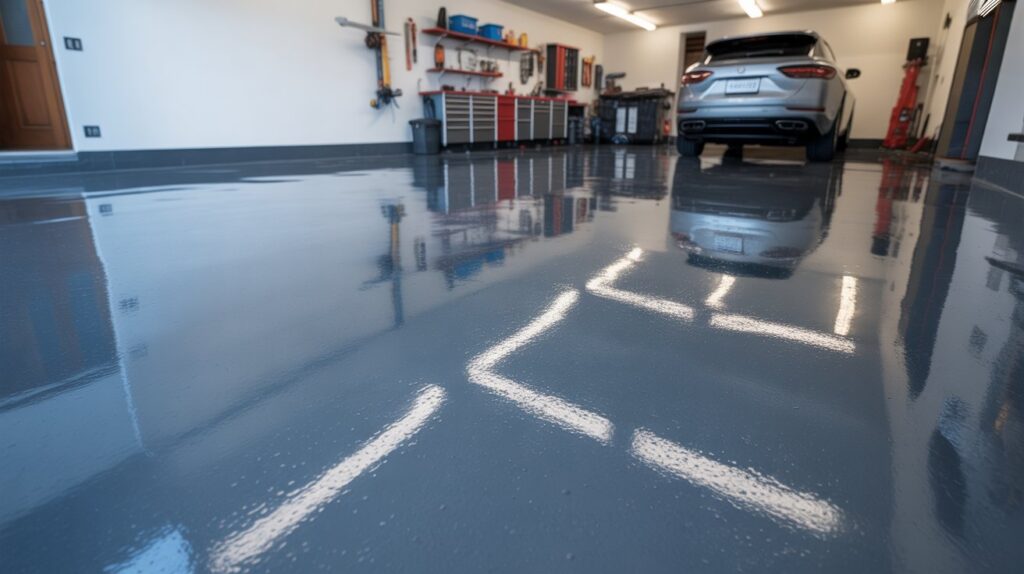
Epoxy garage floors are an easy and effective way to protect your garage while giving it a clean, polished look. They resist stains, chemicals, and daily wear, making your garage easier to maintain. Many homeowners ask, “Is it worth it to epoxy a garage floor?” or “How much does it cost to epoxy a garage floor?” With proper installation, epoxy floors can last 10 20 years, offering long-term durability and value.
In this guide, we’ll cover everything you need to know about epoxy garage floors, including benefits, costs, installation tips, and potential downsides, so you can decide if epoxy is the right choice for your garage.
Table of Contents
2. Durability & Lifespan
When it comes to epoxy garage floors, durability is one of the biggest reasons homeowners choose this coating. Epoxy creates a hard, impact-resistant surface that can withstand daily vehicle traffic, dropped tools, oil spills, and heavy equipment without wearing down quickly. Unlike basic concrete sealers or paint, epoxy forms a long-lasting protective layer that bonds directly with the concrete for stronger performance.
On average, well-installed epoxy garage floors last 10 to 20 years, depending on the product quality, prep work, climate, and how the floor is used. High-grade industrial epoxies and polyaspartic topcoats can push the lifespan even further. Regular cleaning and prompt care for spills can also help maintain the finish.
In simple terms, epoxy offers one of the longest lifespans among garage flooring options, which is why many homeowners consider it a worthwhile upgrade for protecting and extending the life of their concrete floor.
3. Cost Breakdown & Value
When comparing epoxy garage floors, cost is one of the first things homeowners want to understand and for good reason. Epoxy can range from affordable DIY kits to premium professional installations, so knowing what you’re paying for helps you decide how much does it cost to epoxy a garage floor and whether the upgrade is worth the investment.
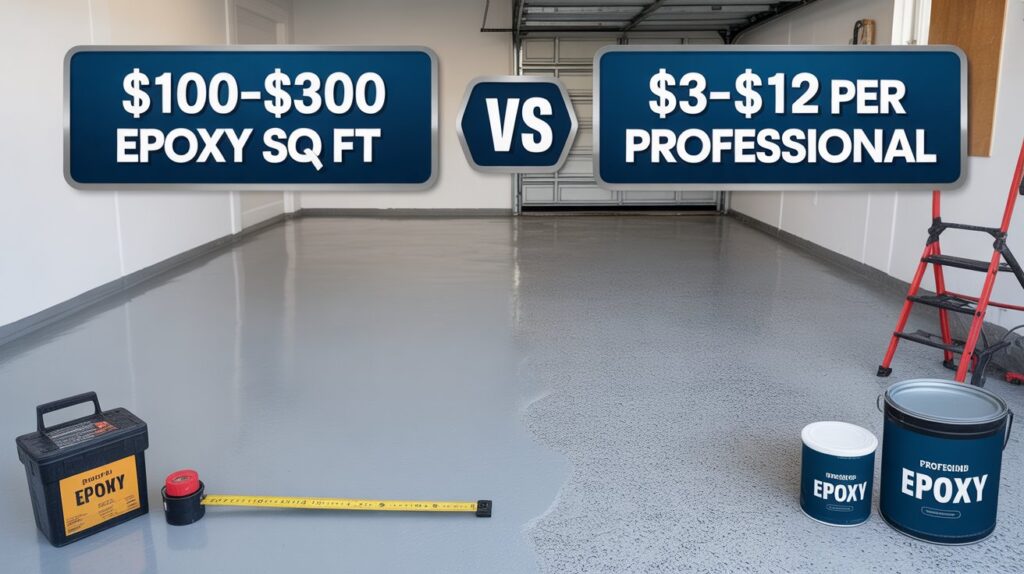
A basic DIY epoxy kit typically costs $100 to $300, but results vary depending on prep work, concrete condition, and product quality. Professional installation, which includes grinding, crack repair, and high-grade materials, usually ranges from $3 to $12 per square foot. Although this is a higher upfront cost, professional coatings generally last longer and provide a smoother, more durable finish.
From a value standpoint, epoxy garage floors offer excellent long-term benefits. They protect your concrete from oil stains, moisture, chemicals, and wear reducing maintenance costs over time. Many homeowners choose epoxy because it enhances the look of the garage while increasing property appeal. Considering the protection and lifespan it delivers, it’s easy to see why many people say it is worth it to epoxy a garage floor.
4. Installation Process & Ease
Installing epoxy garage floors can be straightforward, but the overall difficulty depends on whether you choose a DIY kit or hire a professional installer. Epoxy requires careful surface preparation, which is the most important part of the entire process. The concrete must be cleaned, degreased, repaired, and often mechanically ground to ensure the epoxy bonds properly. Skipping these steps can lead to peeling or uneven results, which is why many homeowners prefer professional installation.
For DIY users, epoxy kits are easier than ever to apply, but they still require time, patience, and a controlled environment. Once mixed, the epoxy has a limited working time, so the application needs to be smooth and quick. Professional installers, however, use industrial equipment and advanced materials, creating a more durable and seamless finish with less risk of mistakes.
Overall, epoxy garage floors are manageable for beginners with the right preparation, but hiring a pro guarantees a stronger, longer-lasting result especially for larger garages or older concrete floors.
5. Chemical, Stain & Impact Resistance
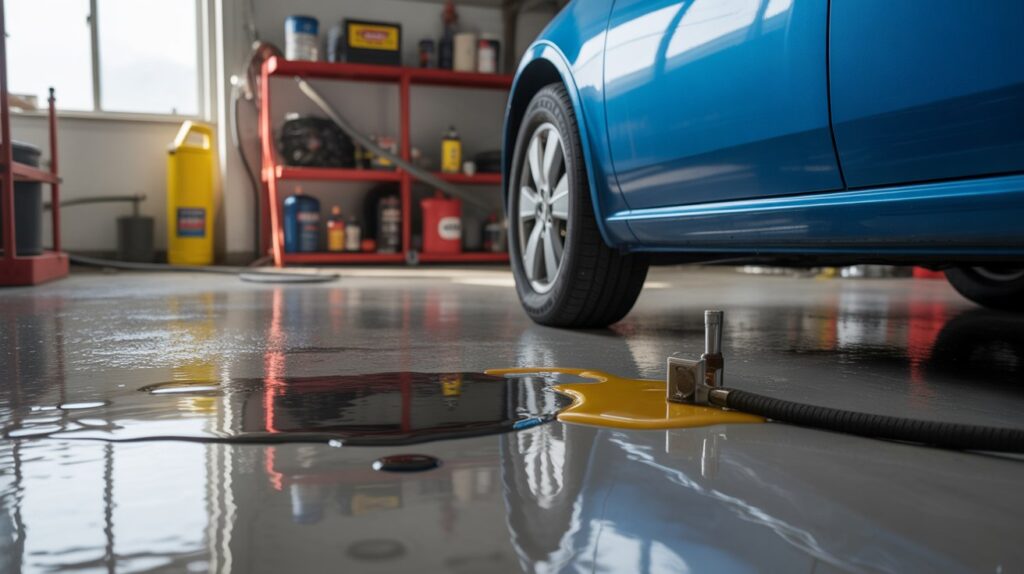
One of the strongest advantages of epoxy garage floors is their ability to resist chemicals, stains, and physical impact. Epoxy creates a non-porous surface that blocks oil, gasoline, brake fluid, road salt, and household chemicals from soaking into the concrete. This makes the garage far easier to keep clean spills simply sit on top of the coating and can be wiped away without leaving marks.
In addition to chemical protection, epoxy is known for its impressive impact resistance. Whether it’s heavy tools dropping, car jacks sliding, or daily vehicle traffic, the hardened surface can withstand force without cracking or chipping. This durability is a major upgrade compared to bare concrete, which absorbs stains quickly and can be damaged by repeated pressure or chemical exposure.
For homeowners looking to protect their concrete and maintain a clean, polished appearance, epoxy garage floors offer reliable long-term performance. Their tough, sealed finish is one of the main reasons epoxy is considered a premium option for garage spaces
6. Slip Resistance & Safety
Safety is an important factor when choosing epoxy garage floors, especially in spaces where water, oil, or dirt can create slipping hazards. While epoxy naturally has a smooth finish, modern coatings are designed with optional additives such as anti-slip flakes, textured finishes, or grip-enhancing powders that increase traction without taking away from the floor’s glossy appearance.
With the right texture added, epoxy floors provide excellent slip resistance even when wet, making them safer for everyday use. This is particularly useful in garages that deal with rainwater from cars, cleaning activities, or chemical spills. Professional installers often recommend a light to medium texture to balance safety and aesthetics.
Overall, epoxy garage floors offer a safe and stable surface when enhanced with the right traction system. Whether you want a high-gloss finish or a more textured surface, epoxy allows you to customise the level of grip to match your safety needs.
7. Appearance, Gloss Levels & Customisation
One of the reasons homeowners love epoxy garage floors is the wide range of design options they offer. Epoxy transforms a plain concrete surface into a clean, polished, and modern-looking space with stunning visual appeal. Whether you prefer a simple solid color or a bold, decorative style, epoxy gives you the freedom to design a garage floor that matches your taste.
Epoxy coatings come in different gloss levels, including matte, satin, and high-gloss finishes. High-gloss epoxy is especially popular because it reflects light beautifully, making the garage look brighter and more open. This shine also highlights the smoothness of the coating, giving your garage a premium, showroom-style appearance.
In terms of customization, epoxy garage floors offer endless possibilities. You can choose from color flakes, quartz textures, metallic swirls, neon pigments, or solid professional tones. Flake systems are ideal for hiding imperfections, while metallic epoxy creates a luxury, marble-like effect that stands out instantly. These design options make epoxy one of the most customizable flooring solutions on the market.
Overall, epoxy doesn’t just protect your garage it elevates the entire look, turning an ordinary space into a stylish and functional part of your home. If you want your garage to look clean, bright, and unique, epoxy is one of the best choices available.
8. Maintenance Requirements
One of the major advantages of epoxy garage floors is how low-maintenance they are compared to other flooring options. Because epoxy forms a seamless, non-porous surface, dirt, dust, and spills don’t penetrate the floor, making cleaning quick and easy. Regular sweeping or vacuuming is usually enough to keep the surface free of debris, while occasional mopping with a gentle detergent restores its shine.
Epoxy floors are also resistant to stains from oil, chemicals, and automotive fluids. Any spills can be wiped away immediately without leaving marks, which reduces long-term maintenance costs. Unlike bare concrete, you won’t need frequent resealing or polishing, which saves both time and money over the years.
For homes with pets or heavy traffic, simple precautions like using floor mats under vehicles or dropping pads under tools can help maintain the finish longer. With minimal effort, epoxy garage floors can stay clean, shiny, and fully functional for many years, making them a practical and attractive choice for any garage.
9. Moisture & Temperature Resistance
Epoxy garage floors are highly resistant to moisture and temperature changes, making them ideal for garages in a variety of climates. Because epoxy forms a seamless, non-porous coating, it prevents water from seeping into the concrete, which can cause cracking, mold, or damage over time. This moisture resistance is particularly important in humid areas or garages prone to leaks and condensation.
In addition, epoxy can handle temperature fluctuations without losing adhesion or cracking. High-quality epoxy formulations remain stable in both hot summers and cold winters, protecting your garage floor from thermal expansion or contraction issues. However, extreme conditions may require specialized epoxy blends or professional installation to ensure maximum durability.
Overall, the moisture and temperature resistance of epoxy garage floors helps maintain a strong, long-lasting surface that keeps your garage safe, clean, and protected, regardless of the weather or environmental conditions.
10. Downsides & Limitations
While epoxy garage floors offer many benefits, it’s important to understand their potential downsides before making a decision. One common limitation is that epoxy can peel or chip if the concrete underneath wasn’t properly prepared or if heavy impact occurs. Poor surface preparation, moisture in the concrete, or applying epoxy over existing coatings can all reduce its lifespan.
Another consideration is that epoxy floors can be slippery when wet, especially if a smooth, high-gloss finish is used without anti-slip additives. Homeowners may need to add textured flakes or grip powders to improve traction and reduce the risk of accidents.
Finally, while epoxy is highly durable, it requires curing time and cannot be applied in very cold or very humid conditions. Some products may also yellow over time if exposed to direct sunlight. Despite these limitations, many homeowners find that the benefits durability, chemical resistance, and visual appeal outweigh the drawbacks, making epoxy garage floors a worthwhile investment when installed correctly.
11. Strength & Thickness Levels
The strength and thickness of epoxy garage floors play a key role in their performance and durability. Epoxy coatings are available in a range of thicknesses, typically measured in mils (1 mil = 0.001 inch). Standard residential epoxy floors are usually 6–10 mils thick, while professional or industrial-grade coatings can reach 20–30 mils. Thicker coatings provide better impact resistance and longer-lasting protection against heavy vehicles, dropped tools, and frequent traffic.
Epoxy is also known for its high compressive and tensile strength, which allows it to resist cracking, chipping, and surface wear over time. When combined with proper surface preparation, thicker epoxy layers create a strong, cohesive bond with the concrete, enhancing overall durability.
By choosing the right strength and thickness for your garage floor, you ensure that your epoxy coating not only looks great but also withstands daily use, chemical spills, and heavy loads for years to come.
12. UV Stability & Yellowing Resistance
Epoxy garage floors are durable and visually appealing, but one factor to consider is their UV stability. Standard epoxy coatings can yellow or fade when exposed to direct sunlight over time, especially in garages with large windows or open doors. This can affect both the colour and the glossy finish, reducing the aesthetic appeal of your floor.
To combat this, many high-quality epoxy products include UV-resistant additives or are combined with a protective topcoat. These formulations help maintain the original colour and shine, keeping your garage floor looking fresh and vibrant for years. Proper selection and installation of UV-stable epoxy ensure long term performance, even in sun-exposed areas.
By choosing UV-resistant options, homeowners can enjoy all the benefits of epoxy garage floors durability, chemical resistance, and easy maintenance without worrying about yellowing or fading over time.
13. Warranty & Manufacturer Reliability
When investing in epoxy garage floors, it’s important to consider both the warranty and the manufacturer’s reliability. A solid warranty reflects the confidence a company has in its product and can protect you from defects, peeling, or premature wear. Many reputable epoxy brands offer warranties ranging from 5 to 15 years, depending on the product and whether it was professionally installed.
Manufacturer reliability is equally important. Established companies often provide detailed installation instructions, customer support, and high-quality materials that perform as promised. Choosing a trusted brand reduces the risk of product failures and ensures that any issues are addressed quickly.
By selecting epoxy garage floors from a reliable manufacturer with a clear warranty, homeowners can enjoy peace of mind knowing their investment is protected and their garage floor will maintain its durability and appearance for years to come.
14. Eco-Friendliness & VOC Levels
Epoxy garage floors are not only durable and attractive but can also be environmentally friendly when you choose the right products. Traditional epoxy coatings may emit volatile organic compounds (VOCs) during application, which can impact indoor air quality and contribute to environmental pollution. However, many modern epoxy formulations are low-VOC or zero-VOC, making them safer for both your home and the environment.
Low-VOC epoxy floors reduce harmful fumes during installation and curing, allowing you to maintain a healthier garage space. Additionally, because epoxy is long-lasting and protects your concrete from damage, it reduces the need for frequent repairs or replacements, further minimising environmental impact over time.Choosing Eco-friendly epoxy garage floors allows homeowners to enjoy a high performance, long-lasting floor while also reducing their carbon footprint and improving indoor air quality.
15. Compatibility With Different Garage Conditions
One of the advantages of epoxy garage floors is their versatility and compatibility with a wide range of garage conditions. Whether your concrete is new, old, cracked, or previously coated, epoxy can provide a strong, protective surface when properly prepared.
For new concrete, epoxy adheres well after curing, creating a seamless and durable finish. Older floors may require extra prep work, such as cleaning, degreasing, or patching cracks, to ensure a smooth and long-lasting coating. Epoxy is also compatible with garages that have minor moisture issues, provided a moisture barrier or specialized moisture-tolerant epoxy is used.
This flexibility makes epoxy garage floors a practical solution for nearly any garage, regardless of its current condition. Proper preparation and the right product choice ensure maximum durability, chemical resistance, and visual appeal, making epoxy one of the most reliable flooring options available.
16.Overall Value & Whether It’s Worth It
When evaluating epoxy garage floors, the overall value goes beyond the initial cost. Epoxy provides a durable, chemical-resistant, and visually appealing surface that protects your concrete for years, reducing maintenance and repair expenses. It also enhances the look of your garage, adding a polished, professional appearance that can increase your home’s resale value.
Considering factors like lifespan, chemical and impact resistance, low maintenance, and customization options, many homeowners find that epoxy is a smart investment. Questions like “Is it worth it to epoxy a garage floor?” are often answered with a yes, especially for garages that see heavy use, exposure to moisture, or frequent spills.
In short, epoxy garage floors combine functionality, durability, and aesthetics, making them a cost-effective solution for anyone looking to protect and enhance their garage space over the long term.
Conclusion
Epoxy garage floors are a highly durable, versatile, and visually appealing flooring solution that can transform any garage. From their long lifespan and chemical resistance to their customizable appearance and low maintenance, epoxy floors provide both practical protection and aesthetic value. While there are some considerations such as proper surface preparation, potential slipperiness, and initial costs the benefits often outweigh the drawbacks, making epoxy a smart investment for homeowners.
Whether you are looking to protect your concrete, enhance your garage’s appearance, or add long-term value to your home, epoxy garage floors offer a reliable and cost-effective solution. By choosing the right product and installation method, you can enjoy a garage floor that is strong, safe, and easy to maintain for years to come.
FAQs
1. Is it worth it to epoxy a garage floor?
Yes, epoxy garage floors provide long-term protection against stains, chemicals, and wear while improving your garage’s appearance. Considering durability and low maintenance, many homeowners find it worth the investment.
2. How much does it cost to epoxy a garage floor?
The cost depends on garage size and installation type. DIY epoxy kits typically cost $100–$300, while professional installation ranges from $3–$12 per square foot. Higher-quality products or decorative finishes may increase the price.
3. What is the downside of epoxy flooring?
Epoxy floors can peel or chip if the concrete isn’t prepared correctly. They may also be slippery without anti-slip additives, and some types can yellow over time. Proper installation and surface prep reduce these risks.
4. How long will epoxy garage floor last?
With proper installation, epoxy garage floors can last 10–20 years. High-quality coatings and professional application increase durability and maintain their protective and aesthetic benefits over time.
5. Can epoxy floors handle heavy traffic and vehicles?
Yes. Epoxy is strong and impact-resistant. For garages with heavy vehicles, using thicker or industrial-grade epoxy provides extra protection against chipping and wear.
6. Are epoxy garage floors easy to maintain?
Yes. Their smooth, non-porous surface makes cleaning easy. Sweeping, occasional mopping, and wiping up spills are usually all that’s needed to keep the floor looking clean and shiny.
7. Are epoxy garage floors safe?
Yes. Adding anti-slip flakes or textured finishes improves traction and prevents slips, even when the floor is wet, making them a safe choice for homes with kids or frequent traffic.
8. Are epoxy garage floors eco-friendly?
Many modern epoxy products are low-VOC or zero-VOC, making them safer for indoor air and better for the environment. Choosing these Eco-friendly options keeps your garage safe while reducing environmental impact.