
Introduction
How to use epoxy resin for table top projects is one of the most important skills for creating a durable, crystal-clear, and professional-looking finish. Whether you’re coating a new wooden table or restoring an old surface, understanding how to use epoxy resin for table top the right way helps prevent bubbles, uneven curing, and surface imperfections. This guide explains every step needed to achieve a smooth, glossy, glass-like table top that lasts for years.
Table of Contents
Epoxy Resin vs Other Resin Types for Table Tops
When choosing a resin for a table top project, it is important to understand how epoxy compares to other commonly used resin types. Each option has different properties that affect durability, appearance, and ease of use, especially for flat surfaces like tables.
Epoxy resin is the most widely used option for table tops because it provides excellent adhesion, strong surface protection, and a clear, glossy finish. It is resistant to water, everyday wear, and minor impacts, making it suitable for dining tables, coffee tables, and desks. Epoxy also levels itself during application, which helps create a smooth surface with fewer visible imperfections.
Polyester resin is often less expensive, but it comes with several drawbacks for table top use. It has a strong odor, offers lower moisture resistance, and tends to yellow faster when exposed to light. While it can be sanded and polished, it is more commonly used for repairs, molds, or industrial applications rather than decorative furniture surfaces.
Polyurethane and acrylic resins are sometimes used as protective coatings, but they are usually thinner and less durable than epoxy. These coatings can add basic protection but do not provide the same depth, thickness, or long-term strength required for a hard-working table surface.
Overall, epoxy stands out as the most reliable choice for table tops because it balances strength, clarity, and ease of application. Compared to other resin types, it offers better protection and a more professional finish, making it a preferred option for both DIY projects and furniture upgrades.
Types of Epoxy Resin for Table Tops (Seal Coat vs Flood Coat)
Not all epoxy resins are used in the same way, and understanding the difference between a seal coat and a flood coat is essential for achieving a smooth, long-lasting table surface. These two types work together to create a strong base and a flawless final finish.
A seal coat is a thin first layer applied to close up pores in wood or other absorbent surfaces. Natural materials often trap air, which can escape during curing and cause bubbles. Applying a seal coat helps lock in the surface, reduce air release, and create better adhesion for the next layer. This step is especially important for raw wood, painted surfaces, or tables with visible grain.
A flood coat is the thicker, final layer that creates the glossy, protective finish most people expect from a resin table top. This type of epoxy is self-leveling, allowing it to spread evenly across the surface and form a smooth, glass-like appearance. The flood coat adds depth, enhances color, and provides strong protection against moisture and daily use.
Using both layers correctly leads to better results. The seal coat prepares and stabilizes the surface, while the flood coat delivers durability and visual appeal. Skipping the seal coat may save time, but it often increases the risk of bubbles, uneven texture, and surface flaws in the final finish.
Choosing the Best Epoxy Resin for Your Table Top Project
Selecting the right epoxy resin plays a major role in how your table top will look and perform over time. Different formulas are designed for specific purposes, so choosing one made specifically for table surfaces helps ensure a smoother application and a more durable finish.
Start by looking for a table top or coating epoxy, not a deep-pour or casting resin. Coating epoxies are designed to spread evenly, cure to a hard surface, and create a clear, glossy finish. They also offer better resistance to scratches, spills, and everyday wear compared to general-purpose resins.
Clarity and UV resistance are also important factors. A high-quality epoxy should cure crystal clear and include UV inhibitors to slow down yellowing over time. While no resin is completely immune to discoloration, UV-stable formulas maintain their appearance much longer, especially for indoor furniture exposed to light.
Ease of use matters as well, especially for beginners. Look for products with simple mixing ratios, longer working times, and self-leveling properties. These features make the process more forgiving and reduce the chance of visible mistakes. Choosing a well-reviewed epoxy designed for furniture projects will help you achieve a professional-looking table top with fewer complications.
Tools and Materials Needed Before You Start
Having the right tools and materials ready before you begin makes the entire resin process smoother and helps prevent mistakes. Once mixing starts, time becomes limited, so preparation is key to achieving a clean and even finish.
Essential tools include measuring cups for accurate mixing, preferably made of silicone or disposable plastic, and sturdy stir sticks that do not introduce excess air into the mixture. A heat gun or small torch is needed to remove surface bubbles, while a spreader or silicone scraper helps guide the resin evenly across the table top. Safety glasses and nitrile gloves are also important to protect your eyes and skin.
Required materials include the epoxy resin itself, a disposable table covering to protect the workspace, and materials such as plastic sheets or aluminum foil to shield table legs and nearby surfaces from drips. For surface preparation, sandpaper, a vacuum, and a lint-free cloth are useful for removing dust and debris before pouring.
Preparing these tools and materials in advance reduces stress during application and allows you to focus on technique rather than scrambling for supplies. A well-organized setup greatly increases the chances of a smooth, professional-looking result.
Preparing the Table Surface for Epoxy Resin
Proper surface preparation is one of the most important steps in achieving a smooth and long-lasting resin finish. Skipping or rushing this stage often leads to bubbles, uneven coating, or poor adhesion, even if the resin itself is high quality.
Start by sanding the table surface to remove old finishes, rough spots, or uneven areas. The goal is to create a slightly textured surface that allows the resin to bond effectively. After sanding, remove all dust using a vacuum followed by a lint-free cloth. Any remaining particles can become trapped in the resin and remain visible after curing.
Next, clean the surface thoroughly to remove grease, oils, or moisture. For wooden tables, sealing the surface is highly recommended, especially if the wood is porous or unfinished. Sealing helps prevent air from escaping during curing and reduces the risk of bubbles forming later. Finally, check that the table is perfectly level before pouring, as resin naturally flows toward the lowest point and can create an uneven finish if the surface is not balanced.
How Much Epoxy Resin Do You Need for a Table Top?
Calculating the correct amount of epoxy resin before starting helps avoid shortages, uneven coverage, and wasted material. The amount needed depends on the size of the table and the thickness of the resin layer being applied.
Begin by measuring the length and width of the table surface to calculate the total square area. For a thin seal coat, a small amount of resin is usually enough because the purpose is only to close surface pores. For a flood coat, more material is required to create a smooth, protective layer with visible depth. Most table top coatings are poured at a thickness of about one-eighth of an inch.
It is always a good idea to add extra resin to your calculation to account for edge coverage, minor spills, and mixing loss. Running out of resin mid-pour can lead to visible lines or uneven curing. Planning slightly more than needed ensures consistent coverage and a cleaner final finish.
How to Mix Epoxy Resin Properly: Ratios, Timing, and Best Practices
Proper mixing is critical for a strong, clear, and bubble-free finish. Using incorrect ratios or rushing the process can lead to sticky spots, uneven curing, or cloudiness in the final surface.
Most epoxy products require a specific ratio of resin to hardener, often 1:1 or 2:1, depending on the brand. Carefully measure each component using separate, accurate cups to maintain the correct balance. Pour one part into the other and scrape down the sides to ensure all material is incorporated.
Mix slowly and steadily for the recommended time, usually around 3–5 minutes for small batches and up to 8 minutes for larger volumes. Stirring too quickly introduces air bubbles, while insufficient mixing can prevent the resin from curing fully. Once the components are combined, transfer the mixture to a clean container and give it a final gentle stir before pouring.
Following the manufacturer’s instructions for timing and technique ensures a consistent, strong, and glossy finish. Properly mixed resin will flow smoothly and remain workable for the full duration of its working time, making it easier to achieve a professional-looking table surface.
Step-by-Step Application of Epoxy Resin on a Table Top
Applying resin correctly is key to achieving a smooth, glossy, and durable surface. Following a systematic approach ensures even coverage and minimizes bubbles or imperfections.
Pour the Seal Coat
Begin by applying a thin seal coat to the prepared surface. This initial layer helps fill pores in the wood or paint, reducing the chance of air bubbles rising to the surface. Use a brush or spreader to evenly coat the table, making sure to cover edges and corners. Allow this layer to partially cure according to the product instructions before moving on.
Mix the Flood Coat
Prepare the flood coat by carefully measuring and mixing the resin and hardener in the correct ratio.Mix the resin gently and consistently to prevent trapping air bubbles. For larger surfaces, pour the mixture into a clean container and give it one final gentle stir to ensure consistency.
Pour the Resin
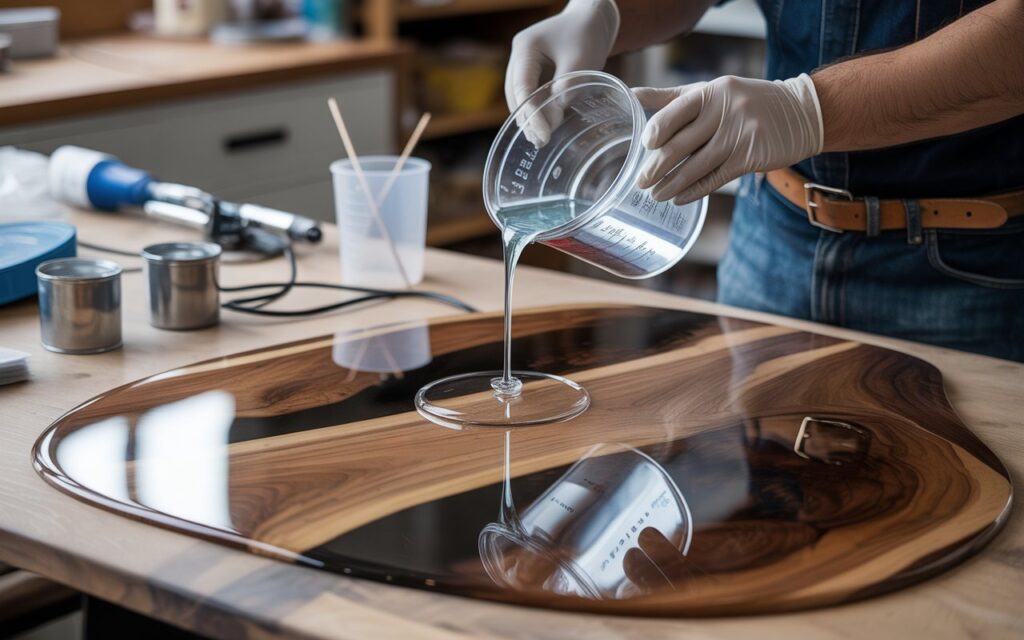
Start at one end of the table and pour the resin in a zigzag or ribbon pattern, allowing it to naturally spread across the surface. Use a spreader or silicone scraper to help guide the resin and ensure an even layer. Keep movements smooth and gentle to avoid disturbing the partially cured seal coat.
Level and Smooth the Surface
Resin is self-leveling, but you may need to encourage it into edges and corners. Lightly move the spreader across the surface, starting from the center and working outward. Avoid overworking the resin, as excessive movement can create ripples or uneven thickness.
Remove Bubbles
Use a heat gun or small torch held several inches above the surface to pop air bubbles. Move the heat source evenly across the resin to bring bubbles to the surface and release trapped air. Take care not to overheat the resin, which can cause scorching or uneven curing.
Check Edges and Drips
Inspect the edges and underside of the table for drips or uneven coating. Gently guide the resin with a scraper to prevent runs and ensure a clean finish. Cover or shield areas where resin may spill onto the floor or legs.
By following these steps carefully, the table surface will cure with a clear, glossy finish and strong protection against daily use, moisture, and scratches. This method also reduces common mistakes and ensures professional-looking results.
Removing Air Bubbles and Leveling the Resin Surface
Air bubbles and uneven spots are common challenges when working with clear coatings, but they can be managed effectively with the right techniques. Removing bubbles and leveling the surface ensures a smooth, glass-like finish that enhances the table’s appearance.
Use a Heat Source Carefully
A heat gun or small torch is the most effective tool for eliminating bubbles. Hold it several inches above the surface and move it in slow, sweeping motions. The gentle heat causes trapped air to rise and pop, leaving a clear, smooth finish. Avoid holding the heat in one spot for too long, as excessive heat can scorch the resin or create ripples.
Encourage Self-Leveling
Epoxy naturally levels itself, but lightly guiding it with a silicone spreader or scraper helps fill edges and corners. Start from the center and push the resin toward the edges with smooth, gentle motions. Overworking the surface can cause streaks or uneven thickness, so minimal intervention is best.
Inspect and Remove Floating Debris
Dust or small particles may land on the surface during curing. Use tweezers or a clean stick to carefully remove debris before the resin fully hardens. Working quickly but carefully prevents imperfections from being trapped permanently.
Monitor the Surface During Curing
Check the table periodically as the resin begins to set. Small adjustments with the scraper can help maintain an even surface and prevent pooling in low spots. Ensuring the table is perfectly level before starting the pour reduces the need for extensive adjustments during this stage.
By following these steps, bubbles are minimized and the surface remains perfectly flat, creating a professional-quality finish that highlights the natural beauty of the table while providing durable protection.
Edge Coating, Drips, and Clean Finishing Techniques
Finishing the edges of a table is just as important as achieving a smooth top surface. Proper edge coating and drip management create a polished, professional look while preventing messy, hardened spills.
Edge Preparation
Before pouring, protect areas you don’t want resin on by covering legs or the underside with aluminum foil, painter’s tape, or a plastic sheet. This ensures clean lines and minimizes cleanup later.
Coating the Edges
Pour a small amount of resin along the edges after completing the top surface. Use a silicone scraper or spreader to gently guide the resin, allowing it to flow evenly over corners and lips. Gravity will help the material coat the sides, but avoid overworking the edges, as this can cause uneven thickness or bubbles.
Managing Drips
Resin will naturally run over edges, creating drips. To prevent large drops, scrape the excess carefully with a flat tool and let gravity control the rest. If small drips form, allow them to partially cure before trimming or sanding for a smooth finish.
Final Touches
After the surface has cured, lightly inspect edges for bumps or hardened runs. Sanding minor imperfections with fine-grit sandpaper and re-coating if necessary ensures a clean, seamless look. Attention to these details results in a table that looks professionally finished from every angle.
Following these techniques guarantees strong, even edge coverage while minimizing waste and maintaining the overall aesthetic of the project.
Epoxy Resin Curing Time and Ideal Environment
The curing process is crucial for achieving a strong, durable, and glossy finish. Understanding the time required and the ideal conditions helps prevent sticky surfaces, uneven curing, or imperfections.
Curing Time
Most coating epoxies reach a touch-dry stage within 6 to 12 hours, but full curing typically takes 24 to 72 hours, depending on the brand and layer thickness. Thicker flood coats may require longer to harden completely. Patience is essential, as disturbing the resin before it cures can leave dents, marks, or cloudiness.
Ideal Temperature
Resin cures best in a stable environment, usually between 70°F and 80°F (21°C to 27°C). Temperatures above this range speed up curing but reduce working time, increasing the risk of uneven application. Cooler conditions slow the process and may prevent the resin from leveling properly, leaving a soft or tacky surface.
Humidity and Ventilation
High humidity can cause cloudiness or white spots on the surface, while low humidity reduces this risk. A well-ventilated space helps dissipate fumes and supports even curing, but avoid drafts that can introduce dust or debris.
Surface Leveling
Ensure the table is completely level before pouring. Uneven surfaces cause resin to pool at low points, resulting in an inconsistent finish. Minor adjustments during curing are possible, but initial leveling saves time and effort.
By controlling temperature, humidity, and surface leveling, the resin will cure evenly, creating a strong, clear, and glossy finish that enhances both the beauty and durability of the table.
Common Mistakes to Avoid When Using Epoxy Resin on Table Tops
Working with clear coatings can be rewarding, but several common mistakes can compromise the final result. Being aware of these issues helps ensure a smooth, durable, and professional-looking finish.
Incorrect Mixing Ratios
Using the wrong proportion of resin to hardener can prevent proper curing.Be precise when measuring each component and adhere to the guidelines provided by the manufacturer. Even small deviations can lead to sticky spots, cloudiness, or soft areas.
Pouring on an Unprepared Surface
Skipping sanding, cleaning, or sealing the table surface often results in poor adhesion, trapped air bubbles, or uneven layers.Getting the surface ready correctly is key to achieving a smooth, perfect finish.
Working in an Improper Environment
High humidity, extreme temperatures, or dusty spaces can cause white spots, uneven curing, or debris trapped in the surface. Maintain a clean, controlled environment for the best results.
Overworking the Resin
Excessive scraping, spreading, or touching the surface can create ripples, streaks, or indentations. Minimal intervention is better once the resin is poured, as it naturally self-levels.
Ignoring Curing Times
Disturbing the resin before it is fully cured can leave dents, marks, or uneven gloss. Allow sufficient time for each layer to harden, especially if applying multiple coats.
Not Protecting Edges and Surroundings
Unprotected table legs or floors may collect drips that are difficult to remove once cured. Cover areas where resin may spill to avoid additional cleanup and damage.
By avoiding these common mistakes, the application process becomes smoother, and the finished table is more durable, clear, and visually appealing. Planning carefully and following proper techniques is the key to success.
Sanding, Repairing, and Re-Coating Epoxy Resin (If Needed)
Even with careful application, small imperfections such as bubbles, dust particles, or uneven edges can appear on the surface. Sanding and re-coating provide a way to correct these issues and achieve a flawless finish.
Sanding the Surface
Use fine-grit sandpaper, typically between 400 and 800 grit, to smooth out minor bumps, drips, or surface imperfections. For deeper scratches or larger defects, start with a coarser grit and gradually work your way to a finer one. Always sand lightly and evenly to avoid creating low spots. Wet sanding is recommended for a smoother finish and less dust.
Cleaning After Sanding
After sanding, remove all dust and debris with a vacuum and a lint-free cloth. Any remaining particles will become trapped in the next layer of resin, so thorough cleaning is crucial.
Re-Coating the Surface
Once the surface is clean, you can apply a thin re-coat layer to restore the glossy, protective finish. Mixing and pouring should follow the same careful techniques used for the original layer. A thin layer is usually sufficient to cover minor flaws and restore clarity.
Finishing Touches
After the re-coat cures, inspect the surface for any remaining imperfections. Additional sanding and polishing can further enhance the smoothness and shine if necessary. By taking the time to repair and re-coat, the table can achieve a professional, long-lasting finish that looks seamless from every angle.
This process ensures even minor mistakes do not detract from the overall quality of the finished table, resulting in a durable and visually appealing piece.
Safety Tips When Working With Epoxy Resin Indoors
Working with clear coatings indoors requires careful attention to safety to protect your health and your workspace. Epoxy can release fumes, cause skin irritation, and stick to surfaces if proper precautions are not taken.
Ensure Proper Ventilation
Always work in a well-ventilated area. Keep the area well-ventilated by opening windows or doors, or by using fans to move fresh air through the space. Good airflow helps disperse fumes and reduces the risk of inhaling volatile compounds.
Wear Protective Gear
Use nitrile gloves to prevent skin contact, as resin and hardener can cause irritation or allergic reactions. Safety glasses or goggles protect your eyes from splashes, while a respirator mask designed for organic vapors offers additional protection when ventilation is limited.
Protect Your Workspace
Cover floors and surrounding surfaces with disposable plastic sheets or a drop cloth. Resin is sticky and difficult to remove once cured, so careful protection reduces the risk of permanent damage.
Handle Materials Carefully
Measure and mix resin and hardener slowly and steadily to avoid spills and minimize air bubbles.Store all containers safely, away from children and pets.
Clean Up Safely
Clean tools and spills promptly using appropriate solvents such as isopropyl alcohol or acetone, and dispose of rags safely to prevent fire hazards.
Following these precautions helps ensure a safe and controlled environment, allowing you to focus on creating a smooth, durable, and visually stunning table surface without compromising health or safety.
How Long Does an Epoxy Resin Table Top Last? (Maintenance & Care)
A properly applied resin coating can last for many years, offering a durable, glossy surface that protects the table from everyday wear and tear. The lifespan depends on factors such as the type of resin used, application quality, and ongoing maintenance.
Durability Factors
High-quality coating resin provides excellent resistance to scratches, heat, and moisture. Indoor tables that are not exposed to direct sunlight or extreme temperature changes tend to maintain their clarity and shine longer. UV-resistant formulas further reduce the risk of yellowing over time, extending the visual appeal of the surface.
Regular Maintenance
Routine care helps preserve the finish. Clean the surface with a soft cloth and mild soap or a non-abrasive cleaner to prevent scratches and build-up of dirt or oilsSteer clear of strong chemicals or rough scrubbing tools, as they can harm the surface.
Handling Minor Issues
Small scratches or dull areas can be lightly sanded and polished, or a thin re-coat applied to restore the glossy appearance. Using coasters, placemats, and trivets prevents heat marks, stains, and indentations from everyday use.
With proper application and care, the table surface can remain clear, smooth, and attractive for 10 years or more, making it a long-lasting investment in both aesthetics and functionality.
FAQs
Can I pour resin over a painted or stained table?
Yes, most coating epoxies adhere well to properly prepared surfaces, including paint, stain, or bare wood. Ensure the surface is clean, dry, and free of dust or grease to improve adhesion and prevent bubbles.
How long does the resin take to fully cure?
Curing times vary by product and layer thickness. Generally, thin seal coats may harden in 6–12 hours, while full flood coats require 24–72 hours to cure completely. Avoid placing objects on the surface until it is fully hardened.
Will the resin yellow over time?
Some discoloration may occur, especially if exposed to direct sunlight. Using UV-resistant formulas can reduce yellowing and help maintain clarity. Indoor tables typically experience less color change over time.
How can I prevent bubbles in the resin surface?
Mix the resin slowly and carefully to minimize air incorporation. Using a heat gun or torch after pouring will help pop bubbles. Applying a thin seal coat first can also reduce trapped air from porous surfaces.
Can I repair scratches or damage later?
Yes, minor scratches can be sanded out and polished. For larger imperfections, a thin re-coat of resin restores smoothness and shine. Routine maintenance with soft cloths and gentle cleaners helps prolong the finish.
Is the surface safe for food and drinks?
High-quality coating resin designed for furniture surfaces is generally food-safe once fully cured. However, always check the manufacturer’s instructions to ensure compliance with safety standards.
Conclusion
Learning how to use epoxy resin for table top projects is a fantastic way to transform ordinary furniture into a durable, glossy, and visually striking piece. While it requires careful preparation, accurate mixing, and attention to detail, the results are well worth the effort.
A properly applied layer creates a strong, water- and scratch-resistant surface that protects the table from everyday wear while highlighting the natural beauty of wood or painted finishes. Even beginners can achieve professional-looking results with the right tools, materials, and techniques.
Additionally, minor scratches or imperfections can be repaired or re-coated, extending the lifespan of the surface and making it a long-term investment. For anyone looking to create a smooth, high-gloss, and resilient table, knowing how to use epoxy resin for table top projects provides both lasting protection and a beautiful, polished finish.