
1. Introduction
How long does resin take to cure with UV light is one of the first questions anyone working with UV resin asks. Knowing the answer is crucial for creating smooth, clear, and durable pieces, whether you’re making jewelry, charms, or small decorative crafts. Unlike traditional epoxy resin, which can take hours or even days to fully harden, UV resin cures much faster—but the exact time depends on several factors such as lamp strength, layer thickness, and even the environment you’re working in.
Getting the curing process right not only saves time but also prevents common problems like sticky surfaces, trapped bubbles, or uneven finishes. By understanding the factors that affect curing time and learning the proper techniques, you can achieve professional-quality results consistently. In this guide, we’ll cover everything from how to prepare your resin and layers to choosing the right UV lamp, tips for faster curing, and safety precautions—all designed to help you confidently plan and complete your resin projects with perfect results every time.
Table of Contents
2. What Is UV Resin and How Does It Cure?
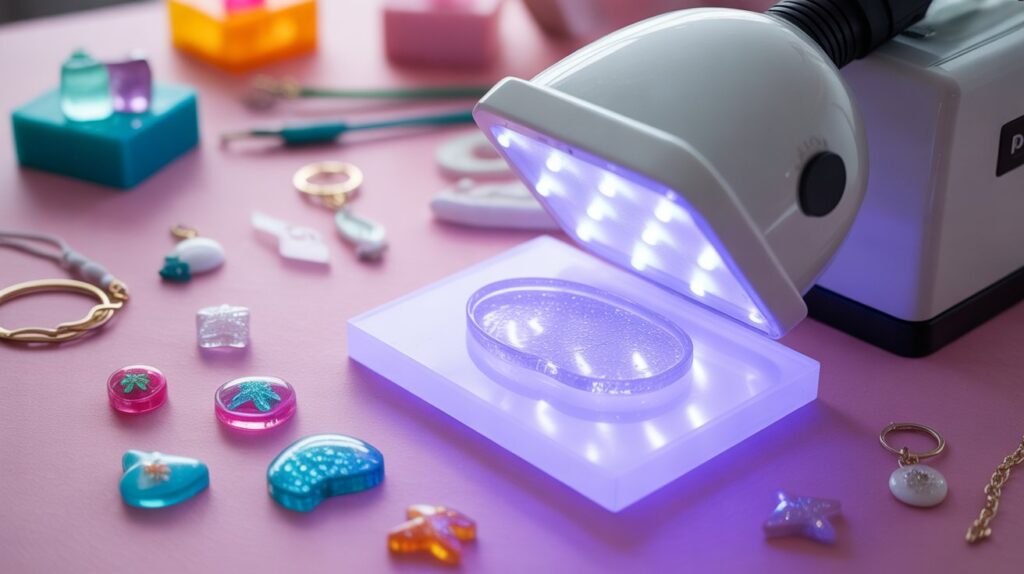
UV resin is a special type of liquid resin that hardens when exposed to ultraviolet light. Unlike traditional epoxy resin, which needs hours or even days to fully set, UV resin cures almost instantly under the right light source. This makes it a popular choice for jewelry making, small crafts, phone charms, and quick DIY projects.
The curing process works through a simple chemical reaction. When UV light hits the resin, it activates a photo-initiator inside the liquid. This triggers the molecules to link together and turn the resin from a soft liquid into a solid, durable surface. Without UV light, this reaction won’t happen properly, which is why a UV lamp or strong sunlight is essential.
One of the biggest advantages of UV resin is control. You decide when the resin hardens by switching the light on or off. This gives you more time to fix bubbles, adjust decorations, or smooth the surface before curing begins.
In short, UV resin cures through light not air or time making it fast, efficient, and ideal for detailed work where speed and precision matter most.
3. Average Curing Time for UV Resin
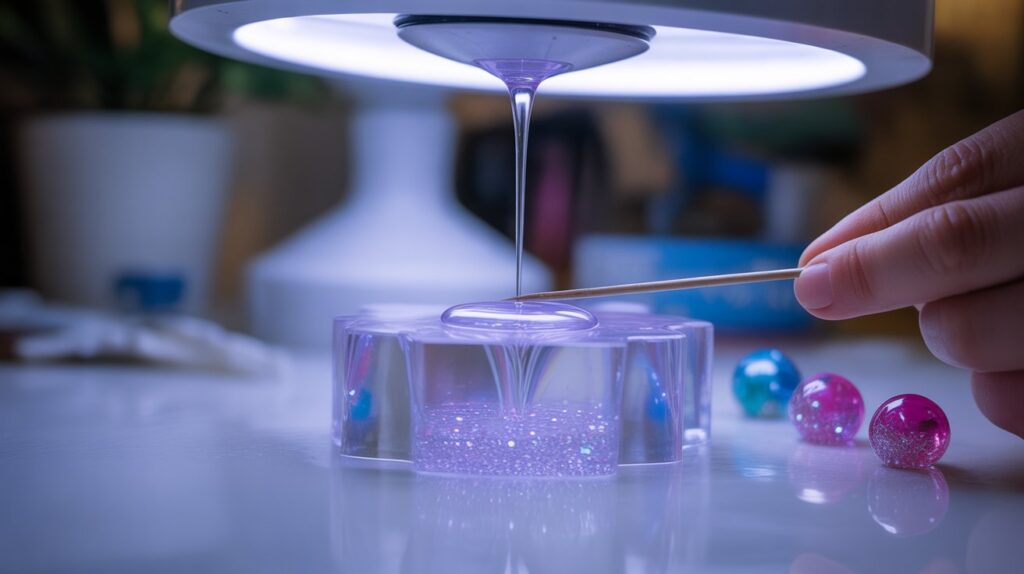
UV resin is known for its fast curing speed, which is one of the main reasons crafters love using it. In most cases, a thin layer of UV resin becomes hard in 30 seconds to 2 minutes when placed under a proper UV lamp. This quick setting time makes it perfect for small projects like jewelry, charms, and decorative details.
However, curing time is not always the same for every project. Thicker layers usually need more exposure often 2 to 5 minutes to fully harden. If the resin still feels soft or sticky after the first round, adding a little more light time usually solves the problem.
Sunlight can also cure UV resin, but it takes longer and depends on weather conditions. On a bright, sunny day, curing may take 5 to 15 minutes, while cloudy weather can slow the process even more.
In simple terms, most UV resin projects cure in just a few minutes, but the exact time depends on layer thickness, light strength, and the environment you’re working in.
4. UV Lamp vs Sunlight: Which Cures Resin Faster?
UV resin can harden under both a UV lamp and natural sunlight, but one method is significantly quicker and more consistent
A UV lamp is the best option if you want quick and consistent results. It delivers a steady amount of ultraviolet light, which helps the resin harden evenly in a short time. Most small projects cure in just a few minutes, making UV lamps perfect for indoor work and daily crafting.
Sunlight, on the other hand, works too but it’s less predictable. On a bright, sunny day, resin can harden fairly well, but clouds, time of day, and even window glass can reduce UV exposure. This means curing may take much longer and the finish may not be as smooth or strong.
In short, sunlight is a good backup when you don’t have a lamp, but a UV lamp is the faster, safer, and more professional choice for curing resin.
5. Factors That Affect UV Resin Curing Time
Even though UV resin cures quickly, the exact time can change depending on a few important factors. Understanding these will help you get better results and avoid sticky or uneven finishes.
Light strength plays a big role. A high-watt UV lamp cures resin much faster than a weak one. If your lamp is low power, the resin may need extra time under the light.
Distance from the light also matters. When the lamp is too far away, less UV reaches the resin, which slows down the curing process. Keeping the light close but not touching gives better results.
Layer thickness affects speed more than anything else. Thin layers harden quickly, while thick pours take longer and may need curing in stages.
Resin quality can make a difference too. Some brands are designed to cure faster and more evenly than others, especially premium formulas made for jewelry and crafts.
Room temperature is another factor. Warmer environments help resin cure more smoothly, while cold conditions can slow the process and leave the surface tacky.
By paying attention to these simple details, you can control curing time and get a stronger, cleaner finish every time.
6. How Layer Thickness Changes Curing Speed
Layer thickness has a direct impact on how fast UV resin hardens. The thinner the layer, the quicker and more evenly it cures. Thin coats allow UV light to pass through easily, helping the resin solidify in seconds or a couple of minutes.
Thicker layers slow everything down. When resin is poured too deep, the light can’t reach the bottom properly. This often leads to a hard surface with a soft or sticky layer underneath. To avoid this problem, it’s best to cure resin in multiple thin layers instead of one thick pour.
For best results, apply a small amount of resin, cure it fully, then add the next layer. This method not only speeds up the overall process but also gives you a stronger, clearer, and more professional-looking finish.
7. Recommended UV Light Wattage for Best Results
Choosing the right UV light wattage makes a big difference in how quickly and evenly resin hardens. While most UV lamps will work, higher wattage usually means faster and more reliable results.
For small craft projects, a 6W to 12W lamp can do the job, but curing may take longer and sometimes require extra exposure. These are fine for beginners, but patience is needed.
A 24W lamp is the best all-around option for most users. It provides enough power to cure resin quickly and evenly without overheating your pieces. This wattage works well for jewelry, charms, and layered designs. If you work on larger pieces or want the fastest results, a 36W or higher lamp is ideal. These lights reduce curing time and help prevent tacky surfaces, especially when working with multiple layers.
In short, the stronger the lamp, the smoother and quicker the curing process—making 24W to 36W the sweet spot for most resin projects.
8. Step-by-Step: How to Cure UV Resin Properly
Curing UV resin the right way ensures a strong, smooth, and professional-looking finish. Follow these simple steps for the best results every time.
Step 1: Prepare your workspace
Work on a clean, flat surface. Make sure your UV lamp is ready and your tools are within reach.
Step 2: Apply a thin layer of resin
Pour or spread a small amount of resin onto your mold or surface. Thin layers cure faster and more evenly.
Step 3: Remove bubbles
Use a toothpick or pin to pop any air bubbles before curing. This helps keep the surface clear and smooth.
Step 4: Place under the UV lamp
Position your project directly under the light. Keep the lamp close enough to cover the whole piece.
Step 5: Cure for the recommended time
Let the resin harden for about 30 seconds to a few minutes, depending on your lamp strength and layer thickness.
Step 6: Check the surface
Touch lightly with a glove or tool. If it feels sticky, add more light time.
Step 7: Repeat for extra layers
If your design needs more depth, add another thin layer and cure again.
By following these steps, you’ll get a clear, hard, and durable finish without wasted time or materials.
9. Signs That UV Resin Is Fully Cured
Knowing when resin is completely hardened is essential to avoid sticky surfaces or damage to your project. Here are the key signs to look for:
1. Hard and solid surface
A fully cured layer feels firm to the touch. Press gently with a finger or tool; it should not leave an indentation.
2. No stickiness
If the resin is still tacky, it needs more time under the light. A properly cured piece should feel smooth and dry.
3. Clear and even finish
The surface should be glossy and uniform, without cloudiness or uneven spots. Any dull areas may indicate incomplete curing.
4. Strong and durable
Once fully set, the resin is resistant to scratches and can handle light pressure without denting or bending.
Checking these signs ensures that your project is ready for handling, layering, or finishing touches. Following proper curing steps helps you consistently achieve a flawless and professional result.
10. Common Mistakes That Slow Down Curing
Even with fast-setting resin, certain mistakes can delay hardening or cause uneven results. Being aware of these issues will save time and improve the quality of your projects.
1. Using a weak or low-power lamp
A UV light that is too weak will struggle to fully cure the resin, leaving surfaces sticky or soft. Always check the wattage and use a lamp suitable for your project size.
2. Pouring thick layers
Thick pours prevent light from reaching the bottom, resulting in partially cured resin. Always work in thin layers and cure each layer before adding the next.
3. Positioning the lamp too far away
Distance matters. Placing the light too far from the resin reduces UV exposure, slowing down the hardening process. Keep the lamp at the recommended distance for even curing.
4. Skipping surface preparation
Dust, oils, or fingerprints can block light and affect curing. Make sure molds and tools are clean before applying resin.
5. Stopping the curing process too early
Removing resin from the light before it’s fully set can leave sticky spots or soft areas. Always check the surface and allow extra time if needed.
Avoiding these common mistakes ensures faster, smoother, and more consistent results, helping you get professional-quality pieces every time.
11. Safety Tips When Using UV Light for Resin
Working with UV resin and ultraviolet light is generally safe, but following a few precautions will protect your skin, eyes, and overall health.
1. Protect your eyes
UV light can be harmful if it shines directly into your eyes. Always wear safety glasses or goggles designed to block UV rays when curing resin.
2. Avoid direct skin exposure
Extended contact with UV light can cause irritation. Wear gloves and avoid placing your hands directly under the lamp for long periods.
3. Work in a well-ventilated area
Although UV resin emits minimal fumes, proper ventilation ensures that any odors do not accumulate, keeping your workspace safe and comfortable.
4. Keep the lamp stable
Make sure the light source is securely positioned to prevent it from tipping over onto your project or workspace.
5. Follow manufacturer instructions
Different lamps and resin brands may have specific safety guidelines. Always read and follow the instructions to ensure proper use.
By taking these simple precautions, you can enjoy crafting with UV resin safely while achieving the best possible results.
12. Final Verdict: How Long Does Resin Take to Cure with UV Lights?
When it comes to curing UV resin, the process is remarkably fast compared to traditional epoxy. Thin layers typically harden in 30 seconds to 2 minutes under a proper lamp, while thicker pours may take 2 to 5 minutes or slightly longer. Using a high-quality UV light and curing in multiple thin layers ensures a smooth, strong, and fully set finish.
While sunlight can also harden resin, it is less predictable and often slower due to varying weather and intensity. For consistent results, a reliable UV lamp is the best choice.
The key takeaway is that proper preparation, the right light, and careful layer management allow you to create durable, professional-looking pieces in minutes. By following the steps and tips outlined in this guide, you can confidently plan your projects and avoid common mistakes that slow down curing.
Your finished pieces will be clear, solid, and ready to enjoy or display in a fraction of the time traditional resins require.
13 Conclusion
Understanding how long does resin take to cure with UV light is essential for anyone working with UV resin, whether you’re a beginner or an experienced crafter. With the right lamp, proper layer thickness, and attention to curing time, you can achieve smooth, clear, and durable results in just a few minutes.
Remember that factors like light strength, distance, and environment can affect how quickly your pieces harden, so always follow best practices for consistent results. By avoiding common mistakes and taking safety precautions, you’ll save time, reduce frustration, and create professional-quality projects every time.
In short, mastering curing time allows you to enjoy the full benefits of UV resin—fast, efficient, and beautifully finished crafts ready to display, gift, or sell.
FAQs
1. Can I cure UV resin without UV light?
Yes, but it’s much slower and less reliable. Some resins may harden partially in sunlight or under bright natural light, but the result might be sticky or uneven. For best results, a UV lamp is recommended. If you’re wondering, thin layers and patience are key.
2. How long should additional layers of resin take to harden?
Each additional layer typically cures in 30 seconds to 2 minutes under a UV lamp, depending on thickness. Curing each layer fully before adding the next prevents bubbles or sticky spots. This answers the question pouring extra layers.
3. How long should the resin harden before adding decorations?
To ensure decorations sit properly, the base layer should be fully hardened. Thin layers usually cure in 30 seconds to 2 minutes. Knowing adding charms or beads helps you avoid sinking or uneven placement.
4. How long to cure UV resin on polymer clay?
When applying resin to polymer clay, thin layers cure in about 30 seconds to 2 minutes under a UV lamp. Thicker pours may need more time. This ensures a strong, glossy finish that sticks well without damaging the clay surface.
5. Can too much UV light damage resin?
Yes. Overexposure can cause the resin to yellow, crack, or become brittle over time. Use the recommended curing times for your lamp and layer thickness to achieve a durable, clear finish.
6. How can I speed up curing if my resin is still sticky?
If your resin remains tacky after the recommended time, try moving it closer to the lamp, using a stronger UV light, or curing in thinner layers. Properly removing bubbles and keeping the surface clean also speeds up hardening.
7. Why is my resin not curing evenly?
Uneven curing often happens when layers are too thick, the UV lamp is too weak, or the distance from the light is too far. Rotating your piece, curing in thinner layers, and using a high-quality lamp ensures consistent results.