
Introduction
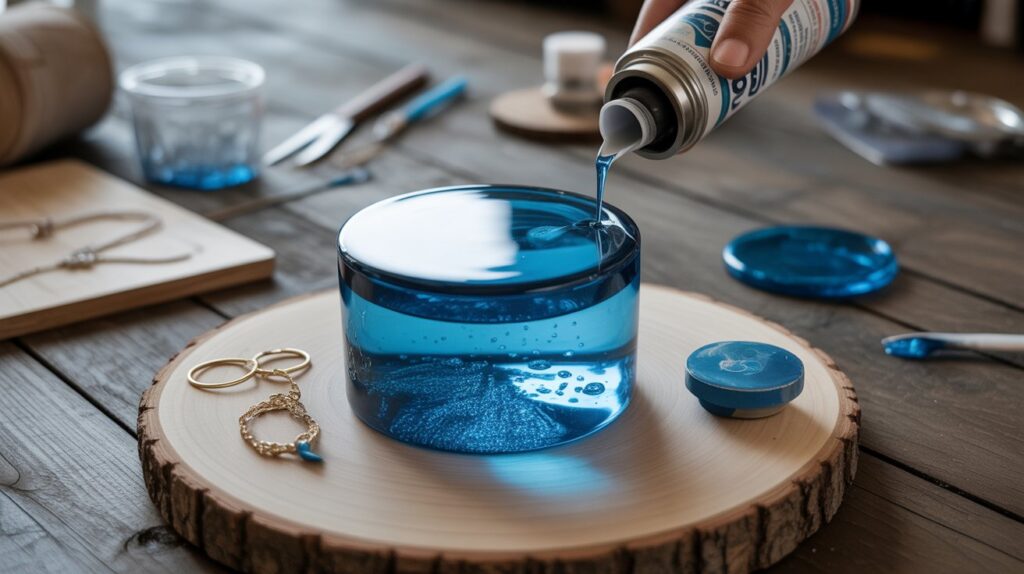
Looking to create professional-quality crafts and artwork? A high-quality Epoxy Resin Kit is essential for achieving clear, glossy, and durable finishes. Whether you’re making jewelry, coating wood, or designing tumblers, choosing the right kit ensures smooth application, bubble-free results, and long-lasting projects. This guide will help you pick the best epoxy resin kit for your needs.
Table of Contents
What’s Included in the Epoxy Resin Kit
When choosing the best Epoxy Resin Kit, it’s important to know exactly what comes inside to ensure you have everything required for a smooth start. Most kits are designed for beginners and hobby artists, so they include essential tools to help measure, mix, and apply the resin properly.
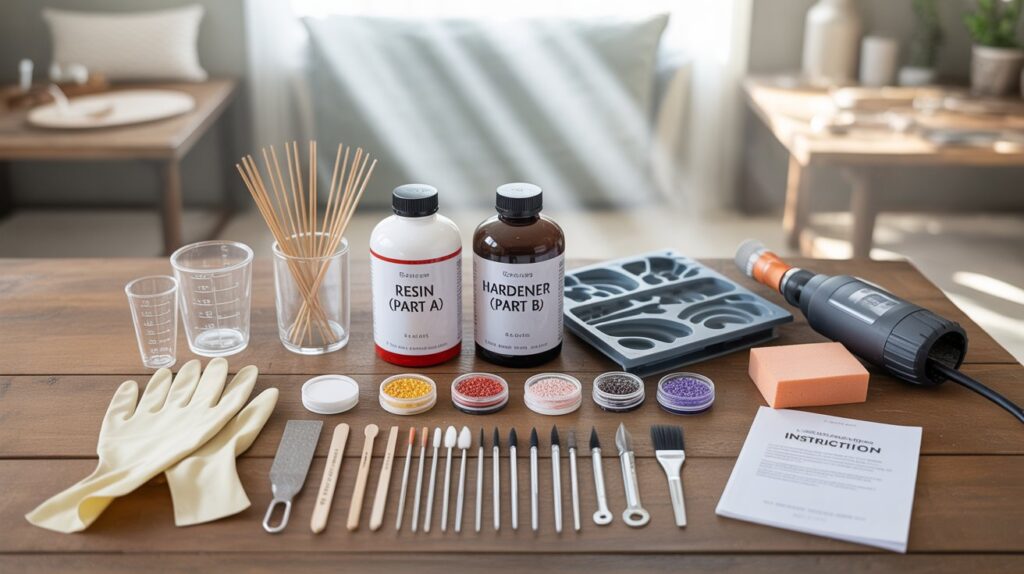
A standard Epoxy Resin Kit typically contains:
Epoxy Resin (Part A) the main liquid formula
Hardener (Part B) activates the resin and begins the curing process
Measuring or Mixing Cups ensures accurate resin-to-hardener ratios
Stir Sticks or Spatulas used to blend both components thoroughly
Protective Gloves helps keep your hands safe and clean
User Guide or Instructions explains mixing ratios and curing tips
Some advanced or premium kits may also include extra accessories such as:
Silicone mixing tools
Heat gun or torch for removing bubbles
Resin pigments or mica powders
Disposable brushes and droppers
Sanding tools or polishing cloths
Silicone molds for jewelry and small crafts
Having these items in your Epoxy Resin Kit saves time and ensures you can start working on your project right away without buying extra supplies. Always check the product description to confirm the accessories included, especially if you’re new to resin crafting. A well-equipped kit makes the process easier and helps you achieve smooth, clear, professional-quality results.
Resin Quality & Clarity
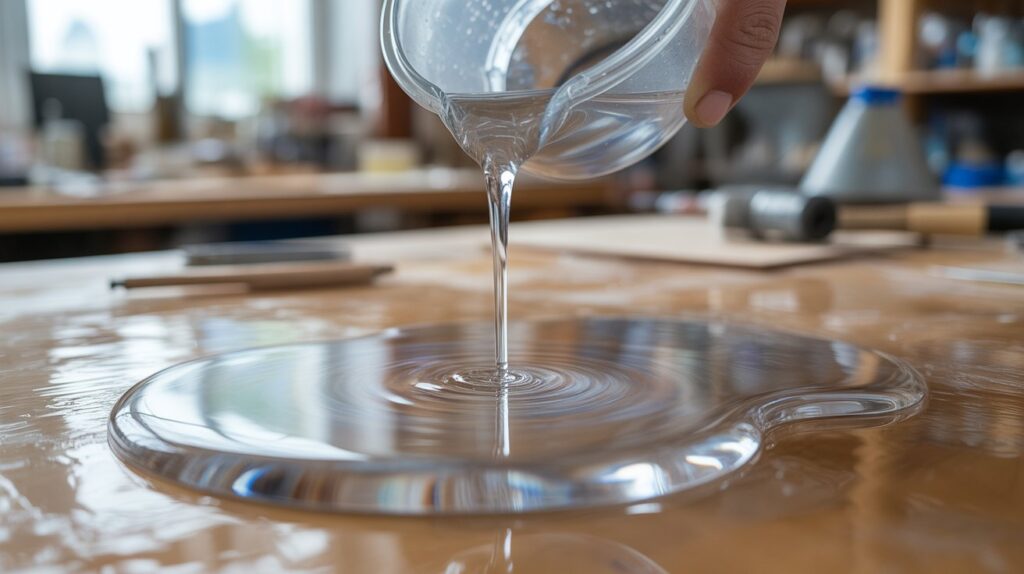
One of the most important factors to consider when choosing an Epoxy Resin Kit is the overall quality and clarity of the resin. High-quality epoxy should cure to a crystal-clear finish without cloudiness, haze, or yellow tint. This is especially important for projects like jewelry, river tables, tumblers, and artwork where transparency and shine play a major role in appearance.
A premium Epoxy Resin Kit typically offers.
Crystal-clear finish no yellowing or discoloration
Low-bubble formula reduces the need for excessive heat-gun work
High-gloss surface enhances depth and shine in your design
Self-levelling performance helps create smooth, even layers
UV-resistant properties prevents yellowing over time
Some kits also include added UV stabilizers and anti-yellowing agents to protect finished pieces from sunlight exposure. For beginners and professionals alike, clarity and stability are crucial to achieving long-lasting and visually appealing results.
Before purchasing, check product reviews and project photos to confirm that the Epoxy Resin Kit performs well in terms of transparency and gloss. A clear, durable finish not only elevates the beauty of your artwork but also ensures your projects remain stunning for years.
Mix Ratio & Ease of Use
The mix ratio is one of the key details to understand when choosing an Epoxy Resin Kit, because it directly affects how easy the resin is to prepare and how well it cures. Most quality epoxy kits use a 1:1 mixing ratio, meaning you combine equal parts of resin and hardener. This simple ratio makes the process easier for beginners and helps avoid measurement mistakes.
A beginner-friendly Epoxy Resin Kit should offer:
Simple mixing instructions (usually 1:1)
Clear measuring marks on bottles or cups
Smooth, low-viscosity texture for easy blending
Slow bubble formation while mixing
Step-by-step instruction guide
To use epoxy resin correctly, you must stir the mixture thoroughly typically for 3–5 minutes scraping the sides and bottom of the container to ensure even blending. Improper mixing can lead to soft spots, sticky surfaces, or uneven curing.
Some professional-grade kits may have a different ratio (like 2:1), but these are usually designed for experienced users who need specialized performance, such as deep pours or industrial coatings.
When selecting the best Epoxy Resin Kit, choose one that clearly explains mixing steps and provides helpful tools like measuring cups and stir sticks. A simple mixing process saves time, avoids curing issues, and makes your resin projects much more enjoyable.
5 Curing Time & Working Time
When selecting an Epoxy Resin Kit, understanding the curing time and working time is essential for planning your projects. Working time, also called pot life, is the amount of time you have to pour, spread, and remove bubbles before the resin begins to harden. Most kits offer a working time of 20 to 45 minutes, depending on temperature and resin formula.
Curing time refers to how long the resin takes to fully harden. While some fast-curing kits begin to set within 8–12 hours, most standard epoxy formulas need 24 to 48 hours for complete curing. Deeper pours, cold environments, or high humidity may extend this time.
A good Epoxy Resin Kit will clearly mention:
Average working time
Initial curing time (touch-dry stage)
Full curing time for handling and sanding
Ideal temperature range (usually 70–80°F / 21–27°C)
For beginners, choosing a resin with a longer working time is easier because it provides more flexibility for spreading, adding pigments, and removing bubbles. Fast-curing resins are useful for small rapid projects, but they can increase the risk of bubbles or uneven texture if you are new to resin crafting.
Bubble Resistance & Self-Levelling Performance
When choosing an Epoxy Resin Kit, bubble resistance and self-leveling ability are two important factors that impact the final finish of your project. Bubbles can form naturally during mixing and pouring, especially in thicker formulas or deeper pours. A high-quality epoxy resin includes de-foaming agents and a low-viscosity formula to help bubbles rise to the surface and release more easily.
A good Epoxy Resin Kit should offer:
Low-bubble formula for smooth finishes
Self-leveling properties to spread evenly without ridges
Deep-pour compatibility for larger projects like river tables (in some kits)
Minimal torching requirement to remove bubbles
Self-leveling performance is especially important when coating wood, making coasters, or sealing artwork. A resin that spreads evenly ensures a smooth, glass-like finish without dents, waves, or uneven texture.
For best results, always work in a dust-free environment and maintain the recommended temperature. Warming the bottles slightly before mixing and using a heat gun or torch lightly on the surface will also help remove any remaining bubbles quickly.
By choosing an Epoxy Resin Kit known for excellent bubble resistance and flawless self-levelling, you’ll achieve clear, professional-quality results with less effort and fewer touch-ups.
Odor Level & Safety Certifications
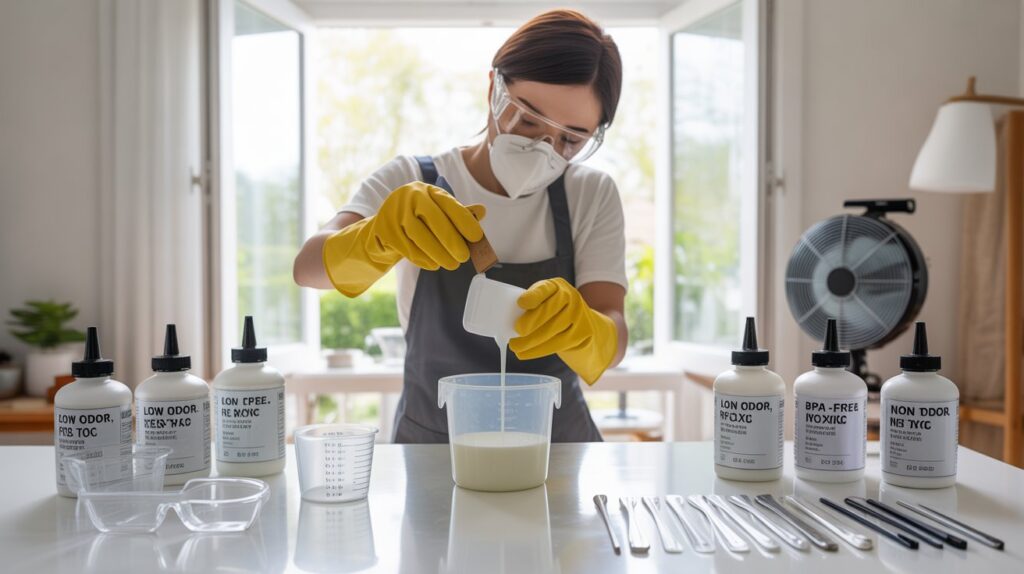
When choosing an Epoxy Resin Kit, it’s important to consider odor levels and safety standards, especially if you plan to work indoors. High-quality epoxy resin is typically low-odor or odor-free, making it more comfortable to use for long crafting sessions. Lower-quality resins may have strong chemical smells, which can be unpleasant and may require better ventilation.
A reliable Epoxy Resin Kit should be:
Low-odor or odor-free
Non-toxic once cured
BPA-free
VOC-free or low-VOC
Safe for home craft environments
Safety certifications are also essential, as they confirm the product meets industry and environmental standards. Look for kits that include certifications such as:
ASTM or SGS-tested
FDA-compliant for food-safe surfaces (after full cure)
REACH-certified (European safety standards)
These certifications provide peace of mind that you’re working with safe, reliable materials and avoiding harmful chemicals.
Although many beginner-friendly epoxy kits are formulated for safe indoor use, it’s still recommended to work in a ventilated space and wear protective gloves — both for comfort and proper handling. Choosing an Epoxy Resin Kit with trustworthy safety standards ensures a better crafting experience and healthier environment for you and your workspace.
Compatibility (Wood, Art, Jewellery, Tumblers, etc.)
One of the biggest advantages of choosing the right Epoxy Resin Kit is its versatility. Different resin formulas are designed for different project types, so selecting a kit that matches your crafting needs is important for achieving smooth and professional results.
A good Epoxy Resin Kit should work well with a variety of surfaces and creative applications, including:
Wood slabs & furniture tops
Ideal for river tables, charioteer boards, coasters, and bar tops. Look for deep-pour or heat-resistant resin options.
Art canvases & paintings
Self-leveling resin with a glossy finish is best for coating artwork and protecting colors.
Jewellery making & small moulds
A low-viscosity formula that flows easily into tiny details and cures crystal-clear works best.
Tumblers & drinkware coating
A resin that offers strong adhesion, smooth leveling, and a glass-like finish ensures flawless tumbler designs.
Crafts & ornaments
Flexible, beginner-friendly formulas are ideal for DIY key chains, bookmarks, trays, and other custom gifts.
When selecting an Epoxy Resin Kit, always check the product label or description to see which projects it’s recommended for. Some resins are made specifically for deep pours and woodworking, while others are better for thin coatings or detailed mold work.
Choosing a resin that matches your craft type ensures better clarity, fewer bubbles, and a stronger final finish helping your creative ideas come to life with ease.
Viscosity & Finish Quality (Gloss UV-Resistance)
When choosing an Epoxy Resin Kit, understanding viscosity and finish quality is key to achieving professional results. Viscosity refers to how thick or thin the resin is, which affects how it spreads, levels, and flows into molds or over surfaces. A lower-viscosity resin is ideal for deep pours, intricate molds, and detailed projects, while a thicker resin works well for coating and layering without dripping.
Finish quality is equally important. A high-quality Epoxy Resin Kit should cure to a:
High-gloss, glass-like finish that enhances colors and textures
Smooth, self-leveling surface that minimizes ridges and imperfections
UV-resistant layer to prevent yellowing over time
UV resistance is especially crucial for projects exposed to sunlight, such as tabletops, outdoor furniture, or resin artwork. Without proper UV protection, even clear epoxy can turn yellow or lose its shine over time.
For best results, select an Epoxy Resin Kit that balances viscosity with clarity, gloss, and UV protection. This ensures your creations not only look professional when finished but also remain durable, vibrant, and resistant to discoloration over years of use.
Durability & Yellowing Protection
One of the most important aspects of a high-quality Epoxy Resin Kit is its long-term durability and resistance to yellowing. A durable epoxy creates a strong, hard surface that can withstand scratches, heat, and everyday wear, making it ideal for furniture, coasters, tumblers, and art pieces.
High-quality Epoxy Resin Kits are formulated with UV inhibitors to reduce yellowing over time, even when exposed to sunlight. Without proper UV protection, even clear epoxy can develop a yellow tint, especially on lighter-colored projects, which can ruin the appearance of your work.
Other durability factors to consider include:
Scratch and impact resistance ensures your surface stays smooth and intact
Heat resistance prevents softening or warping under moderate heat
Chemical resistance protects against mild spills and cleaning agents
For the best results, choose an Epoxy Resin Kit that explicitly mentions yellowing protection and UV resistance. This guarantees your resin creations remain clear, glossy, and vibrant for years, providing both professional quality and long-lasting beauty.
Beginner-Friendliness vs Professional Use
When choosing an Epoxy Resin Kit, it’s important to consider whether the kit is suited for beginners or professionals, as this affects ease of use, curing times, and the quality of results.
Beginner-Friendly Kits are designed for ease and safety:
Simple 1:1 mix ratio for easy preparation
Low-odor formulas suitable for indoor use
Step-by-step instructions with clear guidance
Pre-measured components to reduce errors
Shorter curing times for quicker projects
These kits allow beginners to experiment with jewelry, small molds, and art without needing advanced tools or extensive experience.
Professional-Grade Kits, on the other hand, are tailored for experienced users who need higher performance:
Custom mix ratios (e.g., 2:1) for deeper pours or industrial applications
Enhanced durability and UV resistance
Longer working time for complex projects
Specialised formulas for specific finishes, coatings, or large-scale woodworking
Choosing the right Epoxy Resin Kit depends on your skill level and the type of projects you want to create. Beginners benefit from easy-to-use kits that reduce mistakes, while professionals may prefer high-performance formulas that offer more control and superior results for advanced applications.
Kit Size Options & Coverage
When selecting an Epoxy Resin Kit, understanding the available kit sizes and coverage is essential to ensure you have enough resin for your project without waste. Epoxy resin kits come in a variety of sizes, ranging from small 100–200 g kits for jewelry and small crafts to large 1–5 kg kits for tabletops, river tables, and furniture projects.
Key points to consider:
Small Kits (100–500 g): Perfect for beginners, jewellery making, and small moulds. These kits reduce waste and allow you to practice without committing to large volumes.
Medium Kits (500 g–2 kg): Ideal for medium-sized art pieces, coasters, and small furniture projects. Provides enough resin for multiple layers or projects.
Large Kits (2 kg and above): Best for large tabletops, river tables, or projects requiring multiple deep pours. Professional-grade kits often come in larger sizes for efficiency and bulk use.
Coverage also depends on pour thickness and the type of project. Most manufacturers provide a guide, such as: “1 kg covers approximately 1 m² at 1 mm thickness.” This helps you calculate how much resin you’ll need and prevents running out mid-project.
Choosing the right Epoxy Resin Kit size ensures you have sufficient material for your project while minimising leftover resin. It’s always better to slightly overestimate your needs than risk an unfinished pour.
Accessories & Tools Included
A high-quality Epoxy Resin Kit often comes with more than just resin and hardener the included accessories can make a big difference in your crafting experience, especially for beginners. Having the right tools ensures proper mixing, accurate measurements, and smoother finishes, saving time and reducing mistakes.
Common accessories included in an Epoxy Resin Kit are:
Measuring cups for accurate resin-to-hardener ratios
Stir sticks or spatulas to mix resin thoroughly
Protective gloves for safe handling and clean hands
Disposable pipettes or droppers useful for adding pigments or small details
Silicone molds sometimes included for jewelry, coasters, or small art pieces
Instruction guides step-by-step directions to ensure proper mixing and curing
Sanding or polishing tools included in some premium kits for finishing touches
Some advanced kits also provide extras like: heat guns or torches for removing bubbles, resin pigments or mica powders, and mixing trays.
Choosing an Epoxy Resin Kit with all necessary accessories means you won’t have to buy additional tools separately, allowing you to start your project immediately. This is especially helpful for beginners who may not yet own specialised resin tools.
Customer Ratings & Reviews
Before purchasing an Epoxy Resin Kit, checking customer ratings and reviews can provide valuable insights into real-world performance. Reviews often highlight strengths and weaknesses that product descriptions may not mention, helping you make an informed decision.
Key points to consider when evaluating reviews:
Ease of use Did users find the mixing process simple?
Clarity and finish quality Are the cured pieces clear, glossy, and bubble-free?
Durability and yellowing Does the resin remain strong and transparent over time?
Working and curing time Was it consistent with the manufacturer’s claims?
Kit completeness Did the accessories and tools meet users’ expectations?
Look for patterns in reviews rather than focusing on a single comment. For instance, if multiple users mention yellowing or bubbles, it may indicate an issue with that particular Epoxy Resin Kit.
High-rated kits often receive praise for their beginner-friendly formulas, consistent results, and comprehensive accessories. Incorporating insights from real users ensures you choose a resin kit that meets your crafting needs and delivers professional-quality results every time.
Price & Value for Money
When shopping for an Epoxy Resin Kit, the price is an important factor—but what matters even more is the value you’re getting for that price. A higher-cost kit may include superior materials, better clarity, UV protection, and comprehensive accessories. On the other hand, a lower-priced kit might cut corners in finish quality, curing time, or included tools.
Here are some key considerations when assessing price and value:
Price per volume: Compare how much resin you’re getting relative to cost (e.g., cost per 100 g or per kilogram).
Included accessories: A kit that comes with measuring cups, stir sticks, gloves, or moulds may cost more upfront but saves you from buying tools separately.
Quality guarantees: Premium kits that mention non-yellowing performance, UV protection, or professional-grade clarity may command higher prices and justify them if you need those features.
Suitability for your project: If you’re making small crafts occasionally, a basic kit may be enough. But if you’re working on large-scale furniture pieces, investing in a high-performance kit makes more sense.
Long-term durability: A better-quality kit may offer longer-lasting results, reducing the need for redoing projects or facing finish failures.
In summary, selecting the best Epoxy Resin Kit isn’t just about choosing the cheapest option it’s about finding the right balance between cost and the features you truly need for your projects. A mid-priced kit with good clarity, UV resistance, easy usability, and proper accessories often delivers the best value for both beginners and hobbyists.
Pros & Cons Summary Table
To make it easier to evaluate different options, here’s a quick summary of the main advantages and disadvantages of choosing a high-quality Epoxy Resin Kit:
| Pros | Cons |
| Crystal-clear, glossy finish for professional results | Some kits can be more expensive for large volumes |
| Easy to use with beginner-friendly instructions | Longer curing times may require patience |
| Low-door and safe for indoor use | Certain projects may require additional tools not included |
| Self-levelling and bubble-resistant formula | Improper mixing can lead to sticky spots or uneven surfaces |
| UV and yellowing protection for long-lasting durability | Fast-curing kits may be challenging for beginners |
| Versatile for wood, jewellery, art, tumblers, and crafts | Limited kit sizes may not be suitable for very large projects |
| Includes essential accessories (measuring cups, stir sticks, gloves) | Some kits may require extra pigments or additives for custom effects |
This table helps you quickly weigh the benefits and potential limitations of an Epoxy Resin Kit. By considering both pros and cons, you can choose a kit that matches your skill level, project type, and desired finish quality, ensuring a satisfying resin crafting experience.
Final Recommendation Best Epoxy Resin Kit for Each Use Case
Choosing the right Epoxy Resin Kit depends largely on what you want to make. No single kit fits every project perfectly, so here are tailored recommendations based on different use cases and crafting goals:
| Use Case | Recommended Kit Features | Why It Fits |
| Jewelry, small molds, pendants | Small‑volume kit (e.g., 250–500 g), low‑viscosity, fast cure, bubble‑resistant | These projects require clarity, fine detail and minimal leftover resin — perfect with a beginner‑friendly kit. artsology.com+1 |
| Art coatings, canvases & tabletop finishes | Medium size (500 g–2 kg), self‑leveling finish, UV‑resistant, gloss surface | Art pieces benefit from a smooth glass‑like top layer that enhances colour and gives durability. DIY Craft Club+1 |
| Woodworking / river tables / large pours | Large‑volume kit (2 kg+), deep‑pour capable, extended working time, strong UV/yellowing protection | Bigger pieces demand scale, time and structural finish — a pro‑grade resin works best. artsology.com+1 |
| Beginner experimentation & small crafts | Entry‑level kit, simple 1:1 ratio, low-odor, complete accessories included | Ideal for first time users — reduces risk of mistakes and wasted material while you learn. artsology.com+1 |
✅ Quick Picks
If you’re just starting out, go for a small, budget‑friendly kit that covers “what’s included,” clear mixing instructions and safe handling.
If you’re focused on professional-looking results (for example high gloss art or furniture), invest in a high‑quality kit that emphasises UV resistance, durability, and premium clarity.
If your project is large scale (wood slab, river table, floor coating), choose a kit designed for deep pours, longer working time and large coverage.
Final Thought
The best Epoxy Resin Kit isn’t simply the most expensive or the largest — it’s the one that matches your project type, your skill level, and your desired outcome. By selecting a kit tailored to your specific use case (jewellery art wood beginners), you’ll achieve better results, avoid common problems (like cloudiness, sticky cure or bubbles) and feel confident in your craft.
Conclusion
Choosing the right Epoxy Resin Kit is essential for achieving professional, durable, and visually stunning results in your projects. From small jewelry molds to large river tables, the quality, clarity, curing time, and included accessories all play a crucial role in the final outcome. By understanding factors like mix ratio, bubble resistance, UV protection, and project compatibility, you can select a kit that perfectly matches your skill level and creative goals.
Whether you are a beginner exploring resin crafts for the first time or a professional working on large-scale art or woodworking projects, investing in the right Epoxy Resin Kit ensures your creations are long-lasting, vibrant, and free of common issues like yellowing or uneven finishes. Take the time to compare kits based on your project type, size, and desired results and you’ll enjoy a smooth, rewarding crafting experience every time.
Start your resin journey today with the kit that fits your needs and watch your creative ideas come to life with clarity, shine, and durability.
Faqs
1. What is an epoxy resin kit?
An Epoxy Resin Kit is a two-part system consisting of resin and hardener, often with accessories like measuring cups, stir sticks, and gloves. When mixed, the resin cures to a strong, glossy, and durable finish suitable for art, jewelry, woodworking, and other craft projects.
2. Can beginners use an epoxy resin kit?
Yes! Many epoxy resin kits are beginner-friendly, offering simple 1:1 mixing ratios, low-odor formulas, and clear step-by-step instructions. Kits with included accessories make it easy for first-time users to start crafting immediately.
3. How long does epoxy resin take to cure?
Curing times vary by kit and project size. Most epoxy resin kits have a working time of 20–45 minutes and fully cure within 24–48 hours. Deep pours or cooler environments may require additional curing time.
4. Can epoxy resin yellow over time?
Some resins can yellow if exposed to UV light. High-quality epoxy resin kits include UV inhibitors to prevent yellowing and maintain clarity and gloss for years.
5. What surfaces are compatible with epoxy resin?
Epoxy resin works well on a variety of surfaces including wood, canvas, jewelry molds, tumblers, and small craft items. Make sure to check the product description for recommended project types.
6. How much epoxy resin do I need for my project?
Coverage depends on resin thickness and project size. Most kits provide a guide, such as 1 kg covering 1 m² at 1 mm thickness. Always calculate your project volume to avoid running out mid-pour.
7. Do I need extra tools for epoxy resin projects?
Many kits include essential tools like measuring cups, stir sticks, gloves, and sometimes molds. For advanced projects, you may need additional items like heat guns, silicone molds, or pigments.
8. Is epoxy resin safe to use indoors?
Yes, especially low-odour and non-toxic epoxy resin kits. Always work in a ventilated space and wear protective gloves to ensure safety.