
Introduction
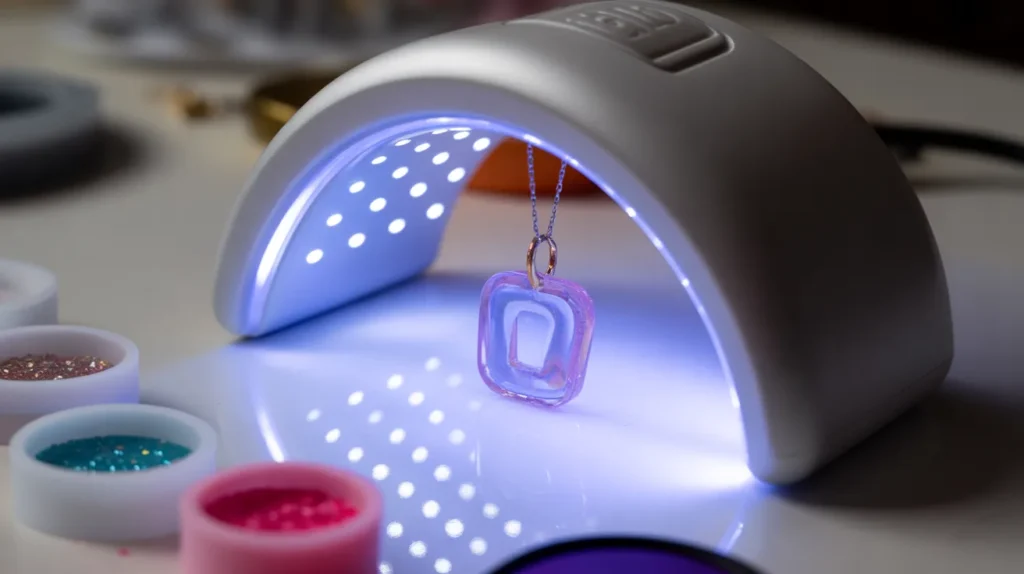
Many beginners wonder, can you cure UV resin with LED lamp or do you need a traditional UV light. The good news is yes most UV resin can be cured with an LED lamp, but only if it has the right wavelength (365–405 nm) and enough wattage.
However, not all LED lamps work properly. Low-quality or weak lamps may cause sticky or soft resin if the curing is incomplete. In this guide, you’ll learn how LED lamps cure UV resin, what to look for in a good lamp, and how to avoid common curing problems for smooth, hard, and professional results.
What Is UV Resin and How Does It Cure?
UV resin is a liquid crafting resin that hardens when exposed to ultraviolet light. It is commonly used for jewelry making, keychains, charms, and small DIY crafts because it cures quickly and creates a clear, glossy finish.
The curing process happens because of special chemicals in the resin called photoinitiators. When UV light hits the resin, these chemicals start a reaction that turns the liquid into a solid plastic material.
Most types of this resin cure best under light in the 365–405 nm wavelength range. When the resin receives enough light energy, it usually hardens within 30 seconds to a few minutes, depending on the lamp power and the thickness of the resin layer. For best results, many crafters apply thin layers, because thinner layers cure faster and reduce problems like sticky surfaces or incomplete curing.
Can You Cure UV Resin With an LED Lamp?
Yes, UV resin can harden properly under many LED curing lamps, as long as the lamp produces light in the correct ultraviolet range. Most resins react to light between 365 nm and 405 nm, which is the wavelength used by many modern LED nail lamps and craft curing lights.
LED lamps are often preferred because they cure resin faster, use less energy, and last longer than traditional UV bulb lamps. A good quality lamp with enough wattage can harden thin resin layers in about 30–60 seconds, making it very convenient for jewelry and small craft projects. However, not every LED lamp works the same. Very low-power lamps or decorative lights may not produce enough ultraviolet energy to start the curing reaction. When this happens, the resin may stay soft, sticky, or only partially hardened.
For reliable results, it is important to use a lamp designed for curing gel nails or UV resin, preferably with higher wattage and the proper wavelength range. This helps ensure the resin cures evenly and forms a clear, durable finish.
Comparison Table
| Product Type | Wattage | Wavelength | Curing Speed | Coverage | Key Feature | Best For |
|---|---|---|---|---|---|---|
| 36W Dual-Sided UV Lamp | 36W | 365–405 nm | Fast (30–60 sec thin layers) | Wide + even curing | Cures from top & bottom | Jewelry & small craft projects |
| 395nm Gooseneck UV LED Lamp | 6W–12W | 395 nm | Medium (1–3 mins) | Focused spot curing | Adjustable flexible arm | Precision work & small pieces |
| Large Double-Sided Digital Lamp (36W) | 36W | 365–405 nm | Fast (30–90 sec) | Wide area coverage | Timer + digital control | Multi-piece curing & crafts |
| High-Power 56 LED UV Lamp (48W+) | 48W+ | 365–405 nm | Very fast (20–60 sec) | Full 360° coverage | Multi-LED curing system | Thick layers & bulk projects |
LED Lamp vs UV Lamp for Resin Curing
Both LED lamps and traditional UV lamps are commonly used to harden resin, but they work a little differently. Understanding these differences can help you choose the right curing light for jewelry making or craft projects.
Curing Speed
LED lamps usually cure resin faster than traditional UV lamps. Many LED lights can harden thin resin layers in 30–60 seconds, while older UV bulb lamps may take 2–3 minutes or longer.
Energy Efficiency and Lifespan
LED lamps are generally more energy-efficient and last much longer. A typical LED curing lamp can work for thousands of hours, while UV bulbs may need replacement after extended use.
Heat and Convenience
LED lamps often produce less heat and start instantly when turned on. Traditional UV lamps can generate more heat and may require more time to reach full curing strength. Overall, many crafters prefer LED lamps because they are faster, more durable, and easier to use for small resin projects.
What Watt LED Lamp Is Best for UV Resin?
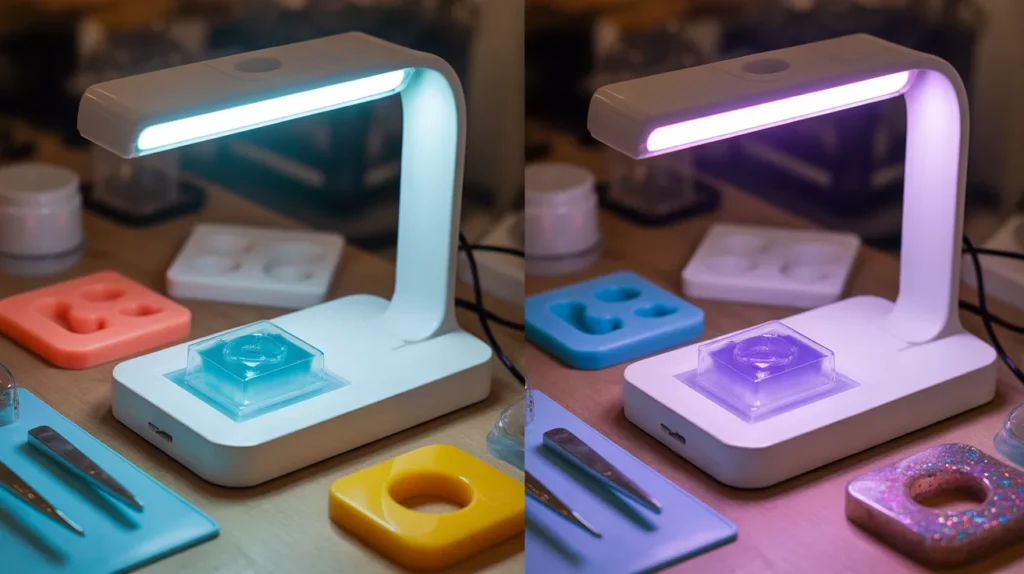
The wattage of an LED lamp plays an important role in how quickly and evenly resin hardens. In general, higher wattage produces stronger UV output, which helps the material cure faster and more completely.
For most craft projects, experts recommend the following ranges:
Low Wattage (6W–12W)
These small lamps can work for very thin layers or tiny jewelry pieces, but curing may take longer and results may be uneven.
Medium Wattage (24W–36W)
This range is often considered the best choice for beginners and resin jewelry makers. It provides a good balance between curing speed and control for small to medium projects.
High Wattage (48W or more)
Higher-power lamps cure resin faster and more evenly, making them useful for thicker layers or when working on multiple pieces at once.
In most cases, a 24W–36W LED lamp is a reliable option for craft projects, while 48W lamps are ideal if you want quicker curing and more consistent results.
How Long Does UV Resin Take to Cure With an LED Lamp?
The curing time depends on several factors such as lamp wattage, resin thickness, and the quality of the resin. In most small craft projects, the material can harden quite quickly when exposed to a strong curing light.
For thin layers, curing usually takes about 30–60 seconds. This is common for jewelry pieces, coatings, or small decorative designs. Medium layers may need around 1–2 minutes to fully harden, while thicker layers can take 2–4 minutes or sometimes longer.
Several factors can affect curing time:
- Lamp wattage – Higher watt lamps cure faster.
- Layer thickness – Thin layers cure more evenly than thick ones.
- Distance from the lamp – Pieces placed closer to the light cure more effectively.
- Resin brand or formula – Some products are designed for faster curing.
For the best results, many crafters apply the resin in multiple thin layers. This helps ensure the material hardens evenly and reduces problems like soft spots or sticky surfaces.
Common Problems When Curing UV Resin With LED Lamps
When working with UV resin, beginners sometimes face a few common curing problems. These issues usually happen because of low lamp power, thick layers, or incorrect curing time.
Sticky or Soft Surface
One of the most common problems is a tacky or sticky surface after curing. This usually happens when the resin does not receive enough light exposure. Curing the piece a little longer or using a stronger lamp can often solve this issue.
Resin Not Fully Hardening
Sometimes the resin stays soft in the middle. This usually happens when the layer is too thick or the lamp does not produce enough UV light. Applying thinner layers helps the resin cure more evenly.
Bubbles in the Resin
Small air bubbles may appear during curing. These bubbles can form when the resin is poured too quickly or when air gets trapped inside the mold. Letting the resin sit for a few seconds before curing can help reduce bubbles.
Uneven Curing
If the light does not reach all parts of the piece, some areas may cure faster than others. Rotating the piece under the lamp or curing from different angles can help create a more even and smooth finish.
Tips for Successfully Curing UV Resin With LED Lamps
Getting a smooth, hard finish requires the right techniques and careful handling. Here are some practical tips to improve your results:
Use Thin Layers
Apply resin in thin layers instead of pouring a thick amount at once. Thin layers cure faster and more evenly, reducing the risk of sticky surfaces or incomplete hardening.
Choose the Right Lamp
Make sure your LED light has sufficient wattage and emits light within the 365–405 nm wavelength range. A higher-quality lamp ensures faster curing and a clearer finish.
Maintain Proper Distance
Keep your resin pieces close to the lamp without touching it. The right distance allows the light to fully reach the resin, ensuring even curing across the surface.
Rotate Pieces During Curing
For molds or jewelry with complex shapes, rotate or reposition the piece under the lamp. This prevents uneven curing and ensures all sides harden properly.
Avoid Bubbles
Pour resin slowly and gently to minimize trapped air. You can also let the resin sit for a few seconds before curing to allow bubbles to rise and pop naturally.
Follow Layer-Specific Timing
Adjust curing time based on the layer thickness and lamp power. Short bursts work for thin layers, while thicker layers may require slightly longer exposure.
Best LED Lamps for Curing UV Resin
Here are some high‑quality LED / UV lamp options that many crafters recommend for resin projects. These tools help get even, fast curing with minimal sticky spots or uneven areas ideal if you want consistent results every time.
36W Dual‑Sided UV Lamp – Versatile and Efficient
This double‑sided lamp offers even light from both top and bottom, helping cure pieces faster and more uniformly. Multiple timer settings make it easy to match curing time to layer thickness, whether you’re making jewelry or small decorative pieces.
395nm UV LED Desk Light with Gooseneck
A flexible lamp with an adjustable neck lets you direct light precisely where it’s needed. The 395 nm wavelength is bright enough for many craft uses, and the clamp design frees your hands while curing.
Large Double‑Sided Digital Lamp – Wide Coverage
With a broad curing area and 36 W output, this light works well for slightly larger resin pieces and molds. Digital timer settings help control curing duration, and the double‑sided design speeds up the process.
High‑Power Multi LED Lamp – Fast and Thorough
Some versions include 56 high‑powered LEDs arranged in a 360° design to cover all sides of your piece without flipping. Adjustable timer modes make them suitable for coatings, thick layers, or detailed molds.
Buying Tips
Check the UV wavelength range (around 365–405 nm) for better performance.
Higher watt lamps (36 W and above) generally cure faster and more evenly.
Look for timer settings and adjustable stands to make curing easier.
FAQs
Can you cure UV resin with an LED lamp?
Yes, UV resin can be cured with an LED lamp if it emits light in the 365–405 nm range. Proper wattage is also important for full and even curing.
What type of LED lamp works best for UV resin?
A 24W–36W LED lamp designed for gel nails or resin crafting works best. Higher wattage lamps cure faster and more evenly.
Why is my UV resin still sticky after using an LED lamp?
Sticky resin usually means under-curing. This can happen due to low lamp power, thick resin layers, or insufficient curing time.
How long does UV resin take to cure under an LED lamp?
Thin layers usually cure in 30–60 seconds. Medium layers may take 1–2 minutes, while thicker layers can take up to 3–4 minutes.
Can any LED lamp cure UV resin?
No. Only LED lamps with the correct UV wavelength (365–405 nm) and enough wattage can properly cure UV resin.
Is an LED lamp better than a UV lamp for resin?
Yes, LED lamps are generally faster, more energy-efficient, and longer-lasting than traditional UV bulb lamps.
What watt LED lamp is best for UV resin crafting?
A 36W LED lamp is ideal for most beginners and jewelry makers. For faster curing or bulk work, 48W or higher is better.
Can I use a nail LED lamp for UV resin?
Yes, most nail LED lamps work well for UV resin as long as they support the correct wavelength and have sufficient wattage.
Why is my resin curing unevenly under LED light?
Uneven curing happens when light does not reach all sides. Rotating the piece or using a dual-sided lamp helps fix this issue.
Do I need a UV lamp if I already have an LED lamp?
No, if your LED lamp is strong enough and has the correct wavelength, it can fully replace a traditional UV lamp for resin projects.
Conclusion
In summary, can you cure UV resin with LED lamp? The answer is yes. LED lamps that emit light within the 365–405 nm wavelength range and have sufficient wattage can cure resin quickly and effectively.
Using the right lamp, applying thin layers, and following proper curing times ensures your resin projects turn out clear, hard, and durable. While low-power or decorative lights may not work well, a quality LED lamp designed for resin or gel nails provides fast, even, and reliable results. By choosing the right equipment and following simple tips, you can achieve professional-looking resin jewelry and craft pieces with ease.
Affiliate Disclosure
This article contains affiliate links. If you click on a link and make a purchase, we may earn a small commission at no extra cost to you. We only recommend products that are helpful for UV resin crafting, jewelry making, and DIY projects.